




Nepal Survey Shows Infant and Young Child Mortality Still High, Uneven Across Provinces
Kathmandu: Nepal’s latest Multiple Indicator Cluster Survey (NMICS) 2024-25 highlights persistent challenges in child survival and related health indicators, with marked differences across provincial...

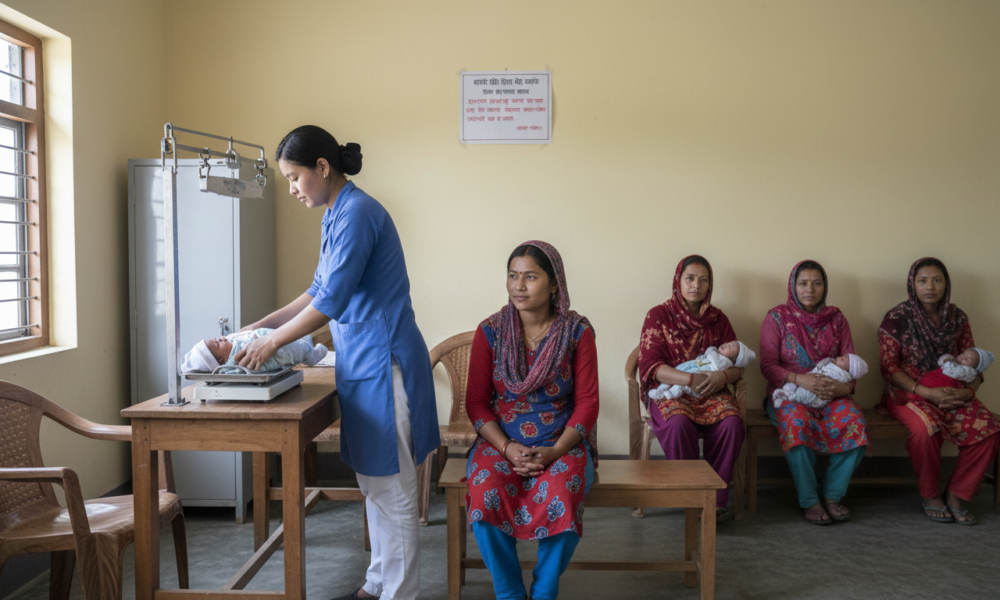
Kathmandu: Nepal’s latest Multiple Indicator Cluster Survey (NMICS) 2024-25 highlights persistent challenges in child survival and related health indicators, with marked differences across provincial regions, according to data released by the National Statistics Office (NSO) on Monday.
The survey shows that nationally, 27 infants die before reaching their first birthday per 1,000 live births, and the under-five mortality rate stands at 31 per 1,000 live births. Neonatal deaths, occurring within the first 28 days of life, were recorded at 17 per 1,000 live births.
Conducted by the NSO with technical and financial input from United Nations Children’s Fund (UNICEF), the NMICS 2024-25 forms part of the Global MICS Programme. It covers a broad range of indicators including child mortality, nutrition, health service coverage, water and sanitation conditions, reproductive health, early marriage, and mental health parameters.
Provincial analysis reveals disparities in outcomes. Sudurpashchim Province recorded the highest neonatal mortality rate at 26 per 1,000 births compared to Bagmati Province’s 10 per 1,000. The highest infant mortality rate at 38 per 1,000 was also noted in Sudurpashchim, while Bagmati posted the lowest figure of 17 per 1,000. Under-five mortality peaked at 48 per 1,000 in Sudurpashchim and was lowest at 20 per 1,000 in Gandaki Province.
The report indicates a total fertility rate of 1.9 births per woman aged 15–49, with adolescent fertility at 48 live births per 1,000 girls aged 15–19. Data also show that 11.2 per cent of women aged 20–24 gave birth before turning 18.
Child nutrition indicators remain a concern. Based on World Health Organization (WHO) standards, 24.3 per cent of children under five are underweight for age and 31.5 per cent are stunted. Approximately 7.6 per cent are underweight for height, and 2.6 per cent are overweight for height. The highest prevalence of low weight for age was observed in Madhes Province (33.2 per cent), and the lowest in Bagmati (9.6 per cent).
The survey also shows that a proportion of children remain out of school: 4.5 per cent in grades 1–5, 3.6 per cent in grades 6–8, and 13.2 per cent in secondary grades (9–12).
Birth registration remains relatively high, with 82.9 per cent of caregivers aware of the process and an overall registration rate of 85.4 per cent for children under five. The highest provincial registration was in Karnali Province (95.8 per cent) and the lowest in Koshi Province (78.4 per cent).
On social factors, the survey reports 3.4 per cent of children aged 0–17 have lost one or both parents, with the highest burden in Sudurpaschim and the lowest in Madhes Province. Meanwhile, 33.2 per cent of children in this age group have one or both parents working abroad, predominantly in Gandaki Province.
Water and sanitation findings show that 98.2 per cent of households use improved drinking water sources, though water quality testing indicates that 60.4 per cent of households had E. coli contamination. Improved toilet use was documented at 92.4 per cent, with 79.9 per cent using these facilities exclusively.
Health insurance coverage remains modest, with 17.8 per cent of women and 19.6 per cent of men aged 15–49 enrolled, while 15 per cent of children aged 5–17 and 11.7 per cent of children under five have insurance coverage.
This comprehensive survey underscores ongoing gaps in child health, nutrition, education, water and sanitation quality, as well as insurance coverage, despite progress in service awareness and birth registration rates.



No Comment! Be the first one.