






AI-Driven Diagnostics and Faculty Recruitment to Lead Next Phase of AIIMS Growth: JP Nadda
The expansion of the All India Institute of Medical Sciences network is set to enter a new phase, with a clear emphasis on artificial intelligence in diagnostics and faster recruitment of faculty....

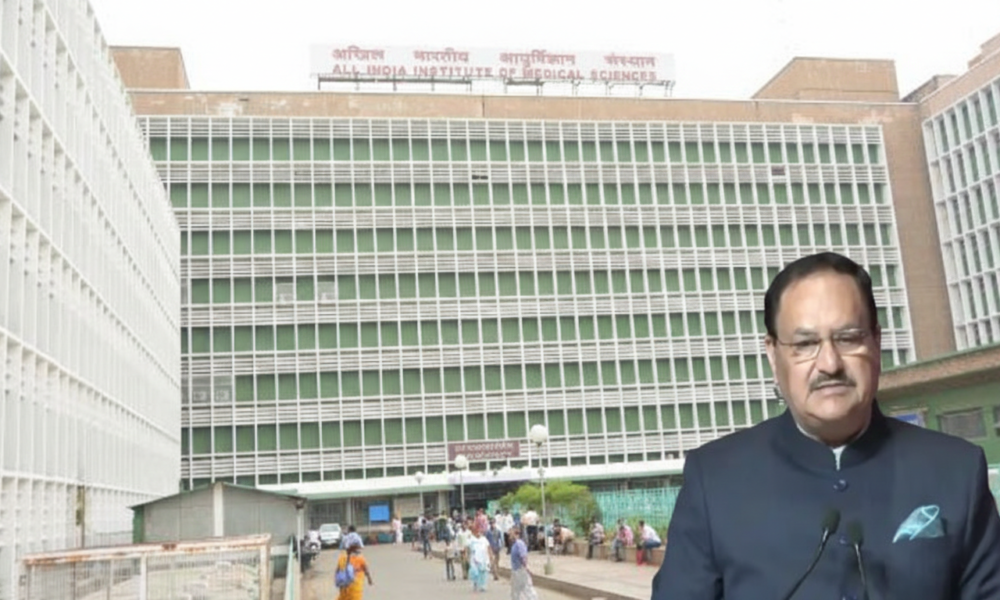
The expansion of the All India Institute of Medical Sciences network is set to enter a new phase, with a clear emphasis on artificial intelligence in diagnostics and faster recruitment of faculty. Union Health Minister J. P. Nadda has outlined a roadmap that places technology adoption and academic strengthening at the center of the country’s premier medical institutions.
During a high-level review of ongoing and upcoming campuses of the All India Institute of Medical Sciences, the minister stressed that expansion must go beyond new buildings and bed capacity. He said the focus should shift to building advanced diagnostic capabilities, enhancing research output, and ensuring that every campus has the faculty strength required to maintain academic and clinical standards.
India has witnessed a rapid increase in the number of AIIMS campuses over the past decade. What began as a single flagship institution in the national capital has now grown into a nationwide network spanning multiple states. Several of these newer campuses are at various stages of development, with outpatient services and teaching programs already underway in many locations. Yet, gaps remain in terms of faculty appointments, super-specialty services, and integration of modern digital systems.
At the review meeting, the minister highlighted the potential of artificial intelligence to improve diagnostic accuracy and reduce turnaround time. AI tools can assist doctors in reading radiology scans, analyzing pathology samples, and identifying early warning signs of diseases such as cancer, cardiovascular conditions, and neurological disorders. In a country where patient volumes are high and specialists are often stretched thin, AI-based systems can act as clinical support tools.
He observed that as patient inflow continues to rise at AIIMS campuses, technology must serve as a support mechanism rather than an optional add-on. Automated imaging analysis, predictive modeling for disease progression, and algorithm-based screening systems can help streamline workflows. Faster report generation can shorten hospital stays and enable timely treatment decisions.
Officials indicated that integration of AI-based tools is being examined across multiple departments, including radiology, oncology, cardiology, and laboratory medicine. The goal is to establish standardized digital diagnostic frameworks that can be replicated across campuses. This would help ensure uniform quality of care, irrespective of geographic location.
Alongside technological upgrades, the minister expressed concern over delays in faculty recruitment at several newly established AIIMS campuses. While infrastructure has expanded rapidly, staffing has not always kept pace. Vacancies in teaching and specialist posts can affect academic schedules, research activity, and patient services.
He directed authorities to speed up recruitment processes and remove administrative hurdles that slow down appointments. Regular monitoring of vacant posts, clear timelines for selection procedures, and transparent evaluation mechanisms were emphasized. The message was clear: infrastructure without adequate faculty cannot deliver the level of care and training expected from AIIMS institutions.
The importance of faculty strength extends beyond classroom teaching. AIIMS campuses serve as referral centers for complex medical cases. Specialists in super-specialty disciplines play a critical role in managing advanced surgeries, critical care, and multidisciplinary treatment. Without sufficient faculty, even state-of-the-art facilities may struggle to operate at full capacity.
Another major theme during the review was digital health integration. AI in diagnostics is closely linked to the broader push for electronic health records and interconnected health systems. The minister stressed that AIIMS institutions should align with national digital health initiatives, enabling seamless data flow between departments and across healthcare facilities.
Electronic health records, when integrated with AI tools, can generate valuable insights into disease trends, treatment outcomes, and public health patterns. However, the use of patient data requires strict safeguards. Data privacy, cybersecurity, and ethical use of information were underscored as non-negotiable aspects of digital transformation.
The review also touched upon research priorities. AIIMS campuses have traditionally been centers of medical research. With the addition of artificial intelligence, there is scope to develop algorithms tailored to Indian disease profiles. Conditions such as tuberculosis, diabetes, hypertension, and certain cancers have unique epidemiological characteristics in the country. Indigenous datasets can improve the accuracy of AI systems and make them more relevant to local needs.
Collaboration with technology firms, research organizations, and academic institutions was encouraged to support development of AI-based diagnostic tools. Building capacity in medical data science and bioinformatics within AIIMS campuses was also discussed as a way to create long-term expertise.
Beyond diagnostics and staffing, the minister reviewed the progress of ongoing construction projects. Timely completion of hospital blocks, installation of advanced medical equipment, and operational readiness of departments were assessed. State governments were urged to work closely with central agencies to address land acquisition, connectivity, and utility issues that can delay project timelines.
The expansion of AIIMS is not only about increasing tertiary care capacity. It also aims to strengthen regional healthcare ecosystems. New campuses are expected to act as hubs that support district hospitals and medical colleges through training, teleconsultation, and referral systems. Integration of AI tools can further enhance these linkages by enabling remote interpretation of diagnostic images and sharing of clinical data.
Patient experience remains central to the vision outlined during the review. Digital systems should simplify hospital procedures, from appointment booking to accessing test reports. AI-driven scheduling systems can reduce waiting times, while automated notifications can keep patients informed about treatment milestones.
As India’s healthcare demands continue to grow, the government’s approach appears to blend infrastructure expansion with technological modernization and human resource strengthening. The next chapter of AIIMS development is likely to be defined by how effectively these elements come together.
Artificial intelligence in diagnostics, combined with adequate faculty recruitment, has the potential to reshape tertiary healthcare delivery. If implemented with careful oversight and sustained investment, this model could set a benchmark for public sector medical institutions across the country.



No Comment! Be the first one.