





The First Six Months Matter
The publication of NFHS-6 has sounded an alarm for India's nutrition and child health, revealing a concerning decline in exclusive breastfeeding.

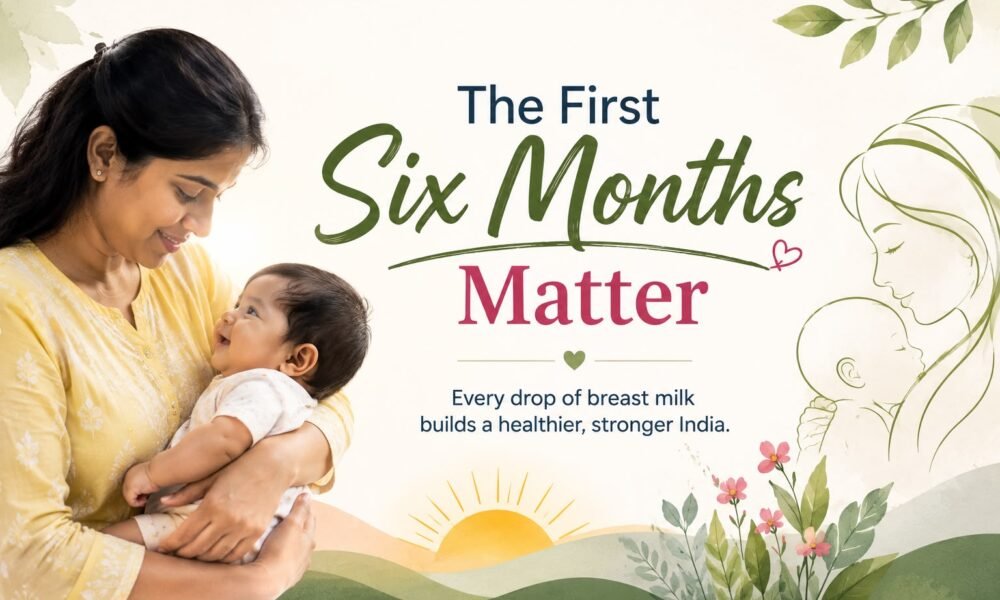
As World Breastfeeding Week draws to a close, the message it leaves behind deserves sustained national attention. The publication of NFHS-6 has sounded an alarm regarding the nutrition and well-being of children in India, revealing a concerning decline in exclusive breastfeeding.
For generations, breastfeeding has always been regarded as a mother’s first gift to her child. It is a complete nutrition, often described as the baby’s first vaccine and one of the most cost-effective public health interventions. However, it seems that things have taken the wrong turn in India according to the latest National Family Health Survey (NFHS-6).
Exclusive breastfeeding among infants under six months has declined from 63.7% in NFHS-5 (2019-21) to 55.8% in NFHS-6 (2023-24), almost an eight- point drop. Even more concerning, 21 of the 30 States and Union Territories with comparable data reported a decline. Behind these numbers are thousands of infants who may miss the healthiest start of life.
But what exactly is exclusive breastfeeding?
Exclusive breastfeeding means feeding an infant only breast milk for first six months of life- without water, animal milk, formula milk or any other food or liquids, except prescribed medicines or vitamin/mineral supplement when required. According to the World Health Organization, breastfeeding exclusively for the first six months of an infant’s life and then continuing with additional breastfeeding along with the appropriate complementary foods until the child is at least two years old or older, is recommended.
Breastfeeding is far more than a feeding practice. It protects infants against diarrhoea, pneumonia and other life-threatening infections. It is also associated with optimal brain development, strengthens immunity, reduces childhood mortality and lowers the future risk of obesity, diabetes and other non-communicable diseases. Mothers are benefited too, with reduced risks of breast and ovarian cancers, postpartum haemorrhage and type 2 diabetes. Breastfeeding also helps mothers return to their pre-pregnancy weight more quickly. At the societal level, breastfeeding lowers healthcare expenditure, it is also the safest, most nutritious and most economical food for every infant.
The decline highlighted by NFHS-6 therefore raises an important public health question: Why are fewer mothers exclusively breastfeeding despite widespread awareness?
The reasons are more complex than simply a mother’s decision. Successful breastfeeding is highly dependent on the surrounding of the mother. Early counselling during pregnancy, skin-to-skin contact immediately after delivery, initiation of breastfeeding within the first hour of birth, skilled lactation support, encouragement from family and friends, adequate maternity leave and breastfeeding – friendly workplaces are the factors that influence whether exclusive breastfeeding continues for six months.
If these systems fail, mothers often face avoidable barriers. Inadequate counselling, early introduction of water or animal milk, aggressive marketing of breastmilk substitutes, limited postnatal support and pressure to return to work. Together, these barriers often lead to premature discontinuation of exclusive breastfeeding and reflect broader gaps in health systems, workplace policies and community support.
On the other hand, NFHS-6 has also made it clear that although there were states that saw reductions, there were other states such as Sikkim, Kerala, Puducherry and Gujarat that managed to make impressive gains. As India strives to build a healthier and more productive population, breastfeeding must be viewed as an investment in human capital rather than solely a maternal and child health intervention. Every missed opportunity to support breastfeeding today has consequences that extend into childhood, adolescence and adulthood.
The way forward is very clear but requires collective action. Mothers have to be consistently counselling about breastfeeding during pregnancy and post childbirth. Healthcare facilities must provide timely support to help them breastfeed successfully. Breastfeeding thrives when families, workplaces and communities offer support, backed by strong enforcement of the Infant Milk Substitutes (IMS) Act.
This World Breastfeeding Week, the NFHS-6 findings should serve as a wake-up call. Protecting, promoting and supporting exclusive breastfeeding is not simply about improving one health indicator- it is about safeguarding India’s future.
The first six months of life pass quickly, but the benefits of breastfeeding last a lifetime!







No Comment! Be the first one.