






Building Collapse and Public Health: What Happens to People Trapped Under Structural Debris?
The recent Satya Niketan building collapse is a message to all infrastructure makers that there are health risks beyond physical injuries. These are known as ‘crush’ injuries. A crush injury occurs...

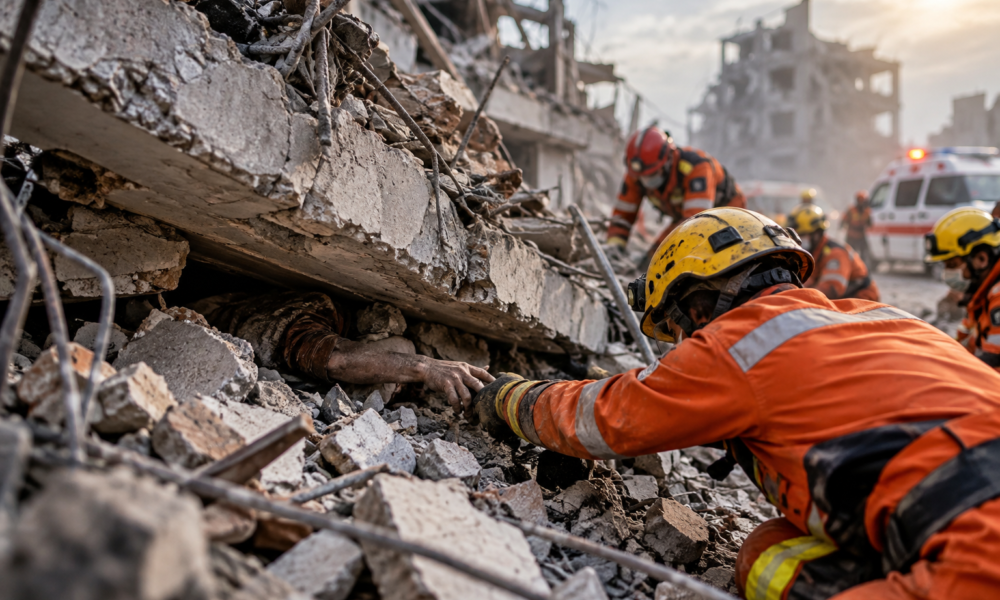
The recent Satya Niketan building collapse is a message to all infrastructure makers that there are health risks beyond physical injuries. These are known as ‘crush’ injuries. A crush injury occurs when prolonged pressure from concrete, metal, furniture or other debris damages muscles and soft tissues. The danger is not always visible. Someone who appears relatively stable while trapped can develop serious complications because damaged muscles release substances into the bloodstream.
Moreover, muscle damage can also affect the kidneys, as severe muscle injury can cause rhabdomyolysis, in which muscle cells break down and release myoglobin. Large amounts of myoglobin can contribute to acute kidney injury.
The moment people are rescued
Even the moment of rescue can be dangerous, as the sudden release of pressure can rapidly change blood flow and the body’s chemistry. This can cause problems such as low blood pressure, abnormal heart rhythms and electrolyte disturbances.
Hyperkalaemia is a major concern
Moreover, hyperkalaemia is a major concern, as damaged cells can release potassium into the bloodstream. Excess potassium can interfere with the heart’s electrical activity and become life-threatening.
Other complications
Crush injuries can involve fractures, internal bleeding, compartment syndrome, shock, infection and tissue death.
Why time matters
The longer tissue remains compressed and the greater the injury, the greater the potential for systemic complications. Rescue teams therefore have to think about medical treatment even while extraction is taking place.
The hospital challenge
Treatment may involve intravenous fluids, monitoring kidney function and electrolytes, cardiac monitoring, management of fractures and wounds, and, in severe cases, renal replacement therapy.




No Comment! Be the first one.