







Why Children Are More Vulnerable to Heat-Related Illnesses
When temperatures rise in summer, most people check their smartphones to see how hot it is. A temperature above 40°C may sound dangerous, while a temperature below 30°C may seem normal. However,...

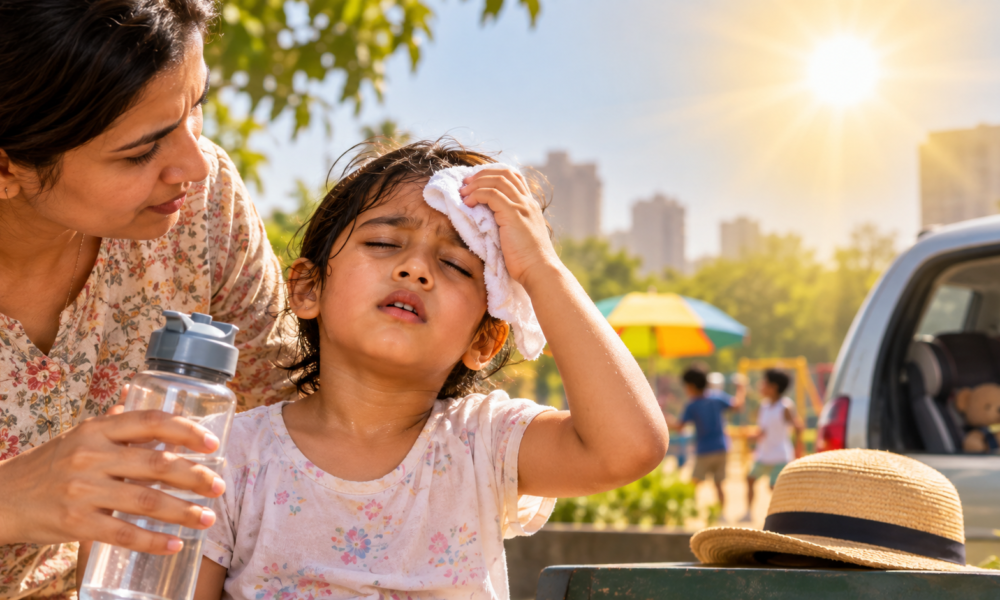
When temperatures rise in summer, most people check their smartphones to see how hot it is. A temperature above 40°C may sound dangerous, while a temperature below 30°C may seem normal. However, temperature is not the only factor that matters. Humidity also plays an important role.
When both temperature and humidity are high, the body finds it harder to cool itself. While adults may be better able to handle changes in temperature, children can be more vulnerable to extreme heat.
This is especially important for parents, schools, caregivers and healthcare workers to understand, particularly as heatwaves are becoming more frequent and lasting longer.
Why humidity makes summers more dangerous
The body normally cools itself by sweating. When sweat evaporates into the surrounding air, it helps remove heat from the body.
However, when humidity is high, sweat does not evaporate properly. It can remain on the skin while the body continues to become hotter.
This can lead to dehydration, heat cramps, heat exhaustion and heat stroke. Heat stroke is a medical emergency and can damage important organs if treatment is delayed.
This means that a very humid day can sometimes be more dangerous than a hotter but dry day.
If a child becomes confused, unconscious or has seizures, it may be a sign of heat stroke. This is a medical emergency, and the child needs immediate medical care.
Recognising the signs early can help prevent heat-related illnesses from becoming more serious.
Parents’ role in protecting children
Prevention is very important during hot and humid weather.
Parents and schools should ensure that children drink enough water throughout the day. It is also important to give children regular water breaks during outdoor activities.
Outdoor activities should be reduced during the hottest part of the day. Children should also wear light, loose-fitting clothes to help keep their bodies cool.
Indoor spaces should be properly ventilated, and parents and schools should pay attention to both temperature and humidity.
Babies and young children need extra protection because they may not be able to clearly communicate when they are feeling hot, uncomfortable or unwell.
It is also important to never leave a child inside a parked car, even for a short period. The temperature inside a car can rise very quickly and become dangerous.
Children can also lose too much heat during surgery
One important fact to note is that children can also lose too much body heat during surgery. Temperature control is important not only outdoors but also inside hospitals.
Interestingly, children undergoing surgery can face the opposite problem. Instead of becoming too hot, they can lose body heat quickly.
Anaesthesia can reduce the body’s normal ability to control its temperature. Children are more vulnerable because they have a larger body surface compared with their body weight and limited energy reserves.
Even a small change in body temperature during surgery can increase the risk of complications and may affect recovery and healing.
Doctors therefore use different methods to keep children warm during surgical procedures, including:
Warming blankets
Warm intravenous fluids
Temperature monitoring
Carefully controlled operating-room temperatures
The goal is to keep the child’s body temperature within a safe range.
Why climate change has become an important talking point
India is currently experiencing longer periods of heat and higher humidity, along with more frequent heatwaves.
This means that simply checking the temperature may not be enough. Additional safety precautions may be needed during periods of extreme heat and humidity.
Parents and schools should pay attention to humidity and heat stress. Public health warnings can also be more useful when they include measures such as the heat index and wet-bulb temperature, rather than looking only at air temperature.
Parents should also learn the early signs of heat-related illnesses so they can act quickly.
Children need special attention because their bodies are still growing and cannot regulate temperature as effectively as adults.
As hot and humid weather becomes a bigger challenge, it is important to understand how heat affects children and what families and schools can do to keep them safe.


No Comment! Be the first one.