






India Crosses 80 Lakh HPV Vaccine Doses in Major Cervical Cancer Prevention Push
India has administered more than 80 lakh, or 8 million, doses of the Human Papillomavirus vaccine under its national HPV vaccination campaign, marking a major milestone in the country’s...

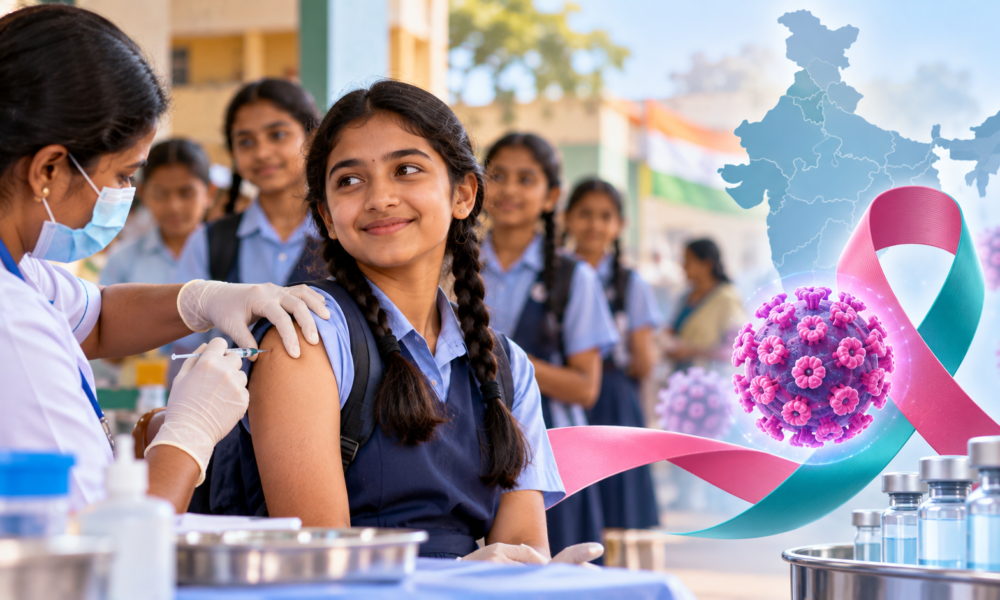
India has administered more than 80 lakh, or 8 million, doses of the Human Papillomavirus vaccine under its national HPV vaccination campaign, marking a major milestone in the country’s cervical cancer prevention efforts.
The Ministry of Health and Family Welfare said more than 80 lakh HPV vaccine doses had been administered since the campaign was launched in February 2026. The programme provides free and voluntary single-dose HPV vaccination to eligible 14-year-old girls.
Uttar Pradesh has recorded the highest number of vaccinations, with more than 22 lakh adolescent girls vaccinated under the campaign. Gujarat, Uttar Pradesh, Madhya Pradesh and Mizoram have achieved 100% coverage according to the Health Ministry, while Bihar, Andhra Pradesh and Assam have crossed 90% coverage.
HPV, or human papillomavirus, is a group of viruses that can cause several types of cancer. Persistent infection with certain HPV types is the primary cause of cervical cancer, making vaccination an important tool in prevention.
India’s national programme focuses on adolescent girls because HPV vaccination is most effective when administered before exposure to the virus. The government has therefore structured the campaign around 14-year-old girls as the eligible group.
The campaign represents one of India’s largest coordinated efforts to expand HPV vaccination through the public health system. The government has emphasised that vaccination sessions are being conducted under medical supervision, with arrangements available around the clock for managing rare adverse events following immunisation.
The 80-lakh milestone also highlights the logistical scale involved in delivering a nationwide adolescent vaccination programme. Reaching millions of beneficiaries requires coordination between central and state health authorities, vaccination centres, schools, healthcare workers and families.
Coverage, however, is not uniform across the country. While several states and Union Territories have reported high coverage, the national programme still needs continued mobilisation to reach eligible girls who have not yet received the vaccine.
Public awareness is another important component. Vaccine programmes depend not only on supply but also on parents and eligible beneficiaries understanding the purpose and safety of vaccination.
Cervical cancer remains an important public-health concern because it is largely preventable through HPV vaccination, screening and timely treatment of precancerous lesions.
The vaccination campaign is therefore part of a wider prevention strategy rather than a standalone intervention. HPV vaccination can reduce the risk of infection from cancer-causing HPV types, while screening remains important for detecting cervical changes later in life.
The Health Ministry’s latest figures indicate that India’s programme has already reached a significant operational milestone less than a year after its launch.
The next challenge will be sustaining coverage, reaching areas where uptake is lower and ensuring that eligible adolescents who have not yet been vaccinated can access the programme.
With more than 8 million doses administered, India has established a substantial base for its national HPV vaccination effort. The programme’s long-term impact will depend on maintaining coverage and connecting vaccination with broader cervical cancer prevention and awareness efforts.





No Comment! Be the first one.