






India Steps Up Hepatitis Elimination Drive With 2030 Target
India has renewed its commitment to combating viral hepatitis and progressing towards its 2030 elimination targets, with the government highlighting prevention, diagnosis, treatment and stronger...

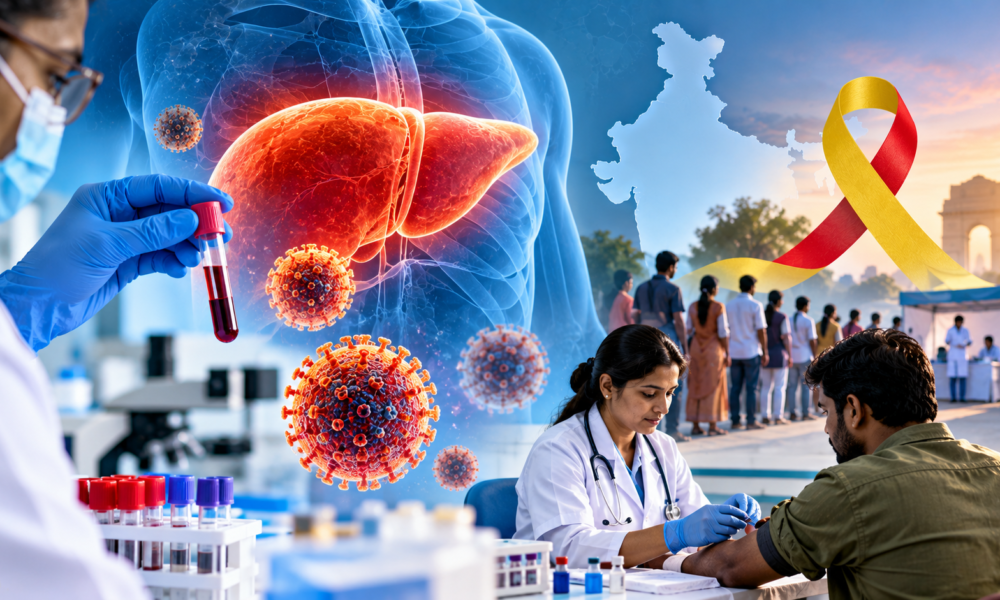
India has renewed its commitment to combating viral hepatitis and progressing towards its 2030 elimination targets, with the government highlighting prevention, diagnosis, treatment and stronger primary healthcare as key elements of the national response.
At global health engagements on the sidelines of the 81st United Nations General Assembly, India highlighted progress towards hepatitis elimination by 2030 as part of its broader universal-health-coverage efforts. The Union Health Secretary outlined the country’s public-health initiatives and ongoing work on hepatitis.
India’s National Viral Hepatitis Control Programme, launched in 2018, has set the objective of achieving countrywide elimination of hepatitis C by 2030 while reducing the burden and mortality associated with hepatitis B and C.
Viral hepatitis is a group of infections affecting the liver. Hepatitis B and C are particularly important from a long-term public-health perspective because chronic infection can lead to cirrhosis and liver cancer.
The government’s programme therefore focuses on identifying infections earlier and connecting patients to appropriate care.
Prevention is another major component. Measures include awareness campaigns, vaccination against hepatitis B, blood-safety measures, injection safety and infection-control practices.
India’s approach also recognises that hepatitis cannot be addressed through hospitals alone. The National Viral Hepatitis Control Programme emphasises community awareness, early diagnosis and management across different levels of the healthcare system.
One of the major challenges is that viral hepatitis can remain undiagnosed for long periods because infected people may not experience obvious symptoms during the early stages.
This makes screening and diagnosis particularly important. Identifying infections before serious liver damage develops can allow patients to access treatment and reduce the possibility of onward transmission.
Hepatitis C is especially relevant to the elimination agenda because effective antiviral medicines can cure most infections when diagnosed and treated appropriately.
Hepatitis B presents a different challenge because chronic infection can require long-term management. Vaccination remains a key preventive measure, particularly for reducing new infections.
India’s 2030 target is aligned with the broader global effort to combat viral hepatitis as a public-health threat. The government’s programme is connected to the Sustainable Development Goal target on combating hepatitis and other communicable diseases.
The latest government messaging also places hepatitis within a larger expansion of India’s public-health infrastructure. According to the Health Ministry, the country now has more than 1.8 lakh Ayushman Arogya Mandirs and has generated hundreds of millions of teleconsultations through e-Sanjeevani.
These primary-care systems can play an important role in prevention, screening and referral.
Reaching the 2030 target will nevertheless require sustained implementation. Screening must reach people who may not know they are infected, treatment must remain accessible, and prevention programmes must continue across states and high-risk populations.
The elimination target should therefore be viewed as a long-term public-health programme rather than a single campaign.
India’s renewed emphasis on hepatitis elimination reflects the broader shift towards detecting infectious diseases earlier and integrating prevention and treatment into primary healthcare.
With 2030 approaching, the effectiveness of the programme will increasingly depend on how well national policy translates into testing, treatment and prevention at the community level.






No Comment! Be the first one.