






Climate Change and Dengue: Why Weather Patterns Matter for India’s Health
Weather conditions can influence the spread of dengue, a mosquito-borne viral disease that affects many parts of India. A new 2026 study focusing on Kerala found that temperature, rainfall, humidity...

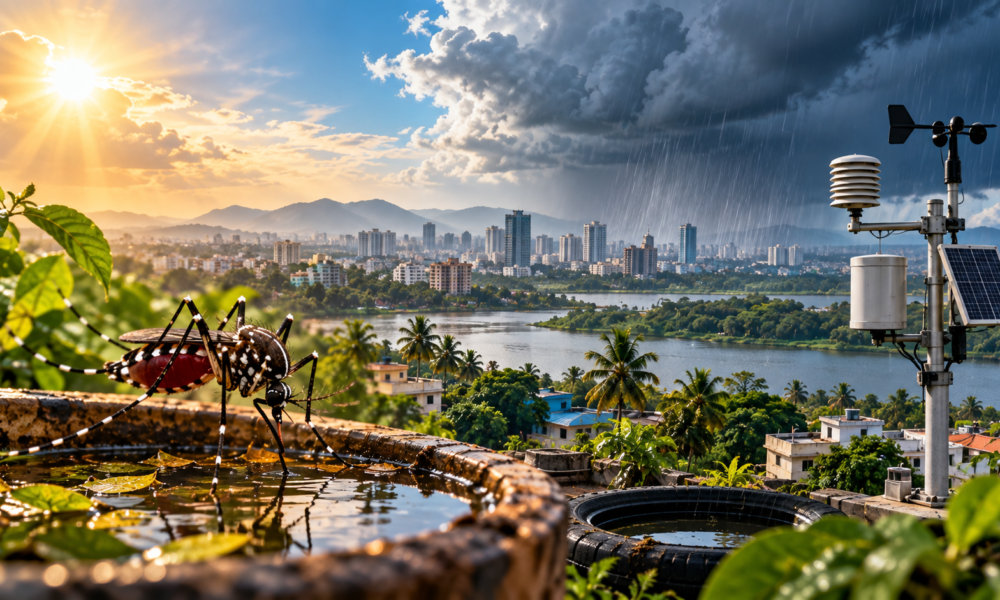
Weather conditions can influence the spread of dengue, a mosquito-borne viral disease that affects many parts of India.
A new 2026 study focusing on Kerala found that temperature, rainfall, humidity and the El Niño-Southern Oscillation can influence dengue transmission. The research used 14 years of climate and dengue data from Kerala.
Why does weather matter?
Dengue is mainly spread by Aedes mosquitoes.
Temperature, rainfall and humidity can affect mosquito breeding, survival and the ability of the virus to develop inside mosquitoes.
The relationship is not simple. Too little rain can encourage water storage in some communities, while heavy rainfall can create temporary breeding sites.
What did the Kerala study find?
The researchers found that dengue cases in Kerala closely followed the rainfall cycle, with cases rising in May and reaching their highest levels during June and July.
The study also found that warmer temperatures and moderate humidity before the monsoon, along with rainfall during the monsoon, were associated with higher dengue incidence.
What does climate change mean for dengue?
Changing temperatures and rainfall patterns can alter when and where mosquitoes can survive.
A 2026 systematic review and meta-analysis also identified precipitation, minimum temperature, mean temperature and relative humidity among important climate factors associated with dengue incidence in India.
This does not mean every hot or rainy period will cause an outbreak. Local mosquito populations, sanitation, population density, healthcare access and human behaviour also matter.
Why are early-warning systems important?
If weather and disease data can be combined, health authorities may be able to identify periods of higher risk earlier.
This can help authorities plan mosquito-control activity, public warnings, testing capacity and healthcare resources.
The evidence suggests that climate information can become an important part of dengue preparedness, but it needs to be combined with local disease surveillance and mosquito-control measures.



No Comment! Be the first one.