






Goa Becomes First Indian State With Dedicated Life-Course Immunisation Policy
Goa has become the first state in India to adopt a dedicated policy covering immunisation across different stages of life. The Policy for Life-course Immunization 2026–2036 was adopted on September...

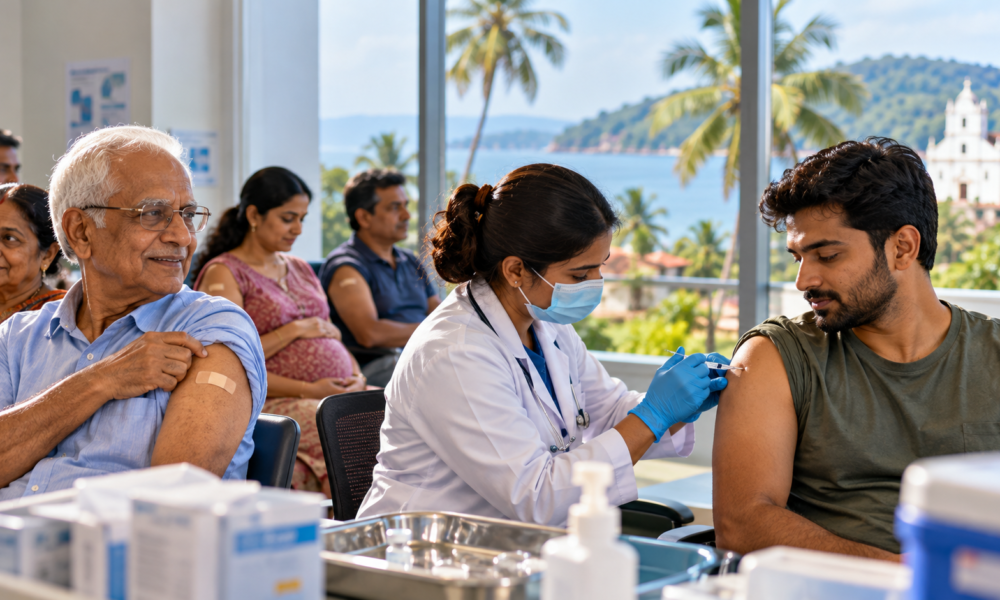
Goa has become the first state in India to adopt a dedicated policy covering immunisation across different stages of life.
The Policy for Life-course Immunization 2026–2036 was adopted on September 23, 2026. The 10-year policy aims to expand vaccination beyond childhood and make adult immunisation a more regular part of healthcare.
The first phase includes influenza, pneumococcal and hepatitis B vaccines for eligible adults. The policy gives particular attention to groups such as people living with chronic diseases, immunocompromised people and healthcare workers.
Why is adult vaccination important?
Vaccination is often associated with childhood. However, protection against some infections can also be important during adulthood and later life.
The risk from certain infections can be higher for older adults and people with chronic health conditions. Healthcare workers may also face greater exposure to infectious diseases because of their work.
A life-course approach means that vaccination is considered at different ages rather than stopping after childhood.
What does life-course immunisation mean?
Life-course immunisation means providing appropriate vaccines according to a person’s age, health condition, occupation and risk of exposure.
The exact vaccines and timing can differ from person to person. People should therefore discuss vaccination with a qualified healthcare professional rather than assuming that every vaccine is required for everyone.
Why is Goa’s policy significant?
The policy represents a shift towards prevention rather than focusing only on treatment after illness develops.
The World Health Organization’s Alliance for Health Policy and Systems Research said researchers worked with policymakers and clinicians as Goa’s policy was developed. The process was designed to bring evidence into decisions about which groups should be prioritised and how vaccination should be delivered.
What could happen next?
Implementation will be important. A vaccination policy needs awareness, reliable vaccine supply, trained healthcare workers and systems that help people understand when they are eligible.
Adult vaccination can also require better communication because many people may not know which vaccines are relevant to them.
Goa’s 2026–2036 policy places adult immunisation within a broader preventive-health framework and could provide a model for discussion about life-course vaccination in other parts of India.




No Comment! Be the first one.