








How to Read Nutrition Labels in Indian Supermarkets: A Practical Guide
From breakfast cereals and biscuits to packaged juices and instant noodles, supermarket shelves offer hundreds of food choices. Packaging often features words such as “natural,” “multigrain,” “high...

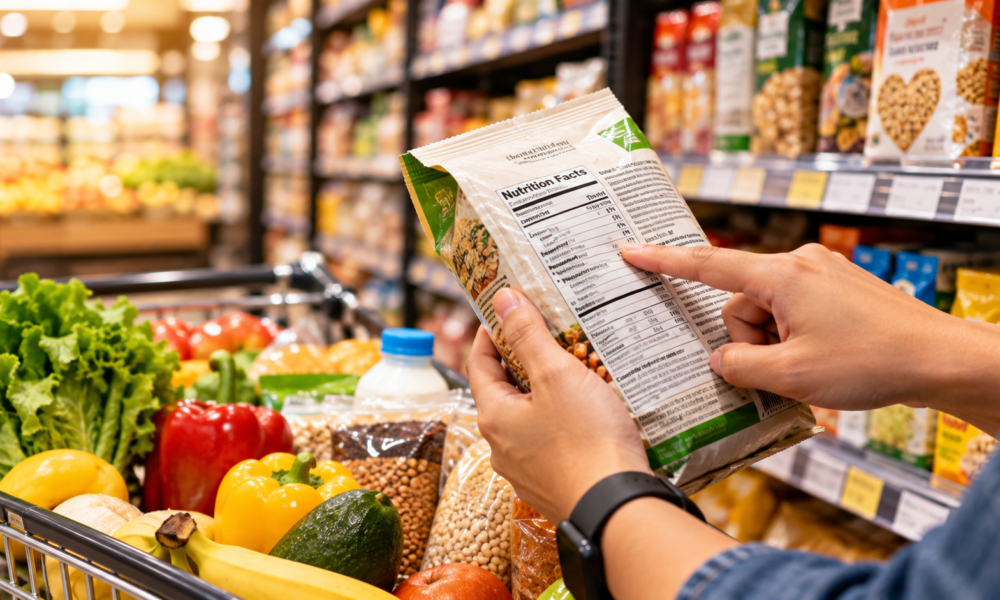
From breakfast cereals and biscuits to packaged juices and instant noodles, supermarket shelves offer hundreds of food choices. Packaging often features words such as “natural,” “multigrain,” “high protein” or “no added sugar.” These claims may attract attention, but they do not tell the whole nutritional story.
Learning to read a food label helps consumers compare products, understand portion sizes and make more informed
decisions.
The Food Safety and Standards Authority of India (FSSAI) provides consumer guidance on interpreting nutrition information, serving sizes and packaged-food declarations.
- Start with the serving size
Serving size is one of the most important details on a nutrition label. Nutrient values may be listed per serving, per 100 grams or per 100 millilitres.
A packet can contain several servings, even if someone is likely to eat the entire package at once.
For example, imagine a snack contains 150 calories per serving and has two servings in the packet. Eating the entire packet provides 300 calories, not 150.
This example is illustrative. Always check the actual serving information printed on the product.
- Check total energy and portion size
Energy is usually expressed in kilocalories (kcal). It helps consumers understand how much energy a serving provides.
Calories alone do not determine whether a food is nutritious. Nuts, for example, can provide useful nutrients while being energy-dense. A product’s overall value depends on its ingredients, nutrient profile, portion size and place in the wider diet.
Compare similar products using the same reference amount, such as per 100 grams, where available. This reduces the risk of comparing different serving sizes.
- Watch added sugars and total sugars
Sugars can appear in foods that do not taste particularly sweet, including some breakfast cereals, sauces and flavoured dairy products.
Check the nutrition panel for total sugars and examine the ingredient list for added sugar sources. Depending on the product, ingredients may include sugar, glucose syrup or other sweetening ingredients.
The WHO recommends limiting free sugars to less than 10% of total daily energy intake, with a further reduction to 5% or less suggested for additional benefits. These are population-level recommendations, not a personalised prescription.
A product labelled “no added sugar” may still contain naturally occurring sugars. It is therefore important to read the full label rather than relying on a single front-of-pack claim.
- Look at saturated fat and salt
Saturated fat and sodium are worth checking, especially when comparing frequently consumed packaged foods.
WHO recommends limiting salt intake for adults to less than 5 grams per day, equivalent to less than 2 grams of sodium. High sodium intake is associated with increased blood pressure.
Compare similar products and consider how much you actually consume. A modest amount of a food may fit into a balanced diet, while frequent large portions can substantially increase daily intake.
- Read the ingredient list
Ingredients are generally listed in descending order by weight. Items appearing near the beginning make up a larger proportion of the product than those appearing later.
Look for whole grains, pulses, nuts or other relevant ingredients when comparing products marketed around those qualities. A “multigrain” claim does not automatically mean a product is high in fibre or made predominantly from whole grains.
People with food allergies should also check allergen declarations and any relevant cross-contact warnings.
- Check dates, storage and food-safety information
Nutrition is only one part of food safety. Check the best-before or use-by information, storage instructions, package integrity and the product’s required identification details.
The FSSAI logo and applicable licence or registration details can also help consumers identify the food business responsible for a packaged product.
Avoid damaged or improperly stored products, and follow any instructions to refrigerate a product after opening.
Reading nutrition labels does not require specialist knowledge. Start with serving size, compare energy and key nutrients, inspect ingredients and check food-safety information.
The goal is not to find a mythical perfect packaged food. It is to make better-informed choices consistently, while keeping fresh foods and a varied diet at the centre of everyday eating.






No Comment! Be the first one.