







Mercury-Free Healthcare in India: Why Hospitals Are Replacing Mercury-Based Medical Devices
India is accelerating efforts to eliminate mercury-containing medical thermometers and blood pressure monitors from healthcare services by 2030. The initiative aims to protect patients, healthcare...

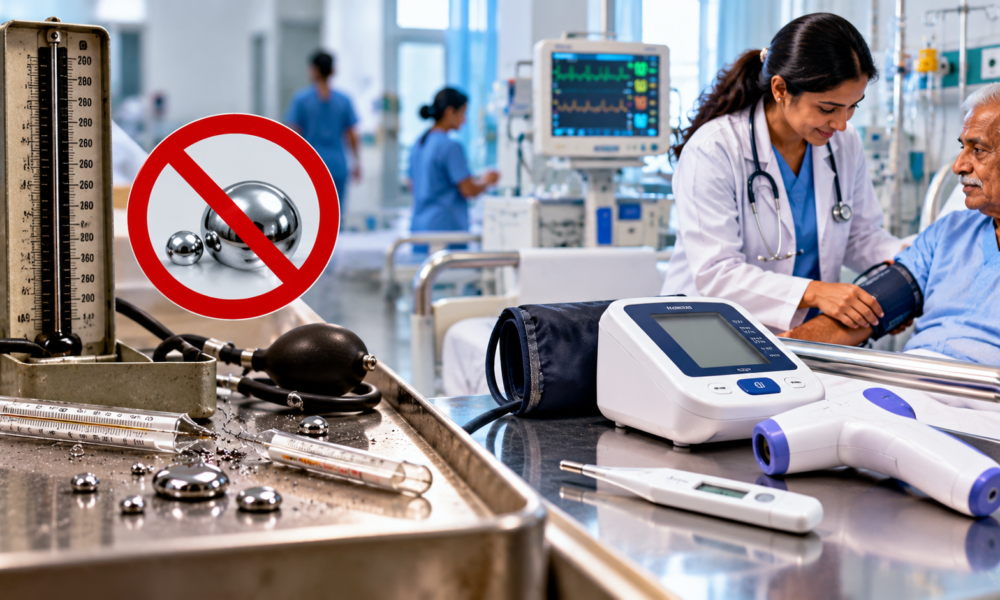
India is accelerating efforts to eliminate mercury-containing medical thermometers and blood pressure monitors from healthcare services by 2030. The initiative aims to protect patients, healthcare workers and the environment from the risks associated with mercury exposure.
In an update published on 22 October 2026, the World Health Organization (WHO) India described efforts to replace mercury-based equipment, strengthen waste-management systems and improve access to reliable alternatives.
The initiative highlights an important aspect of healthcare safety: medical equipment must not only work accurately but also be safe to use, maintain and dispose of.
What Is Mercury and Why Is It a Health Concern?
Mercury is a naturally occurring chemical element that can be harmful to human health. Its toxicity depends on its chemical form, the amount involved and the route and duration of exposure.
Mercury vapour can be released when certain mercury-containing devices break. Inhaling this vapour can expose people to a toxic substance, making spills in enclosed spaces a particular concern.
Depending on the type and extent of exposure, mercury can affect the nervous system, kidneys and other organs. Children and developing foetuses are particularly vulnerable to certain forms of mercury exposure.
A broken mercury thermometer should not be handled like ordinary rubbish. People should follow local hazardous-material guidance and avoid vacuuming or sweeping up spilled mercury, which can increase contamination.
Why Are Hospitals Replacing Mercury-Based Devices?
Mercury thermometers and blood pressure devices have historically been used in healthcare settings. However, safer alternatives are available, including digital thermometers and appropriate aneroid or electronic blood pressure monitors.
Replacing mercury-containing equipment can reduce the risk of accidental spills and help prevent mercury from entering healthcare waste streams.
Equipment selection still matters. Hospitals must ensure that replacement devices are accurate, suitable for the clinical task, maintained properly and used by trained staff.
The transition therefore requires more than purchasing new equipment. It also involves training, procurement planning, maintenance and safe management of old devices.
India’s Roadmap Towards Mercury-Free Healthcare
The WHO India update of 22 October 2026 described a national effort involving the Ministry of Health and Family Welfare, the Ministry of Environment, Forest and Climate Change, WHO, the United Nations Environment Programme and other partners.
The programme aims to eliminate mercury-containing medical thermometers and blood pressure monitors from healthcare services by 2030.
The update reported that 14 states had completed inventories and assessments of mercury-based medical devices, while 12 states had issued phase-out orders. It also identified several jurisdictions that had eliminated their use in public health services.
These milestones indicate progress, but implementation must continue across facilities with different equipment needs, budgets and waste-management capabilities.
Why Safe Disposal Is Essential
Replacing mercury-based devices creates another responsibility: ensuring that existing equipment is collected and managed safely.
Mercury should not be poured into drains, placed in ordinary waste bins or discarded in ways that could contaminate soil or water. Healthcare facilities need suitable procedures for segregation, temporary storage, transportation and authorised disposal.
The WHO update described efforts to strengthen mercury-waste management systems and train state-level officials in occupational safety and environmental protection.
Proper disposal is essential because replacing a device does not eliminate the hazard if its mercury is subsequently released into the environment.
What Does This Mean for Patients?
Patients do not need to avoid medical treatment involving digital thermometers or non-mercury blood pressure devices. These technologies are widely used in clinical practice.
Hospitals should select suitable equipment, follow manufacturer instructions and maintain quality-control procedures to ensure reliable measurements.
Patients who are concerned about a broken mercury device at home should keep people away from the affected area and contact local public-health or hazardous-waste authorities for safe cleanup instructions.
Conclusion
India’s move towards mercury-free healthcare is an important patient-safety and environmental-health initiative. Replacing mercury-based devices can reduce the risk of exposure, but the transition also requires reliable alternatives, staff training and responsible waste disposal.
Progress towards the 2030 goal will depend on sustained cooperation among government agencies, healthcare providers, suppliers and environmental authorities.


No Comment! Be the first one.