








eSanjeevani Crosses 50 Crore Teleconsultations: Can Telemedicine Improve Healthcare Access?
India’s national telemedicine service, eSanjeevani, has crossed 50 crore teleconsultations, marking a major milestone in the country’s digital healthcare programme. The Ministry of Health...

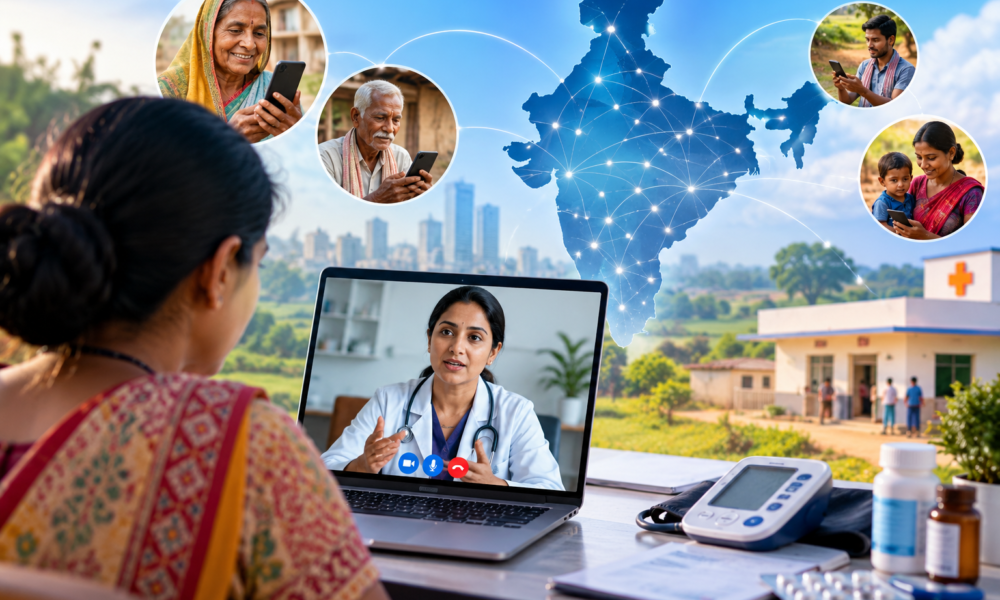
India’s national telemedicine service, eSanjeevani, has crossed 50 crore teleconsultations, marking a major milestone in the country’s digital healthcare programme.
The Ministry of Health and Family Welfare announced the achievement on 6 October 2026. According to the government, the platform crossed the milestone on 15 September, recording more than 500 million consultations across all 36 states and Union Territories.
What is eSanjeevani?
eSanjeevani is a government-supported telemedicine service designed to connect patients with healthcare providers through digital consultations.
Telemedicine allows patients and medical professionals to communicate remotely, potentially reducing the need for travel for consultations that can be handled safely online. The service is particularly relevant for people who face geographical, mobility or logistical barriers to accessing healthcare.
The platform has expanded beyond basic primary-care consultations to include specialist consultations through participating government institutions.
What do the latest figures show?
The Ministry reported that women accounted for 57.14% of eSanjeevani utilisation. Citizens aged 46 and above accounted for 40.15% of consultations, including 16.25% involving senior citizens aged 60 and above.
The government also reported a highest single-day utilisation figure of 6,30,315 consultations. These figures indicate substantial use of the platform, although consultation totals alone cannot establish whether patients received better health outcomes or whether every consultation resolved the underlying medical concern.
How can telemedicine improve access?
Remote consultations can reduce travel costs and waiting time for some patients. People living far from hospitals may be able to consult a healthcare professional without making a long journey for every follow-up.
Telemedicine can also support continuity of care, including follow-up discussions, review of symptoms and guidance on whether further examination is necessary.
The government has also reported the integration of an AI-powered Clinical Decision Support System intended to assist healthcare providers during consultations. Such systems may support clinical workflows, but they do not remove the need for professional judgement.
What are the limitations?
Telemedicine is not suitable for every medical problem. Some conditions require a physical examination, diagnostic testing, imaging or urgent intervention.
Patients experiencing potentially life-threatening symptoms should seek emergency medical care rather than wait for an online appointment. Clinicians must also be able to identify when a remote consultation is insufficient and direct patients to in-person services.
Digital access remains another challenge. Reliable internet, a suitable device, language accessibility and the ability to navigate digital platforms can influence whether patients benefit from telemedicine.
Privacy and confidentiality also matter. Patients should use legitimate services and avoid sharing medical information through unverified platforms.
What comes next for digital healthcare?
Crossing 50 crore consultations demonstrates the scale of eSanjeevani’s use. The next challenge is ensuring that this reach translates into accessible, safe and effective care.
Important measures include patient experience, clinical quality, appropriate referrals, continuity of treatment and access for underserved populations.
Telemedicine is best understood as a complement to the wider healthcare system, not a replacement for hospitals, diagnostic facilities or face-to-face medical care. Its greatest value will come when digital consultations connect patients to the right care at the right time.


No Comment! Be the first one.