








Mental Health Report Raises Concerns About Students
A new mental health report has raised concerns about the emotional well-being of students in India. The Amaha Mental Health Report 2026 found that 71.7% of student respondents seeking care reported...

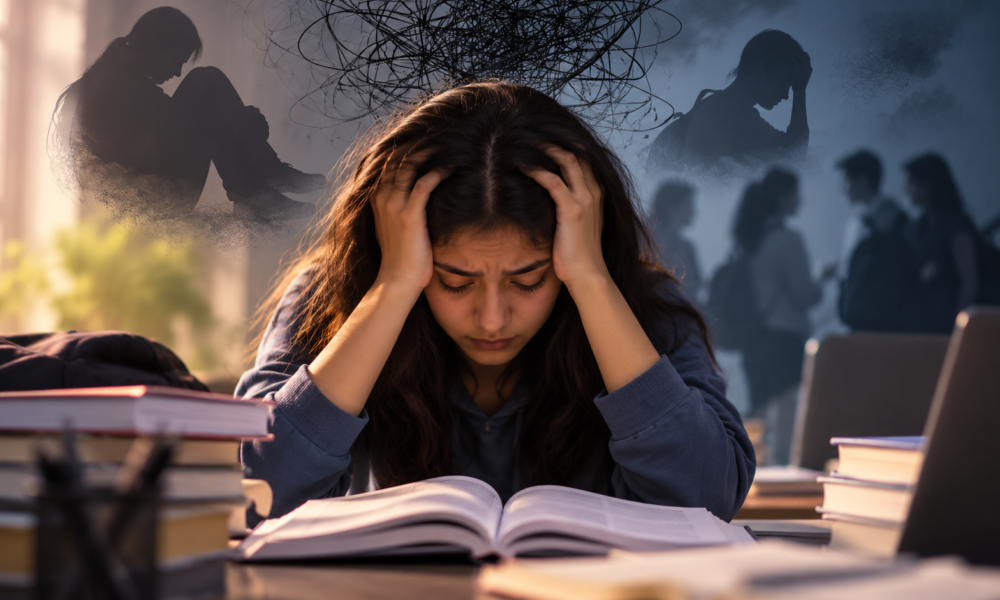
A new mental health report has raised concerns about the emotional well-being of students in India. The Amaha Mental Health Report 2026 found that 71.7% of student respondents seeking care reported thoughts of self-harm.
The report was based on responses from 13,825 people who approached the mental healthcare provider between October 2025 and September 2026.
The findings also showed that many people waited a long time before seeking professional help. More than half of the respondents said they had experienced mental health concerns for over a year before approaching the provider.
What Does the Report Say?
According to the report, 71.7% of student respondents reported thoughts of self-harm. The figure was 53.2% among working professionals and 64.7% among unemployed respondents.
Across all respondents, 56.2% reported having experienced thoughts of self-harm.
These figures need to be understood carefully. The study included people who sought help from Amaha. It does not represent every student or working professional in India.
However, the findings highlight the need to make mental health support easier to access, especially for people experiencing serious emotional distress.
Why Can Students Face Mental Health Problems?
Students may face pressure from examinations, competition, family expectations and worries about their future careers.
Some students fear disappointing their parents if they receive low marks. Others may feel uncertain about jobs, college admissions or financial security.
Bullying, relationship problems, loneliness and difficulties at home can add to these pressures.
Digital life can also affect well-being. Comparing personal achievements with carefully edited images and success stories on social media may make some young people feel that they are falling behind.
Mental health problems rarely have just one cause. Different experiences and personal circumstances can affect each person in different ways.
Why Do People Delay Seeking Help?
The Amaha report found that 53% of respondents had experienced mental health concerns for more than a year before reaching the provider. Only 11.3% approached it within a month.
There can be several reasons for this delay.
Some people may not recognise that they need professional support. Others may worry about being judged by friends, family or colleagues.
The cost of private treatment and the difficulty of finding the right professional may also prevent people from seeking help.
These barriers can make a difficult situation worse. Early support may help people understand their concerns and find suitable treatment.
What Can Schools and Families Do?
Schools and colleges can provide access to trained counsellors and create safe spaces where students can discuss their concerns.
Teachers should take repeated signs of distress seriously. A student who suddenly stops participating, withdraws from friends or struggles with everyday activities may need support rather than criticism.
Parents can help by listening without immediately blaming or comparing their children with others.
Students should also be encouraged to ask for help when they feel overwhelmed. Taking breaks, sleeping regularly, exercising and maintaining contact with trusted people may support well-being, but they cannot replace professional care when serious symptoms occur.
Where Can Students Get Help?
Students experiencing emotional distress can speak with a qualified mental health professional. In India, they can also call the free Tele-MANAS helpline at 14416, which is available 24 hours a day.
If a student talks about self-harm, listen calmly, take the concern seriously and help them reach professional support. If there is immediate danger, seek emergency assistance.
The report is a reminder that academic success should not come at the cost of mental well-being. Students need education, support and opportunities to speak openly about their problems.



No Comment! Be the first one.