







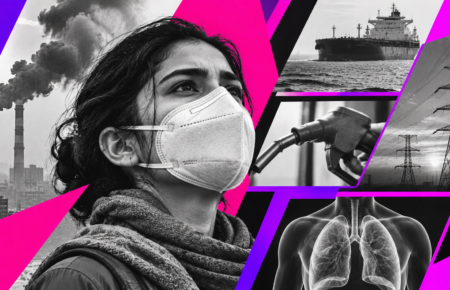
Air Pollution, Energy Supply and Public Health: How Global Crises Affect Everyday Life
Global conflicts and disruptions to energy supplies can have consequences that extend far beyond international politics. Events affecting major shipping routes, oil supplies and energy markets can...


Global conflicts and disruptions to energy supplies can have consequences that extend far beyond international politics.
Events affecting major shipping routes, oil supplies and energy markets can influence transportation costs, household expenses and access to essential services.
The continuing conflict involving Iran and concerns surrounding the Strait of Hormuz have brought energy security back into international focus.
For public health, these developments also raise important questions about air pollution, household energy costs and the availability of essential resources.
- Why the Strait of Hormuz matters
The Strait of Hormuz is a major international maritime route connecting the Persian Gulf with the Gulf of Oman and the Arabian Sea.
A significant proportion of internationally traded oil passes through this narrow waterway.
Any disruption to shipping activity can create uncertainty in global energy markets.
Reuters reported on November 27, 2026, that concerns surrounding the Middle East conflict and maritime activity were influencing oil market sentiment.
These developments demonstrate how geopolitical events can affect economies far beyond the immediate conflict region.
- Energy costs can influence household health
Higher energy prices can increase transportation, electricity and household expenses.
For lower-income households, rising costs may create difficult choices between essential spending categories.
Families may find it harder to manage healthcare expenses, nutritious food purchases and other daily requirements.
Financial pressure can also contribute to stress, sleep problems and emotional discomfort.
- Air pollution remains a major health concern
Air pollution is associated with respiratory and cardiovascular diseases.
Fine particulate matter, particularly PM2.5, can penetrate deep into the lungs and enter the bloodstream.
Exposure is associated with increased risks of heart disease, stroke, respiratory illness and premature mortality.
Combustion of fossil fuels, industrial activities, transportation and other sources contribute to air pollution.
Energy supply disruptions do not automatically mean that air pollution will increase. The actual impact depends on how governments, industries and households respond.
- Energy insecurity and vulnerable populations
Reliable electricity is essential for hospitals, healthcare equipment, medicine storage and emergency services.
Disruptions to energy availability can create additional challenges for healthcare systems.
People who depend on electricity-powered medical equipment may be particularly vulnerable during prolonged outages.
Hospitals and public authorities therefore require emergency energy arrangements and reliable backup systems.
- Household energy choices matter
When energy becomes expensive or unreliable, households may change their cooking and heating practices.
In some circumstances, families may turn to more polluting fuels.
The use of solid fuels and inefficient cooking methods can increase indoor air pollution.
Women, children and older adults may experience greater exposure when they spend more time indoors.
Access to clean cooking energy and reliable electricity is therefore an important public health issue.
- Climate, pollution and energy are interconnected
The transition towards cleaner energy sources can provide long-term public health benefits.
Renewable electricity, energy efficiency and cleaner transportation can reduce dependence on fossil fuels and lower emissions from combustion.
However, energy transitions also require reliable infrastructure, affordability and careful planning.
Public health policies must consider environmental protection alongside economic and energy security.
- What individuals and governments can do
Individuals can monitor local air-quality information, avoid unnecessary exposure during severe pollution episodes and follow public health advisories.
People with asthma or cardiovascular conditions should follow their prescribed treatment plans.
Governments can strengthen air-quality monitoring, expand clean energy infrastructure and protect essential healthcare services during emergencies.
A wider public health perspective
Global crises are not limited to diplomatic negotiations or financial markets.
Their effects can reach households through fuel prices, transportation, food costs, pollution exposure and healthcare infrastructure.
Understanding these connections helps communities recognise why energy security and environmental protection are also public health priorities.




No Comment! Be the first one.