








Does the Moon Affect Your Sleep? What New Research Says
For generations, people have wondered whether the moon affects human behaviour and sleep. The idea has often been dismissed as folklore, but recent research has brought the question back into...

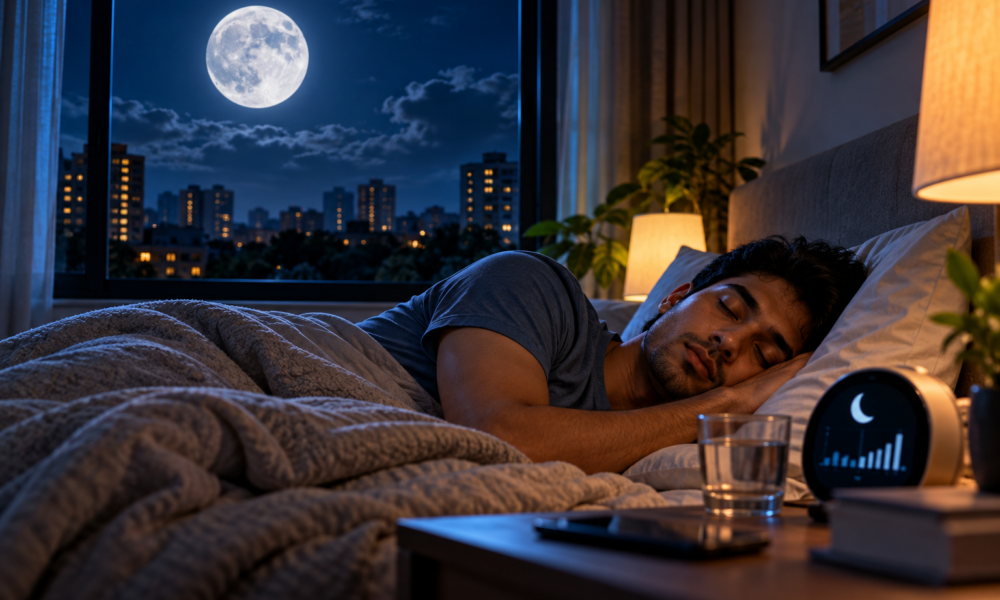
For generations, people have wondered whether the moon affects human behaviour and sleep. The idea has often been dismissed as folklore, but recent research has brought the question back into scientific discussion.
A 2026 study published in Science Advances examined long-term sleep recordings from urban human populations, an Indigenous population in Argentina and captive titi monkeys. The researchers reported that sleep onset was delayed around periods of stronger lunar and solar gravitational variation. The study suggested that lunar gravitational cycles may act as an environmental cue for biological timing.
That does not mean that a full moon automatically causes a person to sleep badly.
Human sleep is influenced by many stronger and more immediate factors, including work schedules, artificial light, stress, caffeine, temperature, noise and bedtime habits. The new research itself notes that social constraints and self-selected light exposure have a major influence on human sleep.
There is also evidence that people’s beliefs about the moon can influence how they interpret their sleep. A 2026 exploratory survey of 1,815 participants found that 36% identified the moon as a cause of poor sleep. The study examined people’s perceptions and associations, rather than establishing that lunar phases directly caused their sleep problems.
This distinction matters. Feeling that you slept badly during a full moon does not necessarily prove that the moon caused it.
The latest research is therefore better understood as an interesting scientific development rather than a reason to change your sleep routine around the lunar calendar.
For better sleep, the fundamentals remain much more practical. Maintaining a consistent sleep and wake time, reducing bright light before bed, keeping the bedroom comfortable and limiting caffeine late in the day can support healthy sleep.
People who regularly struggle to sleep, wake repeatedly during the night or feel excessively tired during the day should discuss the problem with a healthcare professional, particularly if it persists.
The moon-and-sleep debate is a useful reminder that science sometimes revisits questions that appear settled. The 2026 research does not establish that moon phases cause insomnia, but it does provide new evidence that lunar cycles may interact with biological timing in ways researchers are still trying to understand.
For now, your bedtime routine is still more important than checking the lunar calendar.







No Comment! Be the first one.