





India Is Still Waiting for Updated National Anaemia Data: Why the Missing Numbers Matter
India is still waiting for updated national estimates of anaemia after the country’s replacement survey remains under analysis. An RTI response from the Indian Council of Medical...

India is still waiting for updated national estimates of anaemia after the country’s replacement survey remains under analysis.
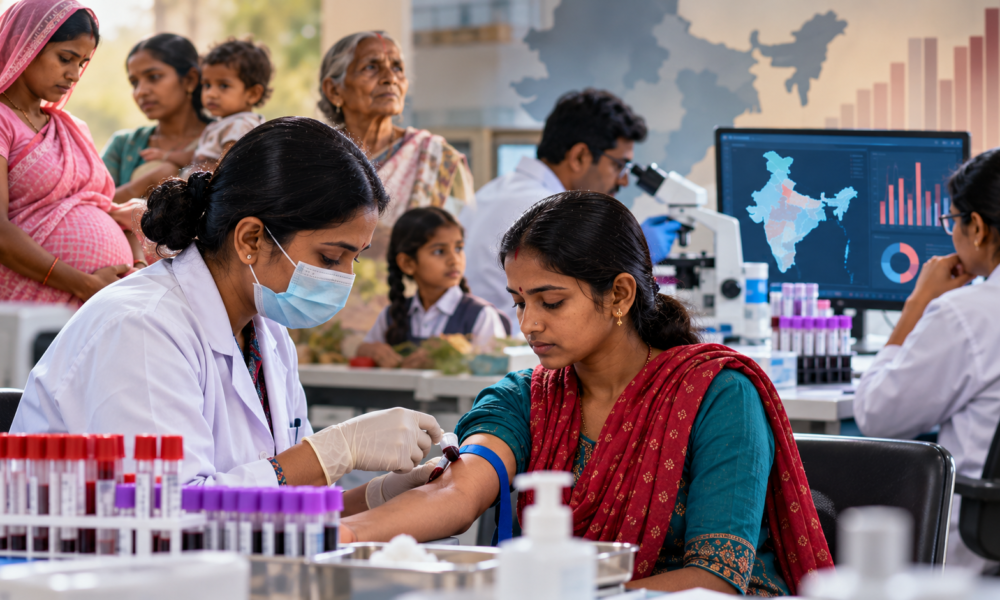
An RTI response from the Indian Council of Medical Research’s National Institute of Nutrition has confirmed that fieldwork for the Diet and Biomarkers Survey of India, or DABS-I, has been completed, but laboratory and statistical analysis is still underway. No timeline for the final release of the findings was provided.
The issue matters because anaemia has historically been an important public-health indicator in India. Previous national surveys provided estimates across different population groups, helping policymakers and health programmes identify nutritional and health gaps.
The latest National Family Health Survey, NFHS-6, released in May 2026, did not include the seven anaemia indicators reported in earlier rounds.
The Health Ministry subsequently said haemoglobin estimation was not included in NFHS-6 because of concerns about the reliability and comparability of estimates generated using capillary blood samples. The government said an ICMR survey would provide updated information instead.
DABS-I is therefore important because it is expected to provide a new evidence base using biological measurements and dietary information.
Anaemia can have multiple causes. Iron deficiency is one important factor, but nutritional deficiencies, infections, chronic diseases, blood loss and other conditions can also contribute.
This makes reliable population-level data particularly useful.
Without updated national estimates, it becomes harder to understand how the burden is changing across different age groups, genders and regions. It can also complicate assessment of whether nutrition and public-health programmes are reaching the people who need them.
The delay also highlights a wider issue in health policy: collecting data is only the first step. Public-health systems need the capacity to process, validate and publish that data in a timely manner.
The DABS-I fieldwork has reportedly been completed, but laboratory analysis of blood and urine biomarkers and statistical analysis remain in progress.
For healthcare planners, updated data can influence nutrition programmes, screening strategies and resource allocation. It can also help researchers identify relationships between diet, biomarkers and health outcomes.
For the public, however, the absence of a current national estimate should not be interpreted as evidence that anaemia has disappeared or dramatically increased. Until the new survey is published, older estimates and partial datasets cannot simply be treated as a replacement for current national measurements.
The situation demonstrates why health data infrastructure is becoming increasingly important.
India is investing heavily in digital health records and disease surveillance, but the quality of healthcare planning ultimately depends on reliable underlying data, transparent methodology and timely publication.
The eventual release of DABS-I results could therefore provide more than a new anaemia number.
It could help establish a fresh baseline for understanding nutrition and micronutrient health in India and provide policymakers with evidence for the next phase of intervention.




No Comment! Be the first one.