








Delhi Expands Newborn Screening to 63 Diseases: 75,000 Babies Already Tested
The Delhi government has expanded its newborn screening programme to cover 63 congenital and genetic disorders, strengthening efforts to identify serious health conditions within the first few days...

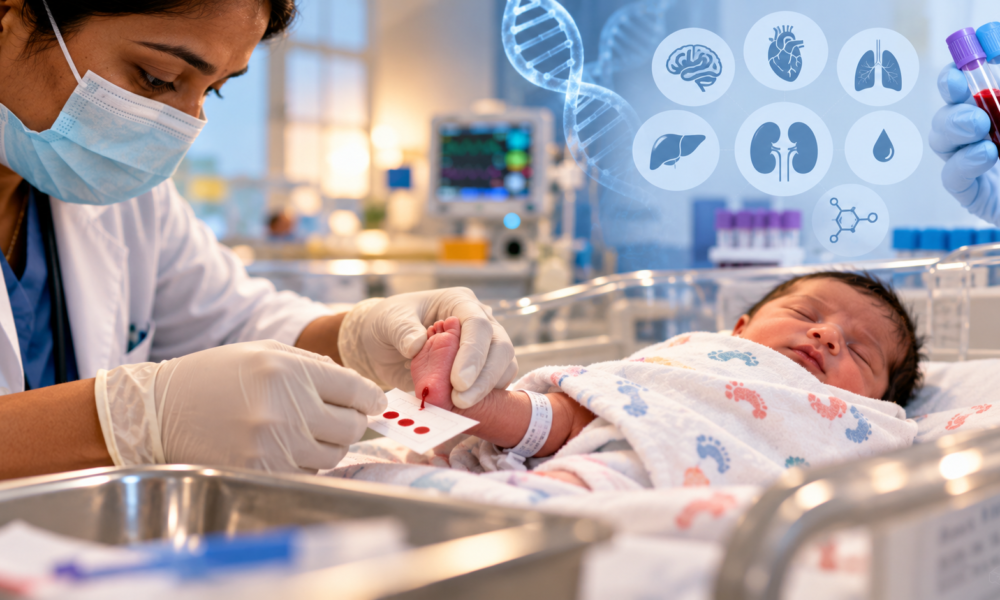
The Delhi government has expanded its newborn screening programme to cover 63 congenital and genetic disorders, strengthening efforts to identify serious health conditions within the first few days of life.
The programme, known as Mission ANMOL, previously covered 56 conditions. The expansion adds seven more diseases to the screening programme.
The government said more than 75,000 newborns have already been screened under the programme, with more than 700 children receiving timely treatment following early detection.
Screening Within 24 to 72 Hours
The programme aims to identify congenital and metabolic disorders shortly after birth.
Screening is carried out within approximately 24 to 72 hours of birth, allowing healthcare professionals to identify conditions that may not immediately produce visible symptoms.
Early diagnosis can be particularly important for disorders where treatment or dietary intervention can reduce the risk of serious complications.
The screening programme uses a small blood sample collected from the newborn.
Delhi Plans to Increase Coverage
The Delhi government currently aims to increase annual screening coverage from around 1.5 lakh newborns to approximately 2.5 lakh.
The expansion is part of a wider effort to strengthen early diagnosis and preventive healthcare.
Officials have said the programme can help identify conditions before symptoms become severe, potentially allowing treatment to begin at an earlier stage.
The government has also launched other healthcare initiatives alongside the screening expansion, including measures aimed at strengthening primary healthcare and improving healthcare administration.
Why Newborn Screening Matters
Some congenital and metabolic disorders can be difficult to identify based solely on a baby’s appearance or early symptoms.
A newborn may initially appear healthy while carrying a condition that can later affect growth, development or organ function.
Screening provides an opportunity to identify certain disorders before they become clinically obvious.
However, screening does not mean that every baby who receives a positive result necessarily has a disease. A screening result can indicate that further diagnostic testing is needed.
Parents should therefore rely on healthcare professionals to interpret results and determine whether additional tests or treatment are required.
Early Detection Can Change Outcomes
The significance of the programme lies in the time between birth and diagnosis.
For some disorders, treatment is more effective when started early. Delays can allow complications to develop before a condition is recognised.
Delhi’s experience, with more than 75,000 newborns screened and over 700 children receiving timely treatment, demonstrates the potential impact of systematic newborn screening.
The expansion from 56 to 63 conditions also means that the screening programme can potentially identify a wider range of health problems.
What Parents Should Know
Parents should ask their hospital or paediatrician whether newborn screening has been completed and what conditions are covered under the local programme.
If a screening test produces an abnormal result, parents should not panic. Screening is designed to identify babies who may require further evaluation.
The next step is usually confirmatory testing and clinical assessment.
Delhi’s expanded Mission ANMOL programme represents a broader shift toward preventive healthcare, where identifying disease early can become as important as treating it after symptoms appear.





No Comment! Be the first one.