






Power Cuts Could Affect Vaccine Safety: How Battery Storage Can Strengthen India’s Cold Chain
Vaccines need carefully controlled temperatures to remain effective. However, maintaining these conditions can become difficult when healthcare facilities experience electricity interruptions. India...

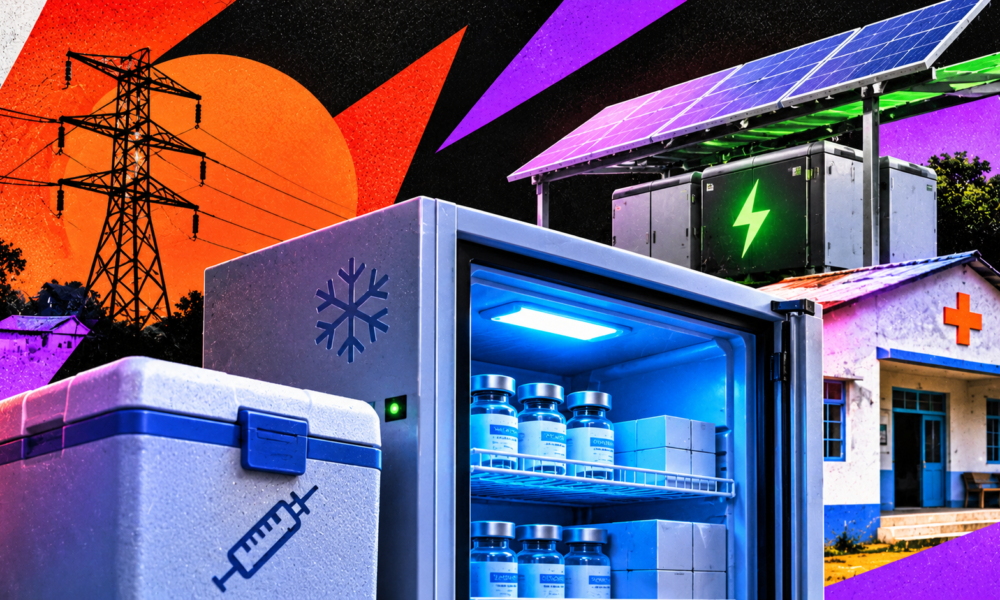
Vaccines need carefully controlled temperatures to remain effective. However, maintaining these conditions can become difficult when healthcare facilities experience electricity interruptions.
India operates a large immunisation programme that depends on a network of vaccine storage facilities, refrigerators, cold rooms and transportation systems.
These facilities form what is known as the vaccine cold chain. It is responsible for keeping vaccines within recommended temperature ranges from the point of storage to the point of administration.
Most routine vaccines require storage at temperatures between 2°C and 8°C, although some vaccines have different storage requirements.
Electricity interruptions can affect refrigeration equipment, particularly in remote areas where healthcare centres depend on unreliable grid connections.
A study published in a peer-reviewed journal examined alternative cold-chain technologies in India. It highlighted the challenges faced by vaccine storage facilities with limited electricity access.
The research reported that 1,332 of approximately 27,000 cold-chain points had less than eight hours of electricity supply within a 24-hour period.
The study also examined equipment designed to maintain vaccine temperatures during power interruptions.
These findings highlight why reliable electricity and appropriate refrigeration systems are important for immunisation services.
PubMed Central (PMC)
How Can Battery Storage Help?
Solar panels can generate electricity during daylight hours. When connected to battery systems, they can store surplus electricity for use at night or during power cuts.
This can help operate vaccine refrigerators and other temperature-sensitive medical equipment.
Solar-powered direct-drive refrigerators and specialised cold-chain equipment can also provide alternatives in locations where grid electricity is unreliable.
However, battery storage is not the only solution. Proper insulation, temperature monitoring, equipment maintenance and trained healthcare workers are equally important.
News in Numbers
- 27,000: Vaccine cold-chain points covered by the research context.
- 1,332: Cold-chain points reported to have less than eight hours of electricity supply in a 24-hour period.
- 2°C–8°C: Common recommended storage range for many routine vaccines.
- 14 hours: Battery backup offered by one Indian-developed solar-compatible vaccine carrier reported in 2025.
The last figure relates to a particular product, not the entire Indian vaccine storage network.
PubMed Central (PMC)+1
Vaccines are sensitive biological products. Exposure to unsuitable temperatures can reduce their effectiveness.
A reliable cold chain helps protect vaccine quality and supports successful immunisation programmes.
For families in remote villages, better refrigeration infrastructure could help improve access to vaccination services closer to home.
One Healthcare Trend
Healthcare refrigeration is moving towards solar-powered and energy-efficient systems.
New technologies include solar direct-drive refrigerators, battery-supported cooling equipment and temperature-monitoring devices.
These developments can help healthcare workers manage vaccine storage in locations with unreliable electricity.
Wider adoption of solar and battery-supported refrigeration could improve the reliability of vaccine storage facilities.
It could also create opportunities for medical refrigeration manufacturers, battery suppliers and healthcare logistics companies.
However, investment must include maintenance, temperature monitoring, staff training and proper vaccine handling procedures.
The bigger picture: Energy storage is not just about keeping electricity available. In healthcare, it can also help protect temperature-sensitive medicines and support immunisation programmes.




No Comment! Be the first one.