







Why Air Quality Monitoring Is Becoming Essential for Urban Healthcare
As air pollution becomes an increasingly important public health concern in Indian cities, monitoring air quality is emerging as a critical part of urban healthcare. From tracking harmful pollutants...

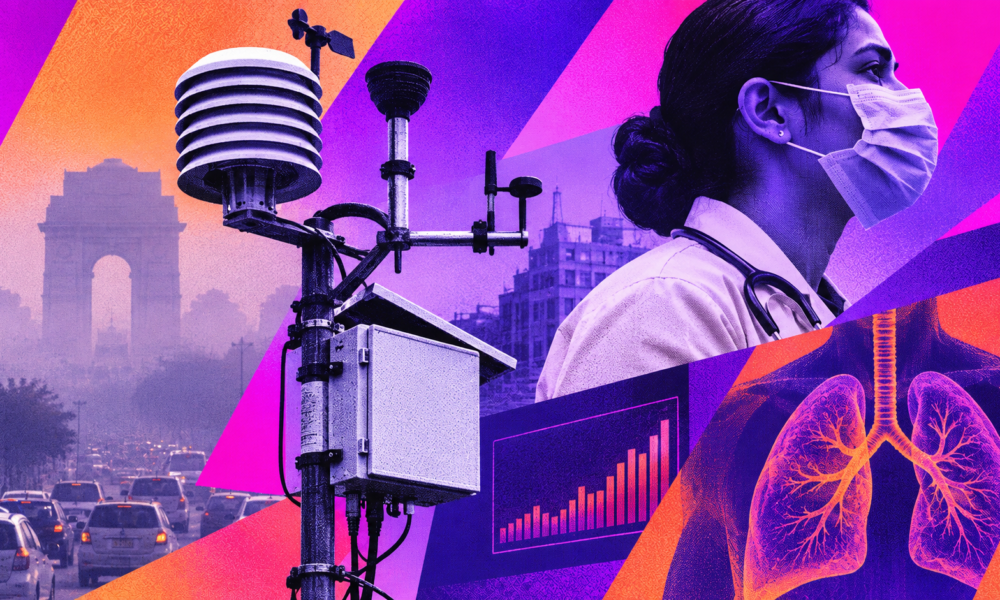
As air pollution becomes an increasingly important public health concern in Indian cities, monitoring air quality is emerging as a critical part of urban healthcare. From tracking harmful pollutants such as PM2.5 and PM10 to identifying pollution-related health risks, reliable air quality data can help healthcare professionals, policymakers and communities make better-informed decisions.
Air pollution is no longer just an environmental issue. It is increasingly recognised as a major public health challenge, particularly in rapidly growing urban centres where traffic congestion, construction activities, industrial emissions and changing weather conditions contribute to deteriorating air quality.
For millions of people living in Indian cities, exposure to polluted air has become a recurring concern. Its effects extend beyond coughing, throat irritation and breathing difficulties. Long-term exposure to air pollution is associated with cardiovascular diseases, chronic respiratory conditions and other serious health complications.
In this context, air quality monitoring is becoming an essential component of urban healthcare planning. By measuring pollution levels and identifying harmful pollutants, monitoring systems can help authorities understand environmental health risks, improve public awareness and strengthen preventive healthcare strategies.
What Is Air Quality Monitoring and Why Does It Matter?
Air quality monitoring involves measuring the concentration of pollutants present in the atmosphere using specialised monitoring stations, sensors and analytical systems.
These systems track several pollutants that can affect human health, including:
- PM2.5: Fine particulate matter that can penetrate deep into the lungs and enter the bloodstream.
- PM10: Larger airborne particles that can enter the respiratory tract.
- Nitrogen dioxide (NO2): A pollutant primarily associated with vehicle emissions and fuel combustion.
- Sulphur dioxide (SO2): A gas released through certain industrial activities and fossil fuel combustion.
- Ground-level ozone (O3): A secondary pollutant formed through chemical reactions involving sunlight and other pollutants.
- Carbon monoxide (CO): A harmful gas produced by incomplete combustion of fuels.
In India, the Central Pollution Control Board (CPCB) operates the National Air Quality Monitoring Programme and provides air quality information through monitoring networks and the National Air Quality Index (AQI).
Such measurements help authorities identify pollution hotspots, understand changing pollution patterns and communicate potential health risks to the public.
How Air Quality Monitoring Supports Urban Healthcare
Air quality monitoring can strengthen healthcare planning by providing information about environmental conditions that influence disease risks.
- Early Identification of Pollution-Related Health Risks
Continuous monitoring helps identify periods when pollutant concentrations increase significantly.
During severe pollution episodes, healthcare authorities can communicate preventive advisories, particularly for children, older adults and individuals with asthma, chronic obstructive pulmonary disease (COPD) or cardiovascular conditions.
Early warnings can encourage vulnerable individuals to reduce outdoor exposure and follow medical advice.
- Strengthening Respiratory Healthcare Planning
Poor air quality can aggravate existing respiratory conditions and increase the burden on healthcare facilities.
Monitoring pollution levels can help hospitals and public health departments anticipate periods of increased respiratory complaints.
This information may support decisions involving staffing, emergency preparedness, respiratory treatment facilities and public health communication.
- Understanding Cardiovascular Health Risks
The health effects of air pollution are not restricted to the respiratory system.
Fine particulate matter can contribute to systemic inflammation, oxidative stress and changes in blood vessel function. Long-term exposure is associated with an increased risk of cardiovascular diseases, including heart attacks and strokes.
Air quality monitoring can help researchers and healthcare authorities examine relationships between pollution exposure and cardiovascular health trends.
- Identifying Pollution Hotspots
Urban pollution levels are not uniform across a city.
Areas near highways, industrial zones, construction sites and heavily congested roads may experience different pollution levels from residential neighbourhoods.
Monitoring networks can help identify these hotspots and support targeted interventions, including traffic management, emission control and urban planning.
Why Indian Cities Need Better Air Quality Monitoring
India’s expanding urban population and growing infrastructure requirements have increased the importance of environmental health management.
Cities such as Delhi, Mumbai, Kolkata and Lucknow face different combinations of traffic emissions, industrial pollution, construction dust and seasonal weather conditions.
Air quality monitoring is particularly important because pollution levels can change throughout the day and across seasons.
During winter, temperature inversions and unfavourable atmospheric conditions can contribute to the accumulation of pollutants near ground level in parts of northern India.
However, monitoring challenges remain. Some areas have limited access to continuous monitoring infrastructure, while differences in sensor quality, geographical coverage and data availability can affect how accurately pollution exposure is understood.
Expanding reliable monitoring networks and improving access to air quality information are therefore important priorities for urban public health.
How Air Quality Data Can Help Hospitals and Healthcare Professionals
Air quality information can become more useful when integrated with healthcare data.
Hospitals and public health institutions can examine pollution trends alongside respiratory consultations, emergency visits and seasonal disease patterns. This can help researchers investigate whether periods of elevated pollution coincide with increased healthcare demand.
India has also taken steps towards connecting environmental information with disease surveillance.
The National Centre for Disease Control (NCDC), under the Ministry of Health and Family Welfare, describes initiatives involving air quality information from the CPCB and hospital-based surveillance in cities covered under air pollution programmes.
Such integration can support:
- Hospital preparedness: Anticipating periods when respiratory healthcare demand may increase.
- Public health advisories: Communicating pollution-related risks to vulnerable communities.
- Disease surveillance: Studying associations between environmental exposure and health outcomes.
- Preventive interventions: Identifying areas where pollution-control and health-awareness campaigns may be particularly important.
However, air quality data alone cannot establish that pollution caused a particular patient’s illness. Medical history, occupational exposure, lifestyle and other environmental factors must also be considered.
The Role of AQI in Public Awareness
The Air Quality Index (AQI) converts complex pollution measurements into a simplified scale that helps people understand prevailing air quality conditions.
- In India, the CPCB uses six categories:
- AQI range Category
- 0–50 Good
- 51–100 Satisfactory
- 101–200 Moderate
- 201–300 Poor
- 301–400 Very Poor
- 401–500 Severe
These categories provide a practical reference for communicating potential health risks.
For example, when air quality deteriorates, people with asthma, cardiovascular disease and other underlying conditions can use official advisories to make informed decisions about outdoor activities.
Healthcare professionals can also use AQI information when advising patients who are particularly vulnerable to pollution exposure.
CPCBorganisation
Challenges in Expanding Air Quality Monitoring
Despite improvements in monitoring infrastructure, several challenges remain.
Limited geographical coverage: Monitoring stations may not adequately represent pollution levels across every neighbourhood, particularly in smaller cities and rapidly expanding urban areas.
Infrastructure and maintenance costs: Continuous monitoring stations require specialised equipment, regular calibration, maintenance and trained personnel.
Data interpretation: Pollution measurements need to be translated into meaningful health information that healthcare professionals and the public can understand.
Indoor air pollution: Outdoor monitoring does not capture every exposure. Indoor environments, including homes, offices and healthcare facilities, can also contain harmful pollutants.
Coordination between departments: Effective air pollution management requires cooperation between environmental agencies, healthcare institutions, municipal authorities and urban planners.
Addressing these challenges will require investment in monitoring infrastructure, improved data-sharing systems and stronger institutional coordination.
What Needs to Happen Next?
Air quality monitoring should become an integral part of urban public health planning rather than functioning exclusively as an environmental compliance exercise.
Government agencies can expand monitoring coverage, strengthen pollution forecasting and improve the accessibility of reliable AQI information.
Hospitals and research institutions can explore ways to integrate environmental exposure data with health surveillance while maintaining patient privacy and appropriate scientific safeguards.
Urban planners can use pollution information to identify high-exposure locations and prioritise cleaner transport, better waste management, dust control and improved urban infrastructure.
The National Clean Air Programme (NCAP), implemented by the Ministry of Environment, Forest and Climate Change, provides an important framework for strengthening air pollution management in Indian cities.
Prana
Conclusion
Air quality monitoring is becoming an important part of preventive healthcare in urban environments. By identifying harmful pollutants, tracking exposure patterns and providing timely public information, monitoring systems can help healthcare institutions and government agencies respond more effectively to environmental health risks.
For Indian cities facing recurring air pollution challenges, better monitoring must go hand in hand with stronger healthcare preparedness, reliable disease surveillance and effective pollution-control measures.
Ultimately, improving urban health requires understanding not only the diseases people develop but also the environmental conditions that influence their well-being.





No Comment! Be the first one.