








India Proposes Red Warning Labels for High-Sugar, High-Salt Packaged Foods
India’s food safety regulator has proposed a new front-of-pack warning label system for packaged foods and beverages that are high in sugar, salt or saturated fat. The Food Safety and Standards...

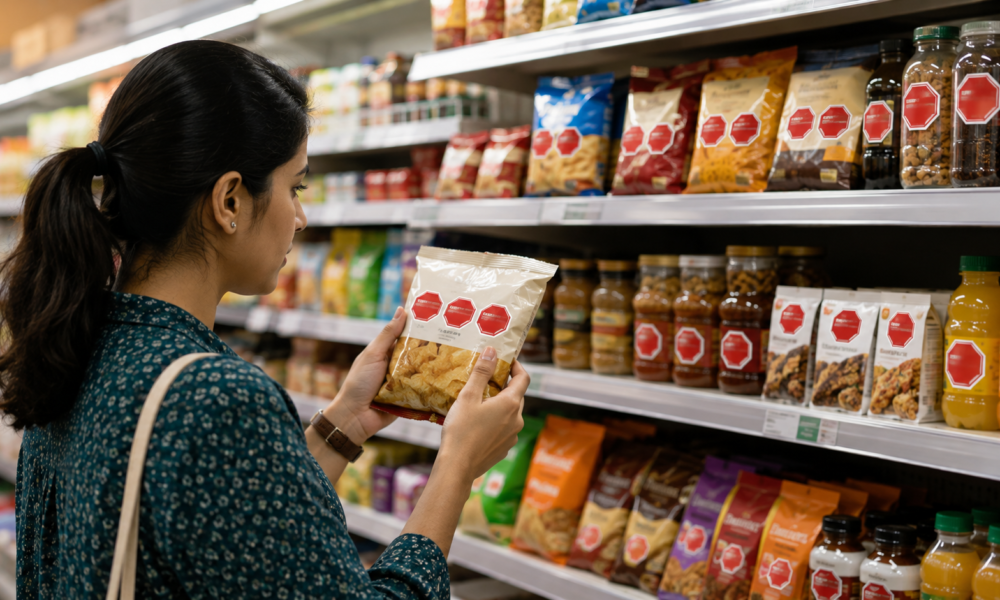
India’s food safety regulator has proposed a new front-of-pack warning label system for packaged foods and beverages that are high in sugar, salt or saturated fat. The Food Safety and Standards Authority of India (FSSAI) has proposed using red hexagonal symbols to help consumers identify products containing high levels of these nutrients more easily.
The proposal was disclosed in a filing submitted to the Supreme Court on 28 August, following growing pressure from health activists and the court over the country’s long-delayed approach to warning labels on packaged foods. The proposed system would mark products with declarations such as “HIGH SUGAR”, “HIGH SALT”, “HIGH FAT” or “HIGHLY SWEETENED BEVERAGE”.
At present, food manufacturers in India are required to provide ingredient and nutritional information on packaging, but consumers generally have to read the back of a packet to understand its nutritional composition. A prominent warning symbol on the front would make this information easier to notice while shoppers are making purchasing decisions.
FSSAI said the proposed system is intended to help consumers make more informed food choices, particularly children and other vulnerable groups. The proposal comes amid increasing concern about obesity and diet-related health problems in India. A recent study cited in the debate estimates that around 450 million Indians could be overweight or obese by 2050.
Under the proposed mechanism, a red warning would apply when a packaged product is high in at least two of the specified nutrients, including saturated fat, sugar and salt. The regulator has also proposed phased implementation, giving food manufacturers time to make changes to their packaging. Single-ingredient food products would be exempt under the proposal.
The issue has been under discussion for several years. Health activists have argued that consumers need clearer information about the nutritional risks associated with packaged foods, while sections of the food industry have questioned whether warning labels would significantly change eating habits.
The latest proposal follows renewed intervention by the Supreme Court. The court had urged the government to act on front-of-pack warning labels, amid concerns about the growing burden of obesity and other health problems linked to unhealthy diets. The latest filing represents a change in the regulator’s position after earlier efforts to introduce stronger warning labels faced resistance.
Food companies could face significant changes if the proposal is implemented. Packaging designs would have to accommodate prominent warning symbols, while manufacturers would need to assess the nutritional composition of their products against the new criteria.
For consumers, the proposed labels could make a difference at the point of purchase. Instead of relying only on detailed nutrition tables, shoppers could potentially identify products high in certain nutrients through a simple visual warning.
However, the proposal is not yet the same as a final nationwide labelling rule. Further regulatory steps will be required before the system becomes mandatory. The exact thresholds, implementation schedule and final design of the labels will be important for both consumers and food manufacturers.
The development puts India closer to international efforts to make nutritional risks more visible on packaged food. It also places greater attention on how food labelling can support healthier choices as the country deals with rising concerns around obesity and diet-related disease.







No Comment! Be the first one.