








Ration Card and Nutrition: How Subsidised Food Supports Food Security and Family Health in India
A ration card is often viewed primarily as a document used to access subsidised foodgrains. But from a public-health perspective, food distribution is closely connected with nutrition and household...

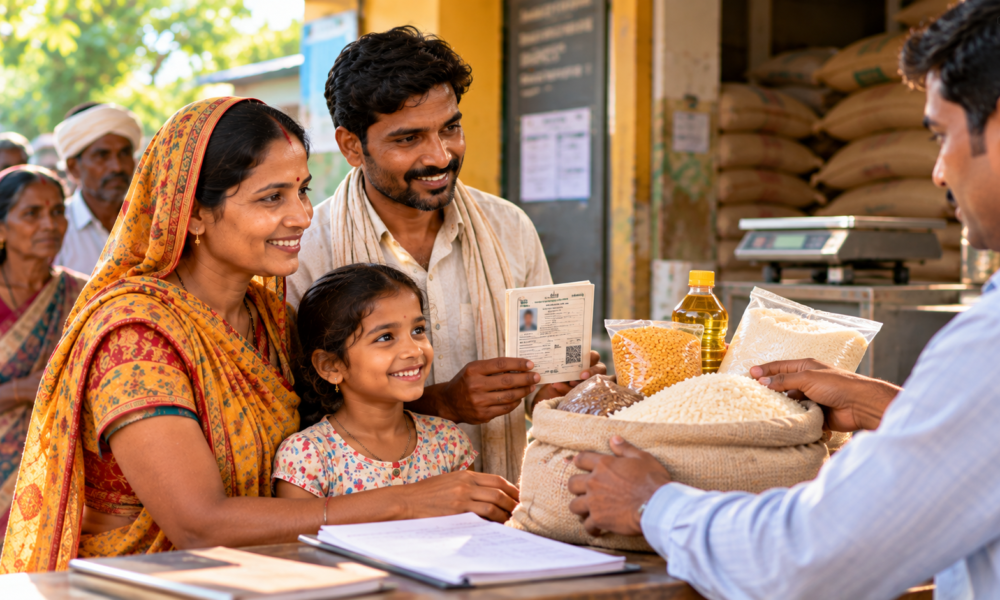
A ration card is often viewed primarily as a document used to access subsidised foodgrains. But from a public-health perspective, food distribution is closely connected with nutrition and household food security.
Under India’s National Food Security Act, eligible households receive subsidised foodgrains through the public distribution system. The Act provides coverage of up to 75% of the rural population and 50% of the urban population. Under the entitlement structure, Antyodaya Anna Yojana households can receive 35 kg of foodgrains per family per month, while priority households are entitled to 5 kg per person per month.
This matters because the ability to consistently obtain staple foods can influence how households manage their food budgets. When a portion of basic food requirements is supported through the public distribution system, families may have more resources available for other necessities.
The National Food Security Act also contains nutritional provisions for vulnerable groups. Pregnant women, lactating mothers and children between six months and 14 years are entitled to nutritional support through programmes including ICDS and PM-POSHAN, subject to the applicable provisions.
Another important development is the One Nation One Ration Card system. The programme allows eligible NFSA beneficiaries to access their entitled foodgrains from electronic point-of-sale-enabled fair-price shops across the country, supporting portability for people who move for work. The government says the system has made food-security entitlements portable for around 80 crore NFSA beneficiaries.
Portability can be particularly relevant for migrant workers. A worker who moves from one state to another does not necessarily need to depend on the ration shop associated with the original place of residence to access their entitled foodgrains.
However, food security is broader than simply receiving cereals. A healthy diet requires adequate protein, vegetables, fruits, healthy fats and micronutrients. Subsidised foodgrains can support household food security, but they are only one component of a nutritionally balanced diet.
This distinction is important when discussing ration cards and health. Access to subsidised food can help protect household food availability, but it should not be presented as a complete solution to malnutrition.
The public distribution system therefore sits at an important intersection of social policy and public health. Its impact extends beyond the ration shop because reliable access to basic food can influence household spending, dietary choices and vulnerability during periods of financial stress.
For families relying on the system, keeping documentation and eligibility information updated can also be important for uninterrupted access to benefits.






No Comment! Be the first one.