






World Hepatitis Day 2026: Viral Hepatitis – The Silent Threat We Can Prevent!
Imagine being in good health while your liver is silently being damaged without any noticeable symptoms. By the time jaundice, abdominal swelling or other signs appear, significant and often...

Imagine being in good health while your liver is silently being damaged without any noticeable symptoms. By the time jaundice, abdominal swelling or other signs appear, significant and often irreversible liver damage may already have occurred. This is the reality for millions of people living with viral hepatitis.
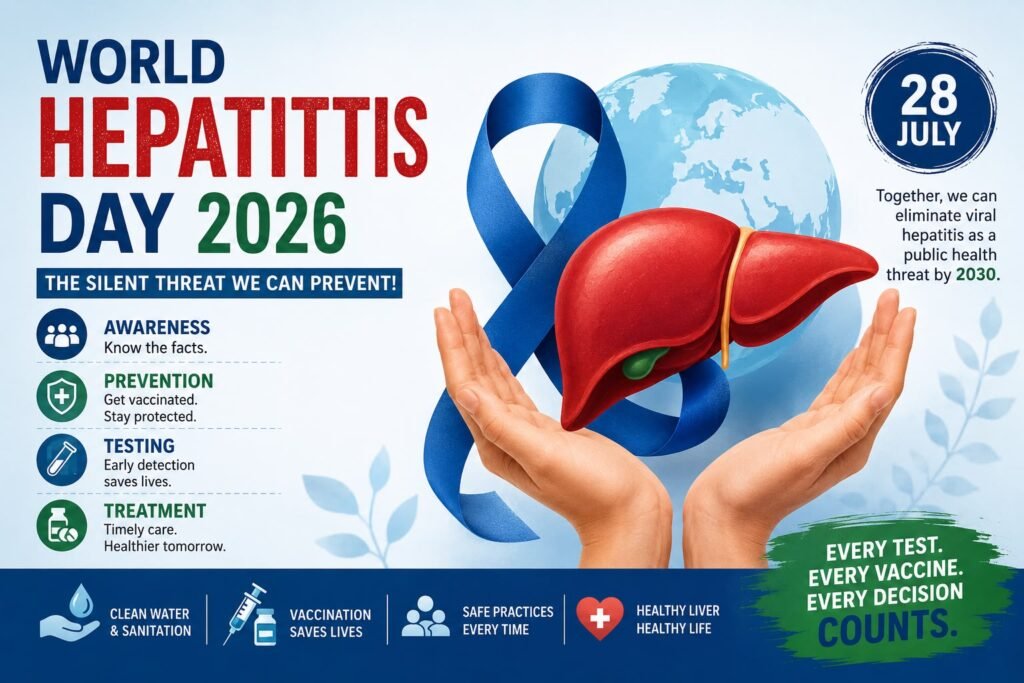
Observed every year on 28th July, World Hepatitis Day 2026 aims to raise awareness about viral hepatitis, promote early screening, encourage hepatitis B vaccination and strengthen efforts toward eliminating hepatitis as a public health threat.
Global and Indian Burden of Viral Hepatitis
Viral hepatitis is one of the world’s leading infectious causes of death. Hepatitis B virus (HBV) and Hepatitis C virus (HCV) together account for more than 95% of all viral hepatitis-related deaths. According to the WHO Global Hepatitis Report 2026, 240 million people were living with chronic hepatitis B infection globally in 2024, representing 2.9% of the world’s population. The report also estimated that viral hepatitis (HBV & HCV) caused approximately 1.34 million deaths in 2024. India bears one of the highest burdens of viral hepatitis globally and is among the ten countries that together account for 69% of the global burden of HBV related deaths. An estimated 35-40 million people in India are living with chronic hepatitis B infection, making awareness, screening and vaccination more important than ever.
Why is Awareness about Hepatitis still Low?
Despite its enormous burden, viral hepatitis continues to receive far less public attention than many other infectious diseases. Unlike other communicable diseases like tuberculosis, which often present with noticeable signs and symptoms, hepatitis can remain silent for years. Many people wrongly believe that liver disease occurs only because of excessive alcohol consumption. They are unaware that viral hepatitis can also damage liver and may eventually lead to cirrhosis, liver failure and liver cancer. Disease. Fear, stigma, misconceptions and lack of awareness about screening test and treatment, also discourage people from getting tested.
How does Hepatitis Spread?
There are Five major types of hepatitis viruses – A, B, C, D and E. Each spreads differently.
Hepatitis A and E are primarily spread through contaminated food or water, where sanitation and hygiene are inadequate.
Hepatitis B and C spread through contact with infected blood and other body fluids.
Transmission can occur through:
- Unsafe injections
- Transfusions of unscreened blood.
- Sharing needles and syringes.
- Unsterile dental or medical instruments.
- Tattooing or body piercing with contaminated equipment
- Sharing razors and other personal items contaminated with blood.
- Unprotected sexual contact
- Transmission from an infected mother to her baby during childbirth.
It is equally important to dispel common myths. Hepatitis B and C do not spread through hugging, shaking hands, sharing food or casual social contact.
Long term Complications of Hepatitis
Not everyone infected with hepatitis B or C develops severe liver disease. Some individuals remain inactive carriers throughout life, while others develop chronic infection that gradually damages the liver. Over time, chronic hepatitis can lead to liver fibrosis, cirrhosis, liver failure and hepatocellular carcinoma (liver cancer) if left untreated.
Hepatitis Prevention and Vaccination
Hepatitis is largely preventable and for many forms are effectively treatable.
Hepatitis A and E
Prevention begins with access to: to safe drinking water, better sanitation, hand hygiene and safe food handling. These measures not only reduce hepatitis transmission but also prevent several other communicable diseases.
Hepatitis B
Vaccination is the most effective way to prevent hepatitis B infection.
In India, hepatitis B vaccination is included in the National Immunization Schedule (NIS).
Infants receive:
- Birth dose within 24 hours of birth
- Three additional doses at 6th, 10th and 14th weeks as part of the pentavalent vaccine.
Vaccination is equally crucial for adults too, especially the high-risk groups. It includes healthcare professionals (doctors, nurses, surgeons, lab personnel), bio-medical waste handlers, household contacts of infected person, people receiving frequent blood transfusions, patients on haemodialysis, people living with HIV, individuals with multiple sex partners and anyone else who might have exposure to blood and body fluids.
Unvaccinated adults should receive three doses at 0,1 and 6 months.
Hepatitis C
Currently, there is no vaccine available against hepatitis C. But the recent advances in direct acting antiviral (DAA) therapy can cure more than 95% of infections when diagnosed and treated on time.
Why Screening is Essential
Because viral hepatitis often remains silent for years, many infected individuals are unaware of their condition. Anyone who has ever received a blood transfusion, undergone surgery or dental procedures, had a tattoo or body piercing, shared needles or syringes or has any other known risk factor should consider getting tested.
India’s healthcare system has well-defined safety protocols including mandatory screening of donated blood, use of sterile medical equipment, infection prevention practices and screening of pregnant women during antenatal care visits. However, these measures are effective only when consistently followed.
Unsafe injection practices and reuse of unsterile needles or instruments continue to occur in some unregulated or resource limited settings, highlighting the importance of strict adherence to safe healthcare practices.
Government initiative: National Viral Hepatitis Control Programme
GOI has strengthened hepatitis prevention and control through the National Viral Hepatitis Control Programme (NVHCP), which focuses on awareness, free screening, diagnosis, treatment, safe blood transfusion practices, infection prevention and universal hepatitis B immunization to move toward the goal of eliminating viral hepatitis as a public health threat by 2030.
World Hepatitis Day reminds us that Hepatitis may be silent, but our response should never be. Through greater awareness, timely hepatitis screening, universal hepatitis B vaccination, safe healthcare practices and access to effective treatment, we can prevent countless deaths and protect future generations.
Every test, every vaccine and every informed decision brings us one step closer to eliminating viral hepatitis as a public health threat.








No Comment! Be the first one.