








Why India’s Healthcare System Needs Better Interoperability Between Hospitals and Clinics
A patient can visit several healthcare providers during a single episode of illness. A general physician may order tests, a diagnostic laboratory may produce reports, a specialist may prescribe...

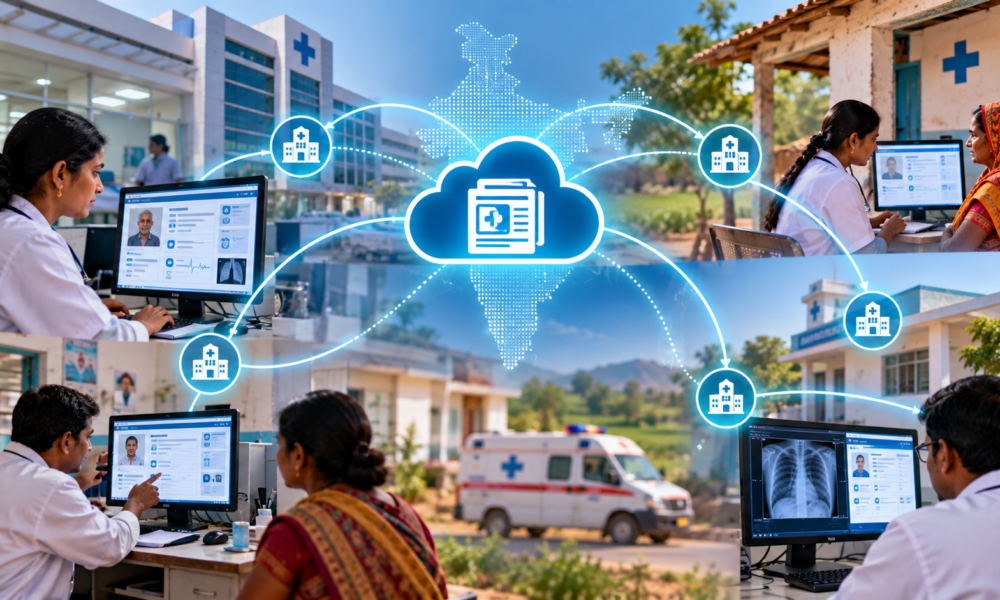
A patient can visit several healthcare providers during a single episode of illness. A general physician may order tests, a diagnostic laboratory may produce reports, a specialist may prescribe treatment, and a hospital may later handle admission.
The problem is that these organisations have not always been able to exchange information easily.
This is where interoperability becomes important.
In simple terms, interoperability means different healthcare systems being able to exchange and understand information in a useful and secure way.
Without interoperability, a patient’s medical history can become fragmented.
One hospital may have a blood-test report. Another may have an imaging report. A clinic may have the prescription. The patient may have a paper discharge summary at home.
Doctors then have to reconstruct the medical history manually.
This can create delays and unnecessary repetition.
India’s Ayushman Bharat Digital Mission is attempting to address this problem by creating common digital infrastructure and registries for healthcare facilities, professionals and citizens.
ABHA provides a health-specific digital identity around which health records can be linked, while the ABDM architecture includes mechanisms for consent-based exchange of information.
The potential benefits are significant.
Suppose a patient moves from one city to another. Instead of starting from zero, an authorised healthcare provider could potentially access relevant previous records when the patient gives the required consent.
This could improve continuity of care.
Interoperability can also help reduce duplicate testing.
A patient who recently completed a diagnostic test may otherwise undergo the same test again because the new doctor cannot access the earlier report.
Not every repeated test is unnecessary, of course. Doctors may need updated information. But better information exchange can reduce avoidable duplication.
Hospitals can also benefit.
Interoperable systems can make referrals easier by transferring relevant information between facilities.
For example, a primary healthcare centre could refer a patient to a district hospital with relevant digital information attached to the referral.
The system could eventually connect hospitals, clinics, diagnostic laboratories, pharmacies and insurers through a broader digital ecosystem.
But interoperability is not simply a technology problem.
Healthcare organisations need compatible software and agreed standards. Staff need training. Patients need to understand consent. Systems need strong security and privacy safeguards.
Trust is critical.
Patients must know who can access their information and for what purpose.
India has made significant progress. The government reported that more than 100 crore health records had been linked with ABHA by May 2026, demonstrating the scale at which digital health infrastructure is developing.
The next challenge is ensuring that these records are genuinely useful across the healthcare system.
A large number of digital records does not automatically create a connected healthcare system.
The records need to be structured, accessible through appropriate systems, exchanged securely and understood by different providers.
If India can achieve that, interoperability could quietly transform healthcare.
The biggest change may not be visible to patients.
It may simply mean that when they move from one doctor to another, their healthcare story does not have to start again.






No Comment! Be the first one.