







ABHA vs Aadhaar: What Is the Difference Between Your Health ID and Aadhaar?
Aadhaar and ABHA are often mentioned together when discussing India’s digital healthcare transformation. But they serve different purposes. Understanding that difference is important because...

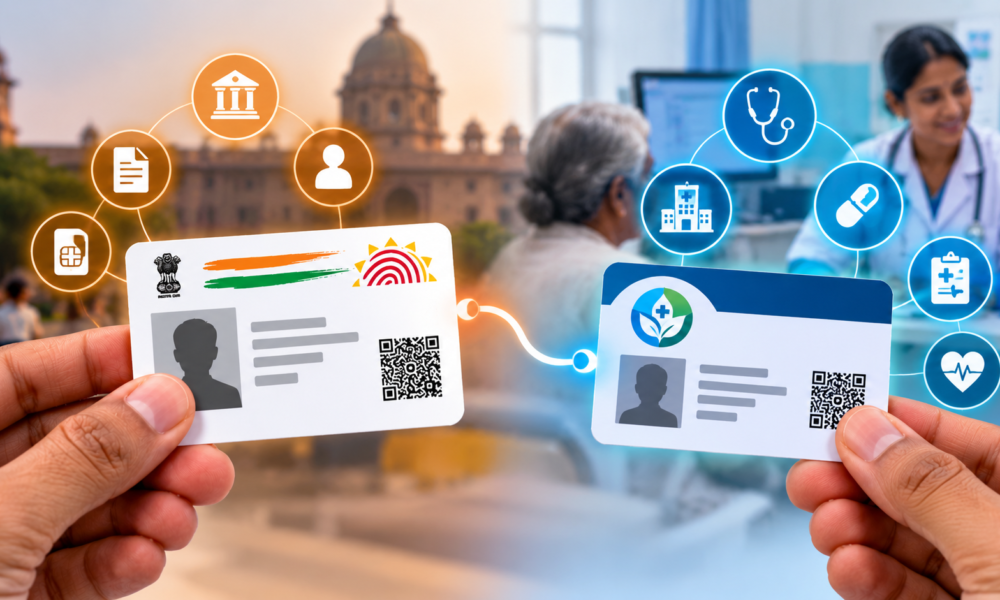
Aadhaar and ABHA are often mentioned together when discussing India’s digital healthcare transformation. But they serve different purposes.
Understanding that difference is important because Aadhaar is primarily an identity system, while ABHA has been created specifically for India’s digital health ecosystem.
Aadhaar is a 12-digit identity number issued by the Unique Identification Authority of India. It allows identity verification through demographic information, OTP-based authentication and, where applicable, biometric authentication.
ABHA, or Ayushman Bharat Health Account, is a digital health identity created under the Ayushman Bharat Digital Mission.
ABHA is designed to help citizens link and manage their health records across participating healthcare facilities and digital health applications.
In simple terms, Aadhaar answers the question: “Who are you?”
ABHA is designed to help answer another question: “How can your health records be connected to you within the digital healthcare ecosystem?”
The distinction matters because medical information requires additional safeguards.
Aadhaar authentication does not automatically mean that a person’s medical history becomes accessible. Healthcare records are handled through separate systems and frameworks designed around health-data management and consent.
Under ABDM, digital health records can be linked with an individual’s ABHA and shared with healthcare providers through consent-based mechanisms.
This can become particularly useful when patients move between healthcare providers.
Imagine a patient who has a blood test at one laboratory, visits a specialist at another hospital and later needs treatment in a different city. Traditionally, the patient may have to carry printed reports or repeatedly explain their medical history.
A connected digital health ecosystem could make this process easier by allowing relevant records to be accessed and shared electronically when the patient provides appropriate consent.
The distinction between Aadhaar and ABHA also matters for privacy.
A person’s Aadhaar identity and medical history should not be treated as the same database or the same function. Digital healthcare needs specialised systems that protect health information and give individuals control over how it is shared.
The rapid expansion of ABDM shows that this infrastructure is already moving beyond the experimental stage. Government data reported more than 94.87 crore ABHA IDs by July 2026, while more than 100 crore health records had been linked with ABHA by May 2026.
The numbers demonstrate the scale of India’s digital health transition.
But creating an ABHA alone does not automatically digitise someone’s entire medical history. Healthcare providers and digital systems also need to generate, store and link records through ABDM-enabled infrastructure.
That is why ABHA should be understood as one component of a larger ecosystem.
Aadhaar provides identity infrastructure. ABHA provides a health-specific digital identity. ABDM connects these health-related systems with healthcare providers, facilities and information-exchange mechanisms.
Together, these technologies could make healthcare more portable, organised and convenient.
But the success of the system will ultimately depend on privacy, interoperability, adoption and patient awareness.






No Comment! Be the first one.