








Why India Needs Better Digital Health Infrastructure for Rural Healthcare
India’s rural healthcare challenge is not only about the number of hospitals or doctors. It is also about distance, information, connectivity and the ability to connect patients with the right...

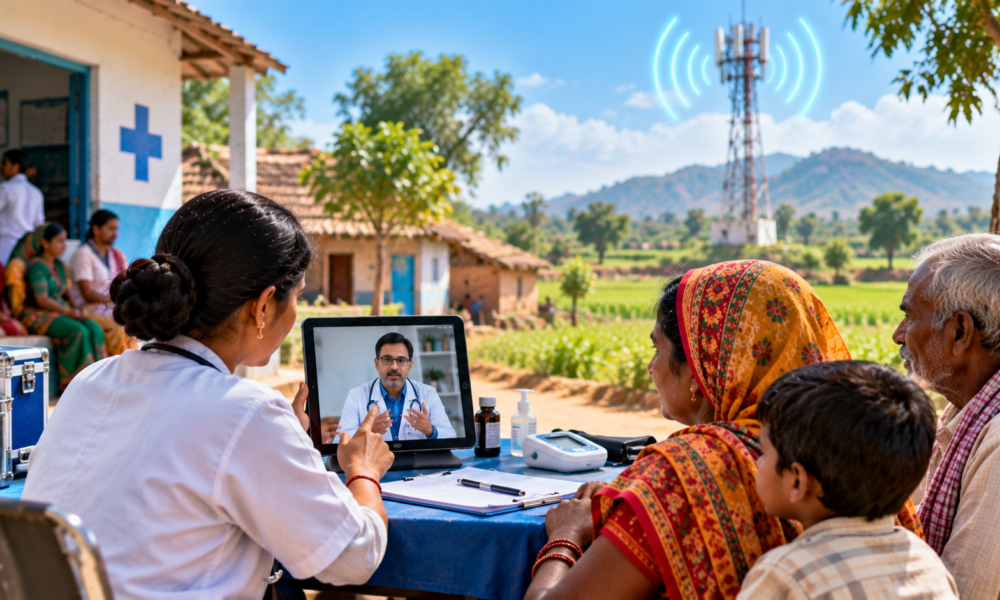
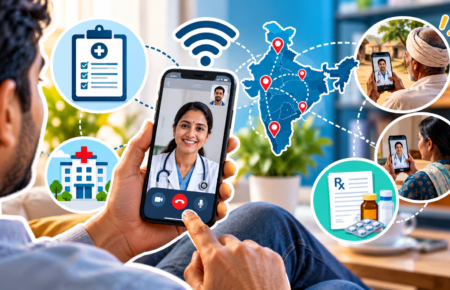
India’s rural healthcare challenge is not only about the number of hospitals or doctors. It is also about distance, information, connectivity and the ability to connect patients with the right healthcare services.
This is where digital health infrastructure could play an increasingly important role.
A patient in a remote village may have access to a primary health centre but not to a specialist. Travelling to a district hospital or major city can require significant time and money.
Digital infrastructure cannot replace every physical healthcare facility, but it can help connect local healthcare workers and patients with services that are otherwise geographically distant.
Telemedicine is one example.
India’s eSanjeevani platform has been developed as a national telemedicine service, with both provider-to-provider and patient-to-provider models. The government has reported hundreds of millions of consultations through the platform.
For rural healthcare, the provider-to-provider model can be particularly useful. A local health worker or primary-care facility can connect with doctors or specialists located elsewhere.
But telemedicine itself requires infrastructure.
Rural health facilities need reliable internet connections, computers or compatible devices, electricity and trained personnel. Patients also need access to devices and connectivity when consultations are conducted directly.
This is why digital health infrastructure should not be treated as an app-development exercise.
It is an infrastructure problem involving telecom networks, electricity, hardware, software, health facilities and trained staff.
Digital health records are another important layer.
If a patient’s relevant health information can be stored and exchanged through ABDM-enabled systems, doctors may have better access to previous medical information when treating patients remotely or when they are referred to another facility.
This could be especially valuable in rural areas where patients may otherwise carry paper reports from one facility to another.
However, digital inclusion remains a major challenge.
Poor connectivity can make online services unreliable. Some communities may have limited digital literacy. Health workers may already be managing large workloads and cannot be expected to operate complicated technology without training.
Infrastructure therefore has to be designed around the realities of rural healthcare.
Simple interfaces, assisted access, offline capabilities and reliable local support can matter as much as advanced software.
India’s digital health expansion also needs stronger last-mile connectivity.
A national digital platform is only as useful as the weakest connection between the patient and the healthcare system.
This makes rural broadband, electricity reliability and health-facility digitisation part of healthcare policy.
The goal should not be to replace rural hospitals and primary health centres with technology.
Instead, digital infrastructure should strengthen them.
A primary health centre connected to specialists, digital records and referral networks can potentially provide a more capable service than an isolated facility.
India’s rural healthcare future will therefore require both physical and digital infrastructure.
New hospitals, trained healthcare workers and diagnostic facilities remain essential. But connectivity, digital records and telemedicine can help extend the reach of those resources.



No Comment! Be the first one.