




Telemedicine in India: Can Online Consultations Reduce the Rural-Urban Healthcare Gap?
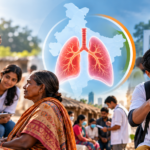
For many patients living outside India’s major cities, accessing a specialist can mean travelling several hours or even an entire day. Telemedicine offers a way to reduce some of that...


For many patients living outside India’s major cities, accessing a specialist can mean travelling several hours or even an entire day.
Telemedicine offers a way to reduce some of that geographical barrier.
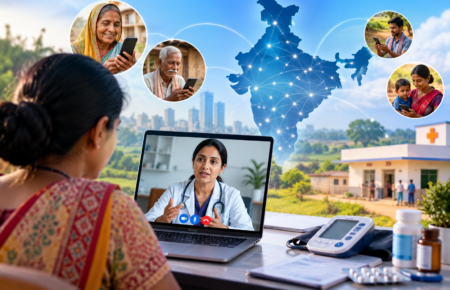
India’s national eSanjeevani platform has become one of the country’s largest public telemedicine initiatives. It supports remote consultations between patients and healthcare professionals and also allows healthcare providers in peripheral facilities to connect with doctors and specialists elsewhere.
The potential benefit is particularly relevant to rural India.
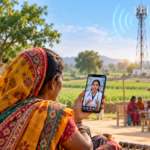
A patient may have access to a primary healthcare centre but not to a dermatologist, cardiologist, psychiatrist or other specialist nearby. Instead of immediately travelling to a large city, some consultations can potentially begin remotely.
This can save time and travel costs.
Government telemedicine guidelines specifically identify reduced travel and associated costs as important benefits for rural patients.
But telemedicine is not a replacement for physical healthcare.
Some conditions require physical examination, diagnostic testing, emergency treatment, surgery or hospital admission. A video consultation cannot substitute for those services.
The most effective model is therefore likely to be a hybrid one.
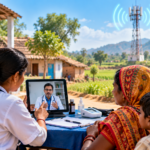
A patient can begin with a local healthcare worker or doctor. If specialist input is required, a teleconsultation can connect the local facility with a specialist elsewhere. If physical treatment is necessary, the patient can then be referred appropriately.
This hub-and-spoke approach can be particularly useful for rural healthcare.
A primary health centre becomes the spoke, while specialists located at district, state or regional facilities act as hubs.
However, the model depends on infrastructure.
Healthcare facilities need reliable internet, electricity, appropriate devices and trained staff. Doctors need systems that allow them to communicate securely and access relevant clinical information.
Patients also need confidence in the process.
Digital health services will be less effective if people do not know when telemedicine is appropriate or cannot use the technology comfortably.
There is also a quality issue.
A teleconsultation should not be treated as simply placing a phone call to a doctor. Proper clinical protocols, patient identification, documentation, privacy and referral systems are required.
India’s experience with eSanjeevani demonstrates that telemedicine can operate at enormous scale. The Ministry of Health and Family Welfare reported that the platform had crossed 330 million consultations by the end of 2024.
The next challenge is moving from scale to deeper integration.
Telemedicine becomes more valuable when it is connected to physical healthcare facilities, diagnostics, prescriptions, referrals and digital health records.
The rural-urban healthcare gap will not disappear through online consultations alone.
But telemedicine can help narrow one important part of that gap: distance.
When combined with stronger primary healthcare, better connectivity and appropriate referral systems, telemedicine could become an important layer of India’s healthcare infrastructure.

No Comment! Be the first one.