




How Mobile Connectivity Is Making Healthcare More Accessible in Rural India
A mobile phone is increasingly becoming more than a communication device in rural India. It can also act as a gateway to healthcare information, appointments, teleconsultations and digital health...

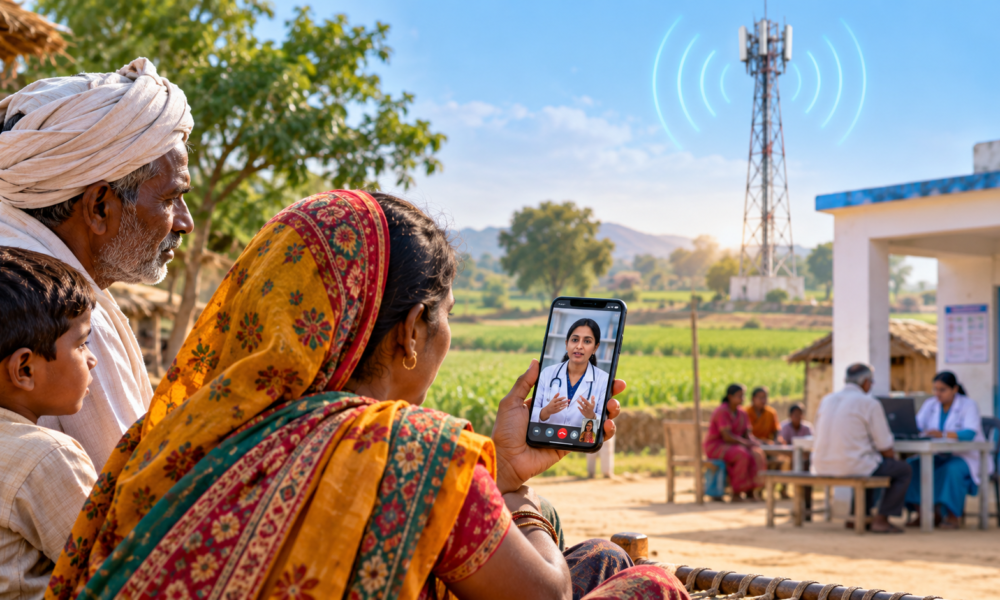
A mobile phone is increasingly becoming more than a communication device in rural India. It can also act as a gateway to healthcare information, appointments, teleconsultations and digital health services.
This transformation depends on one basic requirement: connectivity.
Healthcare is ultimately a physical service, but mobile networks can make parts of that service accessible without requiring patients to travel immediately to a hospital.
Telemedicine is the clearest example.
A patient with access to a suitable device and reliable connectivity may be able to consult a healthcare professional remotely. In some cases, rural healthcare workers can also connect with doctors and specialists through assisted telemedicine models.
This can be valuable in areas where specialist healthcare is geographically concentrated.
Mobile connectivity can also improve communication between patients and healthcare facilities.
Appointment information, follow-up communication and health-related notifications can increasingly be delivered digitally, reducing the need for unnecessary visits.
Digital health records add another layer.
India’s ABDM ecosystem is designed to allow health information to move between participating healthcare providers through interoperable systems and patient consent.
For rural patients, this could reduce dependence on paper documents.
Imagine a patient who receives treatment at a district hospital and later returns to a local primary health centre. If relevant records are available digitally through the appropriate systems, the patient may not have to carry every previous document physically.
However, connectivity alone is not enough.
A mobile network cannot compensate for the absence of doctors, medicines, diagnostic facilities or functioning healthcare centres.
This distinction is important because digital healthcare should strengthen physical healthcare rather than replace it.
The quality of rural connectivity also matters.
A patient may technically have mobile coverage but still experience poor data speeds, network interruptions or insufficient bandwidth for video consultations.
Healthcare applications also need to be designed for low-bandwidth environments.
Digital literacy is another challenge.
Older adults or people unfamiliar with online services may require assistance. Rural healthcare workers can play an important role in helping patients navigate digital systems.
There is also the issue of privacy.
Health information should not be casually shared over insecure channels. Digital healthcare platforms need appropriate safeguards, while users need awareness of how their information is being handled.
The opportunity, however, is substantial.
India’s large mobile user base gives the country a potential platform for extending healthcare services beyond major urban centres.
The next stage of rural healthcare connectivity should therefore focus on integration.
Mobile networks need to connect healthcare facilities. Digital health systems need to connect records. Telemedicine needs to connect patients and specialists.
And physical healthcare infrastructure needs to remain at the centre of the system.
If these pieces work together, mobile connectivity can become an important bridge between rural communities and India’s wider healthcare network.






No Comment! Be the first one.