







Dengue Cases Among BSF Personnel in Gujarat Highlight Need for Mosquito Prevention
Ekta Nagar, Gujarat, October 29, 2026: Dengue infections reported among Border Security Force (BSF) personnel in Gujarat have highlighted the importance of mosquito control and early medical...

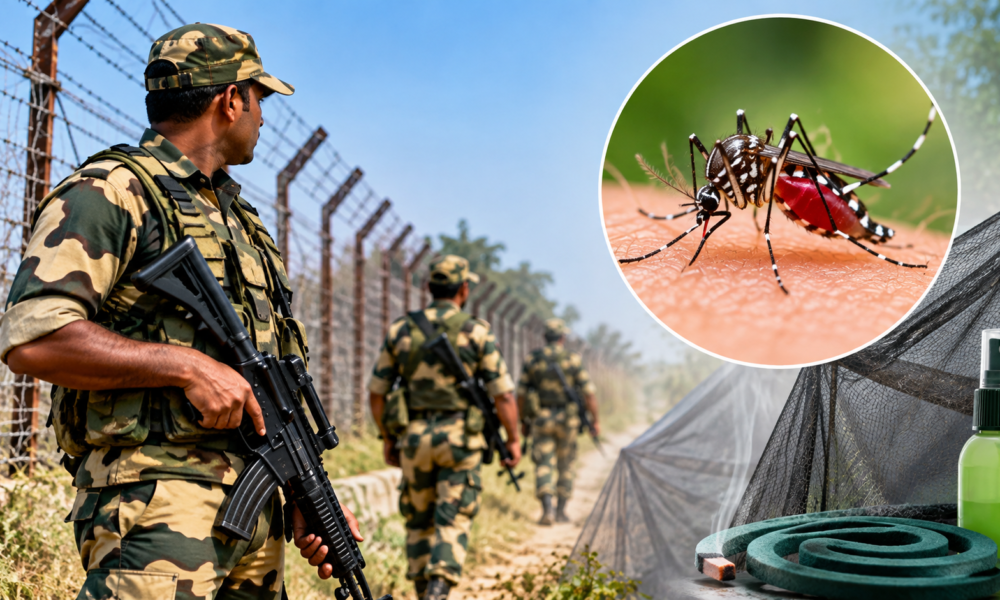
Ekta Nagar, Gujarat, October 29, 2026: Dengue infections reported among Border Security Force (BSF) personnel in Gujarat have highlighted the importance of mosquito control and early medical attention during large public gatherings.
A report published by The Indian Express on October 26 stated that 21 members of a 40-person BSF contingent arriving from Assam for the National Unity Day parade had tested positive for dengue. The annual event is held at Ekta Nagar, near the Statue of Unity, to mark the birth anniversary of Sardar Vallabhbhai Patel.
District health officials reported that affected personnel were receiving treatment and being monitored. Authorities also intensified sanitation and mosquito-control measures around the event.
Officials said the cases did not amount to an epidemic or outbreak in the district at the time of reporting.
What Happened in Ekta Nagar?
According to The Indian Express, members of the BSF contingent began developing fever after arriving in Gujarat. Medical investigations confirmed dengue infections among 21 personnel.
The affected personnel were receiving treatment at the Ekta Nagar Trauma Centre, with medical teams monitoring their condition. Some patients were kept under observation, while two personnel were referred to a hospital in Vadodara for critical care related to dengue.
The district administration also arranged additional medical support for personnel and workers involved in preparations for the celebrations.
The report described measures including medical teams, mobile health services and ambulance support. These arrangements were intended to provide timely assistance to people attending or working at the event.
The reported cases do not, by themselves, establish that dengue transmission has increased across Gujarat or that visitors face a confirmed widespread outbreak.
What Is Dengue?
Dengue is a viral infection transmitted to people through the bites of infected mosquitoes, particularly Aedes mosquitoes. These mosquitoes can breed in containers and other places where water collects.
Common symptoms include fever, headache, pain behind the eyes, muscle and joint pain, nausea and a skin rash. Symptoms can range from mild to severe, and not every infected person experiences the same combination.
Some patients develop warning signs that require urgent medical attention. These may include severe abdominal pain, persistent vomiting, bleeding, unusual drowsiness or restlessness, and difficulty breathing.
Warning signs can appear as the fever begins to subside. People should not assume that a falling temperature always means the illness is improving.
There is no specific antiviral treatment routinely used to cure dengue. Medical care focuses on monitoring symptoms, maintaining appropriate hydration and managing complications when necessary.
How Are Authorities Trying to Reduce the Risk?
The district administration reported that health teams were identifying and removing mosquito-breeding sites. Fogging, chlorination and sanitation activities were also being carried out as part of the preventive response.
These measures are important because removing standing water can reduce places where mosquitoes breed.
However, fogging alone is not enough to prevent dengue. Regular inspection of water containers, drains, coolers and other potential breeding sites remains important.
Public gatherings can make prevention more challenging because many people are present in a limited area. Organisers and local authorities need to coordinate sanitation, health monitoring and access to medical assistance.
The response in Ekta Nagar illustrates why prevention and treatment arrangements are both necessary during large events.
How Can People Protect Themselves From Dengue?
People can reduce mosquito exposure through practical measures at home, at work and while travelling.
They should empty, clean or cover containers that collect water, including buckets, flowerpot trays, coolers and water-storage vessels. Water should not be allowed to accumulate unnecessarily around homes.
Mosquito repellents should be used according to label instructions. Clothing that covers the arms and legs can provide additional protection, while window screens can help keep mosquitoes out of indoor spaces.
People who develop fever after possible mosquito exposure should seek medical advice, especially if symptoms worsen.
They should avoid taking aspirin or ibuprofen for suspected dengue unless specifically advised by a qualified healthcare professional, because these medicines can increase bleeding risk. Paracetamol may be recommended for fever when appropriate, but the correct dose and suitability should be confirmed.
When Should Medical Help Be Sought?
Anyone experiencing severe abdominal pain, persistent vomiting, bleeding, difficulty breathing, confusion or marked weakness should seek urgent medical care.
People with suspected dengue should not rely solely on home remedies or self-diagnosis. A healthcare professional can determine whether testing, monitoring or hospital treatment is needed.
The key takeaway: The reported cases among BSF personnel in Gujarat underline the importance of early medical attention, standing-water removal and coordinated mosquito-control measures. Individual precautions and public-health action both play a role in reducing dengue risk.
Source: The Indian Express, October 26, 2026.
This report is for public information and does not replace medical advice.



No Comment! Be the first one.