







India Plans to Eliminate Mercury-Based Medical Devices by 2030
India is stepping up efforts to replace mercury-containing thermometers and blood pressure monitors with safer alternatives as part of its plan to protect public health and the environment. New...

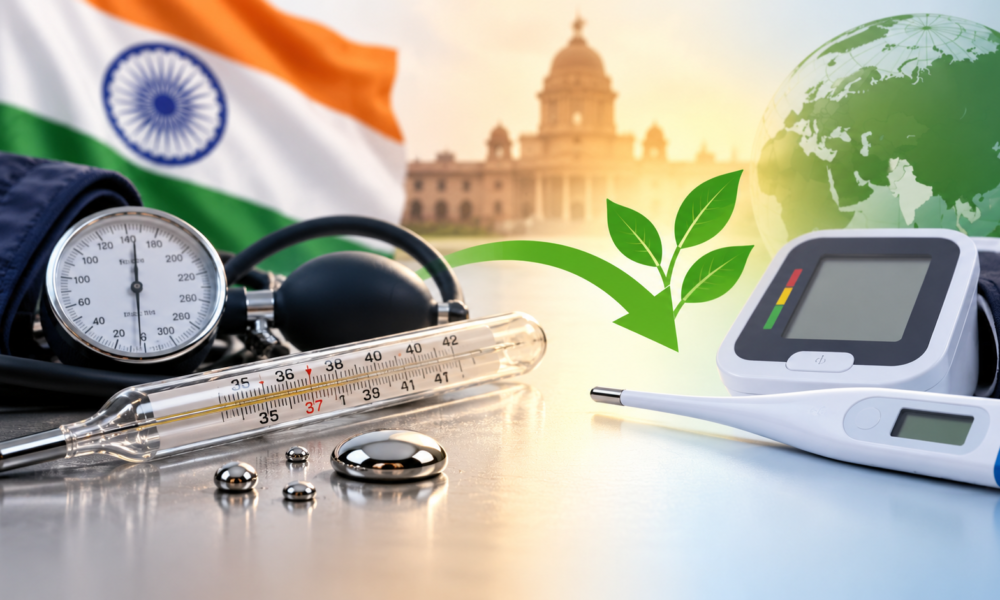
India is stepping up efforts to replace mercury-containing thermometers and blood pressure monitors with safer alternatives as part of its plan to protect public health and the environment.
New Delhi, 22 October 2026: India is accelerating its efforts to eliminate mercury-based medical thermometers and blood pressure monitors from healthcare services by 2030, according to the World Health Organization (WHO). The initiative focuses on replacing old medical equipment, improving the management of mercury waste and ensuring healthcare facilities have access to reliable alternatives.
In its news release dated 22 October 2026, the WHO said India had developed a national strategy and established coordination between different government departments to achieve its mercury-free healthcare target. The plan also includes training healthcare officials and strengthening systems for the safe collection, storage, transportation and disposal of mercury waste.
Several States Have Already Taken Steps
According to the WHO, 14 Indian states have completed inventories and assessments of mercury-based medical devices, while 12 states have issued orders to phase out their use.
Delhi, Punjab, Manipur, Sikkim, Goa, Haryana, Ladakh, Chandigarh and the Andaman and Nicobar Islands have already eliminated the use of mercury-based medical devices in public healthcare services.
The WHO also reported that 30 state-nominated officials received online training on India’s national strategy. The training covered workplace safety and the proper management of mercury waste.
The initiative aims to establish improved systems for separating, collecting, temporarily storing, transporting and safely disposing of mercury waste by late 2027. This will require cooperation between health and environment departments.
Why Is Mercury Dangerous?
Mercury is a toxic substance that can harm human health and damage the environment. Exposure to mercury vapour can affect the nervous system, lungs and kidneys. It can also cause problems involving the digestive and immune systems.
Mercury-containing medical devices can release the substance if they break or are disposed of incorrectly. Once released, mercury can contaminate nearby surfaces, water and the surrounding environment.
According to the WHO, children and unborn babies are particularly vulnerable to the harmful effects of mercury exposure. Reducing the use of these devices and improving waste management can help protect patients, healthcare workers and communities.
Digital Alternatives and Better Waste Management
Replacing mercury-based equipment is an important part of the initiative. Healthcare facilities will need access to reliable alternatives, including suitable digital thermometers and non-mercury blood pressure monitors.
However, replacing existing devices is only one part of the process. Hospitals and other healthcare facilities must also manage old equipment safely to prevent mercury from entering the environment.
The WHO and other technical partners are supporting efforts to improve equipment replacement, staff training and healthcare waste management. The initiative also involves examining supply and quality issues related to alternative medical devices.
What Happens Next?
India’s progress towards mercury-free healthcare will depend on effective coordination between government departments, hospitals, equipment manufacturers and other partners.
The planned transition by 2030 is intended to make healthcare services safer while reducing the environmental risks associated with mercury. Better waste management and access to suitable alternatives will be important for achieving this goal.
The WHO said sustained cooperation across the government, healthcare sector, industry and development partners would be essential to complete the transition successfully.



No Comment! Be the first one.