







Delhi-NCR Air Pollution: AQI Enters the Very Poor Category as Health Concerns Rise
Delhi-NCR’s air quality deteriorated sharply on November 2, with Delhi, Noida and Ghaziabad recording unhealthy pollution levels as winter conditions and seasonal emissions added to the region’s...

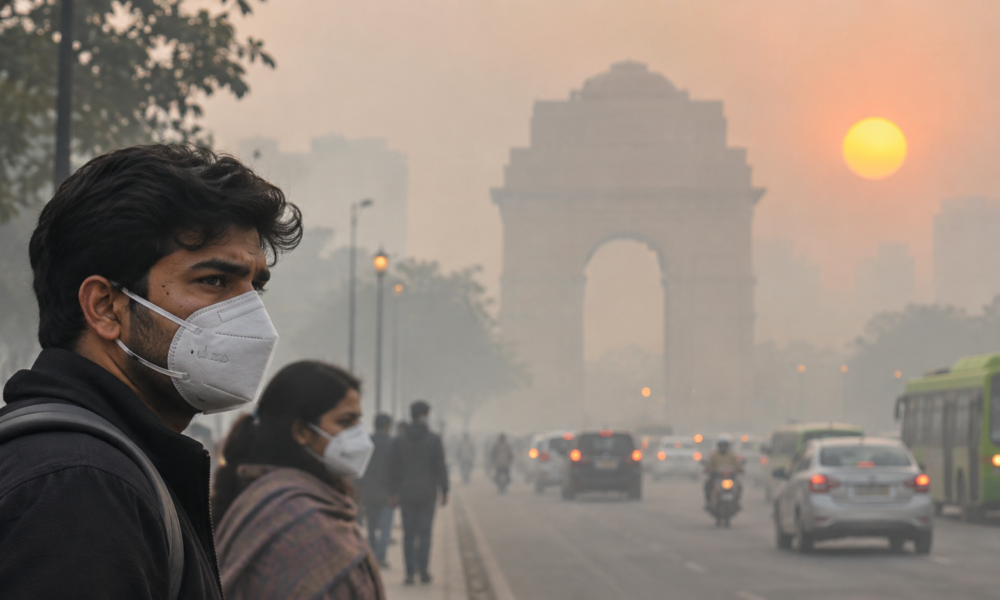
Delhi-NCR’s air quality deteriorated sharply on November 2, with Delhi, Noida and Ghaziabad recording unhealthy pollution levels as winter conditions and seasonal emissions added to the region’s air-quality challenge.
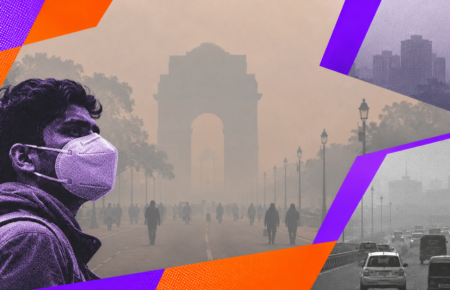
Air pollution is once again becoming a major public-health concern across the National Capital Region. On the morning of November 2, Delhi and parts of the surrounding region recorded high Air Quality Index (AQI) readings, with Noida entering the very poor category and Ghaziabad remaining in the poor category.
According to readings reported from the Central Pollution Control Board’s monitoring network at around 8:05 am, Noida recorded an AQI of 311, Delhi 310 and Ghaziabad 278. These figures indicate a deterioration in air quality across several NCR locations.
The situation matters because exposure to polluted air can affect the respiratory and cardiovascular systems, with children, older adults, pregnant women and people with existing heart or lung conditions among the groups that require particular attention.
Delhi-NCR AQI on November 2
The reported readings show that pollution levels were not uniform across the region.
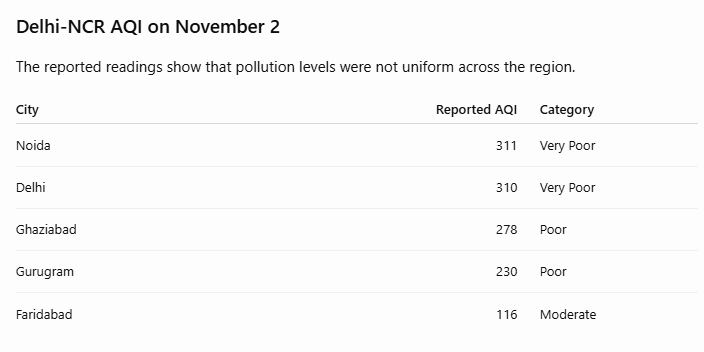
These are time-specific readings reported at approximately 8:05 am on November 2, not permanent city-wide values. AQI can vary by monitoring station and time of day.
Under India’s National AQI classification, readings between 201 and 300 fall in the poor category, while readings between 301 and 400 are classified as very poor.
How air pollution affects health
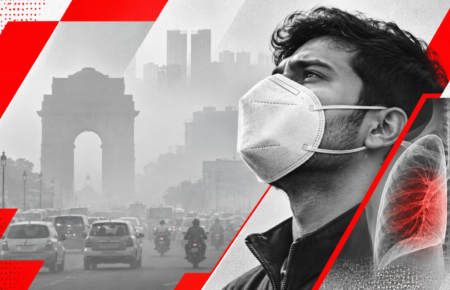
Air pollution is not limited to temporary irritation or discomfort. Fine particulate matter, particularly PM2.5, can penetrate deep into the respiratory system. Exposure is associated with respiratory and cardiovascular health risks.
The World Health Organization identifies air pollution as a major environmental health risk. Its 2026 technical brief highlights impacts across respiratory, cardiovascular, cerebrovascular, reproductive and metabolic health.
People with asthma, chronic obstructive pulmonary disease, heart disease and other existing conditions may be more vulnerable to pollution exposure. Children and older adults also require particular care.
Who should take extra precautions?
People with asthma or other chronic respiratory conditions should follow their clinician’s advice and monitor symptoms. Children, older adults and people with heart or lung disease should be cautious about prolonged outdoor exertion when pollution levels are high.
If outdoor activity is unavoidable, reducing the duration and intensity of strenuous exercise can help limit exposure. People should also follow official local health advisories and seek medical attention if they experience severe breathing difficulty, chest pain or other concerning symptoms.
Why does pollution worsen during winter?
Winter weather can make pollution episodes more persistent. Lower wind speeds and atmospheric conditions that limit the vertical mixing of air can slow the dispersion of pollutants.
Delhi’s seasonal pollution is influenced by multiple sources, including transport, industrial emissions, construction dust, waste burning, regional agricultural fires and weather conditions. Their relative contributions vary from day to day.
The Indian Institute of Tropical Meteorology’s Delhi Air Quality Early Warning System forecast poor air quality for November 2 and 3, with a possibility of very poor conditions on November 4.
What residents should monitor
Residents should check the latest AQI from official monitoring sources rather than relying on a single reading shared on social media. The CPCB’s Sameer platform and Delhi government’s AQI dashboard provide monitoring information.
Air quality can differ considerably between neighbourhoods. A reading from one monitoring station should not automatically be treated as the condition across the entire city.
Delhi-NCR’s pollution challenge requires sustained action on transport emissions, dust control, waste management, industrial pollution and regional coordination. For residents, the immediate priority is to understand local air-quality conditions and reduce avoidable exposure during high-pollution periods.


No Comment! Be the first one.