






India’s Air Pollution Crisis: The Health Cost of Breathing Toxic Air
Air pollution is often discussed through visibility, traffic restrictions and air quality index readings. But its consequences extend much further than a hazy skyline. For millions of people living...


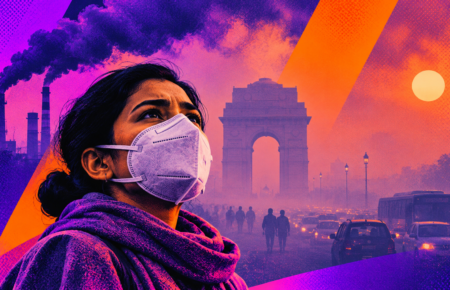
Air pollution is often discussed through visibility, traffic restrictions and air quality index readings. But its consequences extend much further than a hazy skyline.
For millions of people living in Indian cities, polluted air is an environmental exposure that can affect respiratory health, cardiovascular function and overall wellbeing.
The challenge is particularly concerning because exposure is not limited to people with pre-existing respiratory conditions. Air pollution is associated with a wide range of health outcomes and remains an important public health risk.
As urbanisation and economic activity expand, addressing air pollution is becoming an increasingly important part of India’s healthcare agenda.
The Scale of India’s Air Pollution Challenge
The World Health Organization’s 2025 India Health and Environment Scorecard reported an annual country mean PM2.5 concentration of 50 micrograms per cubic metre.
This is ten times the WHO annual air quality guideline value of 5 micrograms per cubic metre.
Fine particulate matter, commonly known as PM2.5, consists of particles small enough to penetrate deep into the respiratory system.
The Health Effects Institute’s State of Global Air 2025 report estimated that India experienced more than two million deaths attributable to air pollution in 2023.
These are modelled estimates of population-level disease burden, not a count of individually certified deaths.
The figures illustrate why air pollution needs to be treated as a major public health issue rather than simply an environmental inconvenience.
Why PM2.5 Is Particularly Concerning
PM2.5 particles are smaller than 2.5 micrometres in diameter.
Because of their size, they can travel deep into the lungs, with some components entering the bloodstream.
Exposure has been associated with respiratory and cardiovascular conditions.
Important health concerns include:
Exacerbation of asthma and other respiratory illnesses.
Increased risk of cardiovascular disease.
Greater susceptibility to respiratory infections.
Increased risk of adverse health outcomes in vulnerable populations.
Long-term impacts associated with chronic exposure.
The health effects depend on exposure levels, duration, individual vulnerability and other environmental and medical factors.
The Connection Between Air Pollution and Heart Health
Air pollution is not exclusively a respiratory problem.
Fine particulate exposure is also associated with cardiovascular disease, including heart attacks and strokes.
The State of Global Air 2025 report examined air pollution’s contribution to several non-communicable diseases.
Its findings underline the importance of considering air quality in discussions about long-term cardiovascular health.
For public health systems, this creates a challenge that extends beyond treating coughs, wheezing and other immediate respiratory symptoms.
Reducing pollution exposure is also relevant to preventing chronic disease.
Children, Older Adults and Vulnerable Populations
Air pollution does not affect everyone equally.
Children, older adults and people with existing respiratory or cardiovascular conditions may be particularly vulnerable.
Children’s developing respiratory systems make environmental exposure an important concern.
For older adults, existing medical conditions can increase the consequences of prolonged exposure.
People working outdoors, including construction workers, delivery personnel and traffic personnel, may also experience higher exposure because of the time they spend in polluted environments.
This makes occupational health an important part of the broader air pollution conversation.
Indoor Air Pollution Also Deserves Attention
Outdoor pollution often receives the most public attention, but indoor air quality matters too.
Household exposure can come from cooking fuels, tobacco smoke, poor ventilation and other indoor sources.
The WHO’s 2025 India environmental health scorecard reported that 26% of the population lacked access to clean cooking fuels and technologies.
Improving household ventilation, reducing exposure to smoke and adopting cleaner cooking technologies are important public health interventions.
Indoor air quality should therefore be considered alongside outdoor pollution.
Can Individuals Reduce Their Exposure?
Individual precautions cannot solve a city-wide air pollution problem, but they may help reduce exposure.
Practical steps include:
Monitor official air quality information before planning outdoor activities.
Reduce prolonged strenuous outdoor activity when pollution levels are particularly high.
Use a well-fitted particulate respirator, such as an appropriate N95 or equivalent, when exposure cannot be avoided.
Maintain clean indoor environments and minimise indoor smoke.
Seek medical advice when respiratory or cardiovascular symptoms worsen.
Air purifiers may help reduce indoor particulate exposure when appropriately selected, sized and maintained. They cannot remove the underlying sources of outdoor pollution.
People with existing medical conditions should follow advice from their healthcare professionals.
Why Public Policy Matters More Than Individual Precautions
Air pollution cannot be addressed through masks and air purifiers alone.
Long-term improvement requires coordinated action across transport, energy, construction, industry, agriculture and urban planning.
Better public transport, cleaner fuels, industrial emission controls, dust management and effective monitoring can contribute to reducing pollution.
Healthcare systems also need to strengthen awareness, early diagnosis and treatment of pollution-related illnesses.
The challenge requires sustained coordination between central and state governments, local authorities, industries and communities.
Clean Air Is a Public Health Necessity
India’s air pollution challenge is fundamentally connected to the way cities are planned, industries operate and energy is consumed.
The health consequences extend beyond temporary discomfort and can contribute to a substantial burden of chronic disease.
Reducing exposure requires both individual awareness and structural change.
The objective should not simply be to make city skylines look clearer. It should be to create healthier environments in which people can live, work and breathe without carrying an avoidable burden of pollution-related illness.
Health note: This article provides general public health information. People experiencing breathing difficulties, chest pain or other serious symptoms should seek prompt medical attention.

No Comment! Be the first one.