







Reliable Electricity in Hospitals: How Energy Storage Could Improve Patient Care in India
Hospitals and healthcare centres depend on electricity for almost every important medical service. From operating rooms and intensive care units to diagnostic equipment and vaccine refrigerators, a...


Hospitals and healthcare centres depend on electricity for almost every important medical service. From operating rooms and intensive care units to diagnostic equipment and vaccine refrigerators, a reliable power supply is essential for patient care.
However, electricity access remains a major challenge for healthcare facilities in several developing countries.
The World Health Organization (WHO), in its October 2026 fact sheet on electricity in healthcare facilities, highlighted that close to one billion people in low- and lower-middle-income countries are served by healthcare facilities without reliable electricity or without electricity access altogether.
The problem is particularly serious in remote and rural locations, where healthcare centres may experience frequent power interruptions or depend on expensive backup generators.
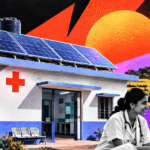
The WHO has identified solar energy and battery storage as potential solutions for improving electricity access in healthcare facilities. These systems can provide power even when the central electricity grid is unavailable.
Why Do Hospitals Need Reliable Electricity?
Electricity is essential for running medical equipment and maintaining basic hospital operations.
For example, intensive care units require continuous electricity for ventilators, patient monitors and other life-support equipment.
Operating theatres need reliable lighting, medical devices and sterilisation equipment. Laboratories depend on electricity for diagnostic machines, while vaccine storage facilities require temperature-controlled refrigeration.
Even a temporary power interruption can disrupt these services.
Hospitals generally use backup generators and other power systems to manage electricity failures. However, generators require fuel, regular maintenance and proper operation.
Solar panels combined with battery storage offer another option. They can generate and store electricity locally, helping healthcare facilities maintain essential services during grid interruptions.
News in Numbers
- Nearly 1 billion people: Estimated to be served by healthcare facilities without reliable electricity or with no electricity access in low- and lower-middle-income countries.
- 12%: Healthcare facilities in low- and lower-middle-income South Asia reported to have no electricity access.
- 15%: Corresponding figure for sub-Saharan Africa.
- 4.9 billion US dollars: Estimated funding requirement identified by the World Bank to bring healthcare facilities in 63 low- and middle-income countries to minimum or intermediate electrification levels.
These are regional and global figures, not estimates for India alone.
World Health Organization
Why Does It Matter?
Reliable electricity directly affects the quality and availability of healthcare services.
A hospital with stable power can operate essential diagnostic equipment, maintain medicine storage temperatures and provide uninterrupted care to patients.
For rural healthcare centres, better electricity access could also reduce the need to refer patients to distant hospitals simply because essential equipment cannot operate.
One Healthcare Trend
Hospitals are increasingly looking towards decentralised clean energy systems.
Solar panels, battery storage and energy-efficient medical equipment can help healthcare facilities manage electricity interruptions.
These systems can also reduce dependence on diesel generators and their associated pollution.
Future Impact
The adoption of solar and battery-based electricity systems could improve the reliability of healthcare services in remote areas.
It may also create opportunities for companies working in medical infrastructure, renewable energy, battery manufacturing and hospital engineering.
However, these systems need proper installation, maintenance, battery replacement planning and trained technical staff.
The bigger picture: Reliable electricity is not simply an infrastructure requirement for hospitals. It is an essential part of safe and accessible healthcare.

No Comment! Be the first one.