








Ageing Changes Brain Protein Structures, Contributing to Memory Loss, Study Finds
Researchers have discovered that age-related changes in a naturally occurring brain protein may contribute to memory impairment, with experiments in fruit flies showing that restoring its younger...

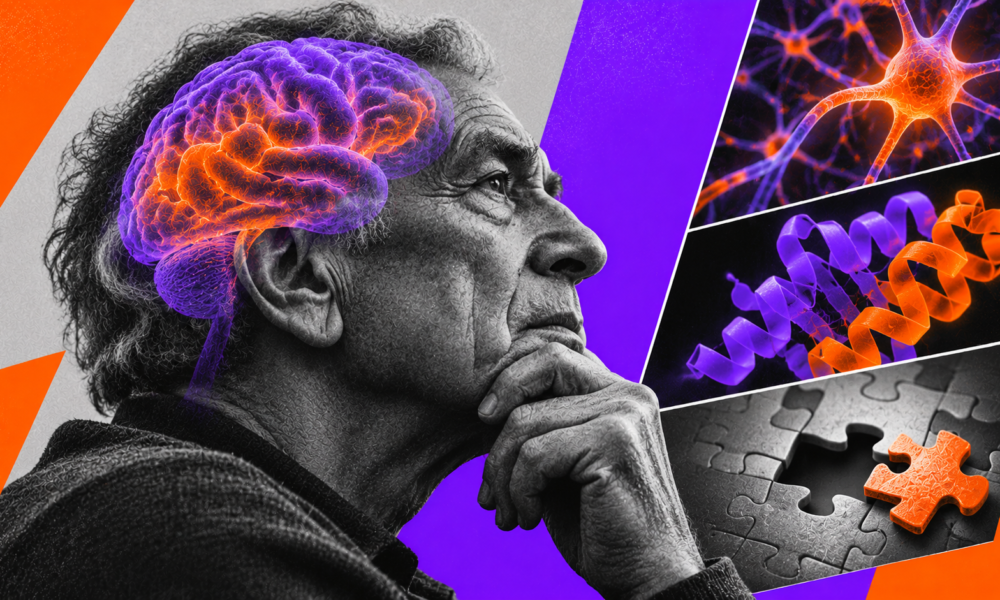
Researchers have discovered that age-related changes in a naturally occurring brain protein may contribute to memory impairment, with experiments in fruit flies showing that restoring its younger structural state can improve memory.
A new study published in the journal Cell has uncovered a possible molecular explanation for why memory deteriorates with age. Researchers found that structural changes in a protein called Orb2 can reduce its ability to support the brain processes required for long-term memory.
The research, titled Age-dependent structural evolution of a functional amyloid contributes to memory impairment in Drosophila, was conducted by scientists from The University of Hong Kong, The Hong Kong University of Science and Technology and research institutions in Spain.
The findings provide new insights into the relationship between ageing, protein aggregation and memory function.
What Did the Researchers Discover?
The study focused on Orb2, a protein found in the fruit fly Drosophila melanogaster. Orb2 plays an important role in regulating protein production at synapses, the connections through which brain cells communicate.
This process is essential for maintaining long-term memories.
Unlike amyloid proteins commonly associated with harmful protein accumulation in neurodegenerative diseases, Orb2 forms functional amyloid assemblies that help regulate normal brain activity.
Using cryogenic electron microscopy (cryo-EM), researchers examined how the structure of Orb2 changes throughout the adult lifespan of fruit flies.
They discovered that Orb2 exists in different structural states depending on the age of the organism.
In younger flies, the protein predominantly forms assemblies that support protein translation, allowing the brain to maintain processes associated with long-term memory.
However, as the flies age, Orb2 gradually shifts towards structurally different assemblies that are more resistant to destabilisation but have lower translational activity.
This transition coincides with a decline in memory performance.
How Does This Affect Memory?
The researchers found that the structural evolution of Orb2 is associated with reduced protein production at synapses.
Synaptic protein translation is important because it helps strengthen and maintain the connections between neurons. These connections form the biological foundation of learning and long-term memory.
When Orb2 shifts towards its ageing-associated structural states, its ability to support this process declines.
This suggests that memory impairment may not simply result from the accumulation of abnormal proteins. Changes in the structure and activity of proteins that normally perform essential biological functions may also contribute to cognitive decline.
Can These Changes Be Reversed?
One of the most significant findings involved memory-related proteins known as molecular chaperones.
Researchers manipulated these chaperones in the brains of older fruit flies and found that doing so shifted Orb2 towards younger, translation-promoting structural states.
This intervention was also associated with improved memory performance in older flies.
In another experiment, researchers pushed Orb2 towards ageing-like, translation-deficient structural states in young adult flies. This was associated with premature memory impairment.
Together, these experiments suggest that the structural state of Orb2 plays an important role in maintaining memory function.
Why Does This Research Matter?
The findings add another dimension to scientific understanding of age-related memory loss.
Much of the research into neurodegenerative conditions has focused on harmful protein aggregation. However, this study highlights that amyloid formation is not necessarily damaging. Some amyloid structures perform important biological functions, and changes in their organisation can affect normal brain activity.
The research also raises questions about whether similar age-dependent protein changes occur in other organisms, including humans.
However, the experiments were conducted in fruit flies, and further research will be necessary to establish whether the same mechanisms contribute to human memory decline.
What Comes Next?
The findings could help researchers investigate new approaches to protecting memory during ageing.
Understanding how molecular chaperones influence functional amyloid structures may offer potential directions for future research into maintaining synaptic activity and cognitive function.
More importantly, the study shifts attention towards the dynamic behaviour of proteins inside the ageing brain.
Rather than looking only at which proteins accumulate, scientists may increasingly examine how their structures evolve over time and how these changes influence the brain’s ability to retain information.
The research offers a promising new perspective on the molecular mechanisms of memory ageing, although translating these findings into treatments for humans will require substantial further investigation.






No Comment! Be the first one.