








A Study Finds How Blueberries Could Support Better Mental Health
Blueberries are widely recognised for their nutritional benefits, but could these small, antioxidant-rich fruits also play a role in supporting mental health? A recent study published in The Journal...


Blueberries are widely recognised for their nutritional benefits, but could these small, antioxidant-rich fruits also play a role in supporting mental health? A recent study published in The Journal of Nutrition, Health & Aging suggests that consuming blueberries may be associated with improvements in depressive symptoms among older adults.
The research, conducted by scientists affiliated with Harvard Medical School and the Hinda and Arthur Marcus Institute for Aging Research at Hebrew SeniorLife, explored the potential relationship between blueberry consumption, gut health and mood.
The findings offer an interesting insight into how everyday dietary choices may influence mental well-being. However, researchers emphasise that further investigation involving larger groups of participants is necessary before any clinical conclusions can be drawn.
What Did the Study Find?
Researchers conducted a randomised, double-blind, placebo-controlled pilot study involving 18 adults aged 65 and above. All participants had mild depressive symptoms and were relatively sedentary.
The participants were divided into two groups. One group received blueberry powder, while the other received a placebo powder. Those in the blueberry group consumed 48 grams of freeze-dried blueberry powder daily for three months, equivalent to approximately two cups of fresh blueberries.
The researchers assessed participants’ depressive symptoms and examined changes in their gut microbiome before and after the intervention.
The results indicated that participants consuming blueberry powder experienced a greater and more consistent reduction in depressive symptom severity than those receiving the placebo.
However, the difference in improvement between the two groups was not statistically significant. This means the researchers could not establish that blueberries directly caused the improvement in mood.
The study also identified changes in the abundance of certain gut microbial enzymes in the blueberry group. One of the enzymes examined was associated with biochemical pathways involved in the production of gamma-aminobutyric acid (GABA), a neurotransmitter that helps regulate brain activity.
These observations have encouraged researchers to investigate the possible relationship between diet, gut bacteria and mental health.
Why Are Blueberries Important for Mental Health?
Blueberries contain several beneficial nutrients, particularly anthocyanins, which are naturally occurring plant compounds responsible for their characteristic blue and purple colour.
Anthocyanins belong to a broader group of compounds called flavonoids. They are known for their antioxidant properties and have attracted scientific interest because of their potential role in protecting cells against oxidative stress.
Oxidative stress occurs when there is an imbalance between harmful molecules called free radicals and the body’s ability to neutralise them. Prolonged oxidative stress has been associated with several health conditions, including processes involved in ageing and neurological health.
Another important component of blueberries is dietary fibre. Fibre supports digestive health and helps nourish beneficial bacteria in the gut. These microorganisms contribute to several biological processes, including the production of metabolites that may influence communication between the gut and the brain.
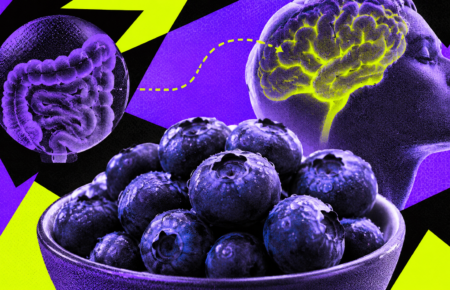
This relationship is commonly known as the gut-brain axis. It describes the complex, two-way communication network connecting the digestive system and the central nervous system.
Although scientists are still investigating how this relationship influences mood and emotional well-being, dietary patterns that support a healthy gut microbiome are increasingly attracting attention.
Blueberries also contain vitamin C, vitamin K and other essential nutrients, making them a valuable addition to a balanced diet.
What Role Does GABA Play in Brain Health?
Gamma-aminobutyric acid, commonly known as GABA, is an inhibitory neurotransmitter that helps regulate communication between nerve cells.
Its primary function is to reduce excessive neuronal activity, helping maintain a balance in brain signalling. GABA is involved in processes associated with relaxation, sleep and the regulation of nervous system activity.
Researchers are interested in understanding whether changes in gut microbial activity could influence biological pathways associated with neurotransmitters such as GABA.
However, the blueberry study did not establish that consuming blueberries increases GABA levels in the brain or directly improves mental health through this mechanism.
Instead, the findings offer an early indication that dietary interventions could influence certain gut microbial processes that warrant further investigation.
What Are the Limitations of the Study?
Despite its promising observations, the research has several limitations that readers should consider.
- Small sample size: Only 18 participants completed the study. Such a small group makes it difficult to establish whether the findings would apply to a wider population.
- Limited age group: All participants were aged 65 or older and had mild depressive symptoms. The findings cannot automatically be extended to younger adults or people experiencing clinical depression.
- No statistically significant difference between groups: Although the blueberry group showed a greater reduction in depressive symptoms, the difference compared with the placebo group was not statistically significant.
- Limited evidence about biological mechanisms: Researchers observed changes in certain gut microbial enzyme genes, but they did not establish a direct relationship between these changes, GABA levels and improvements in mood.
- Need for larger clinical trials: Further research involving more participants and longer observation periods is required to determine whether blueberries can have a meaningful and consistent impact on mental well-being.
Can Eating Blueberries Help Prevent Depression?
Blueberries can be part of a healthy and balanced diet, but the available evidence does not establish them as a treatment or preventive measure for depression.
People can incorporate fresh, frozen or unsweetened blueberries into their daily meals. They can be added to smoothies, breakfast bowls, porridge or plant-based yoghurt.
It is also important to remember that mental health is influenced by several interconnected factors, including sleep quality, physical activity, nutrition, social relationships and underlying medical conditions.
People experiencing persistent depressive symptoms should seek advice from a qualified healthcare professional rather than relying on individual foods or dietary supplements.
The latest research adds to the growing scientific interest in the relationship between nutrition, gut health and emotional well-being. While blueberries may offer several nutritional advantages, their potential role in supporting mental health requires more substantial scientific evidence.
For now, they remain a nutritious addition to the diet rather than a clinically established solution for depression.





No Comment! Be the first one.