








Gujarat Draws ₹2,500 Crore Pharma Investment as 59 New Drug Plants Get Approval
Gujarat is seeing a fresh wave of pharmaceutical investment, with the state attracting an estimated ₹2,500 crore to ₹3,000 crore after approving 59 new allopathic drug manufacturing plants during...

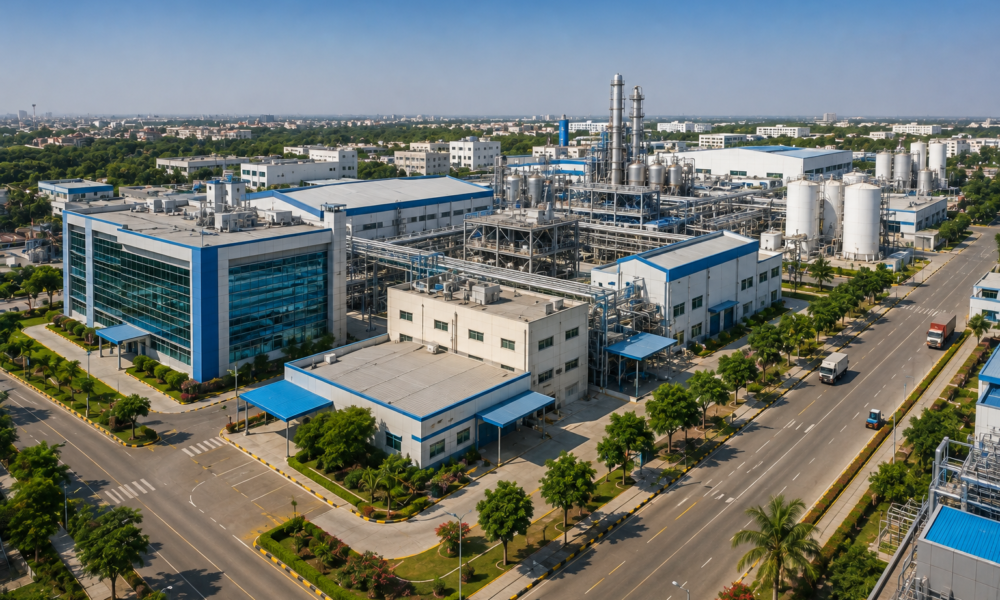
Gujarat is seeing a fresh wave of pharmaceutical investment, with the state attracting an estimated ₹2,500 crore to ₹3,000 crore after approving 59 new allopathic drug manufacturing plants during FY26. The latest approvals are strengthening Gujarat’s position as one of India’s leading pharmaceutical production centres and could add further capacity to the state’s domestic and export-oriented drug manufacturing base.
The Gujarat Food and Drugs Control Administration (FDCA) granted 330 fresh licences during FY26, covering new manufacturing facilities and loan-licensing arrangements. Of these, 59 licences were issued for new allopathic medicine manufacturing plants, while another 271 were approved under the loan-licence category.
The latest activity follows a strong run of pharmaceutical manufacturing approvals in the state. Gujarat approved 69 new manufacturing plant licences and 271 loan licences during the previous financial year, indicating continued demand for additional production capacity. Since March 2019, the state has approved more than 1,000 new allopathic medicine licences, according to the FDCA.
The expansion is also being supported by Gujarat’s established pharmaceutical ecosystem, which includes manufacturing clusters, skilled workers, research capabilities and a network of companies involved in medicines and biotechnology. The state government describes pharmaceuticals as one of Gujarat’s established manufacturing sectors and is also promoting biotechnology through its latest policy framework.
Industry representatives say the state’s existing ecosystem and skilled workforce have helped attract both domestic and multinational pharmaceutical companies. New facilities are also increasingly expected to meet international manufacturing standards, strengthening their ability to serve overseas markets.
The investment could have implications beyond pharmaceutical manufacturing itself. New drug plants require industrial land, utilities, storage facilities, specialised equipment, laboratories and supply-chain infrastructure. As production capacity increases, demand could also grow for warehouses, cold-chain facilities, logistics services and other industrial support infrastructure.
The expansion is particularly relevant to Gujarat’s role in India’s wider pharmaceutical supply chain. The state has an established base across Ahmedabad, Vadodara, Bharuch, Vapi and other industrial centres, creating a network of manufacturing and research activity. Government-backed biotechnology information also identifies pharmaceutical and healthcare biotechnology as a major segment within Gujarat’s life sciences ecosystem.
The new manufacturing licences also come at a time when India is seeking to strengthen domestic pharmaceutical production and reduce vulnerabilities in critical supply chains. Expanding manufacturing capacity can support the availability of medicines in the domestic market while giving companies greater capacity to serve international markets.
For Gujarat, the latest investment cycle could strengthen its position as a major pharmaceutical and life sciences hub. Continued approvals for new plants, combined with investment in research, biotechnology and manufacturing infrastructure, could attract further companies and supporting businesses to the state.
The next phase will depend on how quickly the approved facilities move from licences to actual construction and commercial production. If the new plants are commissioned as planned, Gujarat could see a further expansion of its pharmaceutical manufacturing footprint, creating opportunities across industrial real estate, logistics, employment and healthcare supply chains.
The development also highlights a broader trend in India’s healthcare sector. Growth is increasingly extending beyond hospitals and clinical services to the manufacturing infrastructure behind medicines, medical products and biotechnology. Gujarat’s latest pharmaceutical investments show how industrial capacity can become an important part of the country’s healthcare growth story.







No Comment! Be the first one.