








India’s Food-Safety Crackdown: What Consumers Need to Know About Contaminated and Mislabelled Food
India is seeing a stronger crackdown on food safety, with authorities carrying out more inspections, raids and enforcement actions against businesses accused of selling unsafe, substandard or...

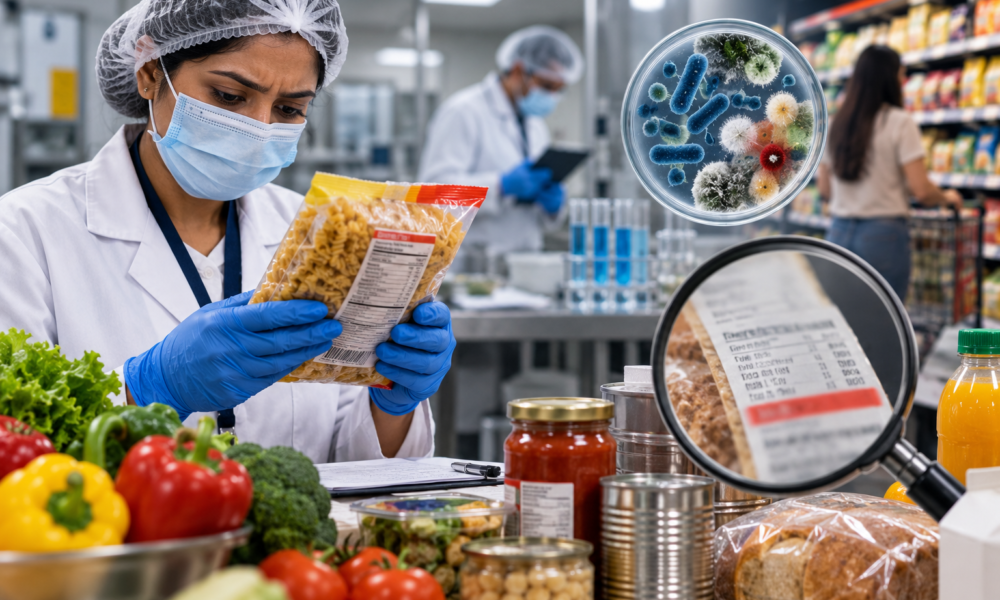
India is seeing a stronger crackdown on food safety, with authorities carrying out more inspections, raids and enforcement actions against businesses accused of selling unsafe, substandard or incorrectly labelled food. The action comes amid growing concerns over food hygiene, adulteration and the information provided to consumers on packaged products.
The Food Safety and Standards Authority of India (FSSAI) and state food-safety authorities are responsible for monitoring food businesses and taking action when products or businesses fail to meet food safety requirements. Government data shows that more than 5.18 lakh food samples were analysed over three years, with 88,192 penalties imposed and 3,614 convictions secured.
Expired and Mislabelled Food Under the Scanner
One of the biggest concerns is the sale of expired food and the changing of expiry dates or other information on labels.
In a recent operation in Mumbai, Maharashtra authorities uncovered a warehouse where expiry dates and nutritional information on branded food products were allegedly being changed. Products from major brands were reportedly found with altered labels, raising concerns about how food products are stored, labelled and moved through supply chains.
A separate enforcement drive in Bengaluru also found expired and mislabelled food products at storage and delivery facilities. Authorities seized such products and took action against facilities involved in violations.
These cases show why accurate food labels are important. Information such as the expiry date, ingredients, nutritional values and other required details helps consumers decide whether a product is suitable for purchase and consumption.
Poor Hygiene Remains a Major Concern
Food safety is not limited to packaged products. Restaurants, hotels, food courts, markets and other food businesses are also being inspected.
In Kolkata, a week-long inspection drive covered 592 establishments. Officials collected 161 food samples and issued notices to businesses that did not meet the required standards. The authorities also reported finding problems such as poor refrigeration, pests, fungal contamination and unhygienic storage. More than 1,200 kg of substandard food was destroyed, while 40 food licences were suspended.
Such cases highlight the importance of proper food storage, clean kitchens, safe handling practices and regular inspections.
What Is Being Done?
FSSAI has been expanding its enforcement and testing system. The regulator has notified 252 food-testing laboratories and deployed 305 mobile food-testing units, known as Food Safety on Wheels, across 35 states and Union territories.
The government has also introduced measures aimed at improving food labelling and consumer protection. FSSAI’s labelling regulations set requirements for information that must be provided on food products.
FSSAI also operates a food recall system through which unsafe or non-compliant food can be withdrawn from the market.
What Should Consumers Check?
Consumers can take a few simple steps when buying food:
Check the expiry or best-before date.
Read the ingredients and nutrition information.
Look for damaged, opened or poorly sealed packaging.
Check that required product information is clearly printed.
Be careful with products making unusually strong health or quality claims.
Buy food from businesses that maintain clean and hygienic conditions.
Report suspected unsafe or mislabelled food to the relevant authorities.
India’s food-safety crackdown shows that consumer protection depends on both strong enforcement and greater awareness. As packaged food, online grocery services and quick-commerce platforms continue to grow, ensuring that food remains safe from production to the consumer’s kitchen will become increasingly important.
For consumers, the message is simple: check the label, check the condition of the food and stay informed.






No Comment! Be the first one.