






Indian Genome Study Finds 21 Genetic Regions Linked to Endometriosis
India’s first genome-wide study of endometriosis has identified 21 genetic regions associated with the condition in Indian women, offering new clues about why some women may be more susceptible to...

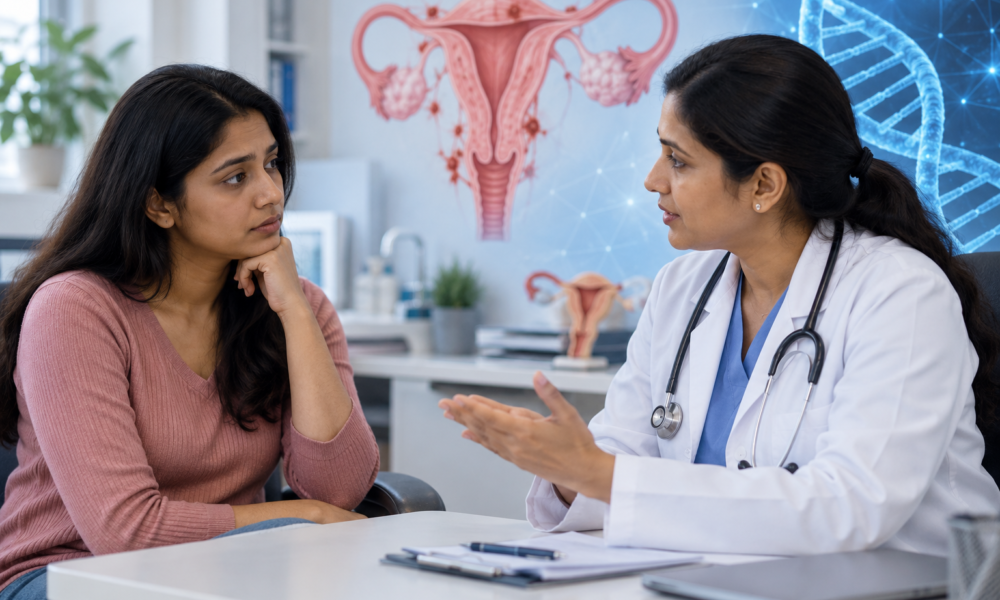
India’s first genome-wide study of endometriosis has identified 21 genetic regions associated with the condition in Indian women, offering new clues about why some women may be more susceptible to the disease.
The study, published in the peer-reviewed journal Scientific Reports, was carried out through the Endometriosis Clinical and Genetic Research in India (ECGRI) initiative, led by researchers from the Indian Council of Medical Research’s National Institute for Research on Women’s Health (ICMR-NIRWoH) and the University of Queensland in Australia. The research involved 18 centres across India and included participants from different geographical regions and ancestry backgrounds.
The strongest genetic signal identified by researchers was located near the LINC00415/SHISA2 region on chromosome 13. The researchers also found signals in regions that have previously been associated with endometriosis, including areas near WNT4 and CDKN2B-AS1. These findings suggest that some genetic factors linked to the condition may be shared across populations, while others could be particularly relevant to Indian women.
Endometriosis is a chronic gynaecological condition in which tissue similar to the lining of the uterus grows outside the uterus. It can cause severe menstrual and pelvic pain and may be associated with infertility and other problems that affect quality of life. Around one in 10 women of reproductive age are estimated to have endometriosis globally. Yet diagnosis can take years, particularly when severe period pain is treated as a normal part of menstruation.
The genetic findings are significant partly because South Asian populations have been underrepresented in previous genetic research on endometriosis. Much of the existing evidence has come from populations of European and East Asian ancestry. Building an Indian dataset could help researchers determine whether genetic risk identified elsewhere applies in the same way to Indian women and whether additional population-specific signals exist.
The ECGRI initiative was established to study the clinical and genetic characteristics of endometriosis in India. The research programme brings together clinicians, surgeons, researchers and laboratory teams to collect clinical information and biological samples from women with and without the condition. Its broader aim is to improve understanding of disease subtypes, risk factors and genetic susceptibility.
However, the latest findings should not be interpreted as a genetic test for endometriosis. Researchers have stressed that the identified regions are suggestive associations that require further validation. The results cannot currently tell an individual woman whether she will develop the condition or provide a clinical prediction of her personal risk.
Instead, the study provides a starting point for larger research involving South Asian populations. Researchers hope that a better understanding of genetic risk could eventually contribute to earlier recognition, improved diagnosis and more personalised approaches to treatment.
For women living with unexplained severe period pain, chronic pelvic pain or fertility problems, the research also highlights an important point: these symptoms should not automatically be dismissed as something they simply have to live with. Better awareness, timely medical evaluation and continued research remain essential to reducing the long diagnostic journey faced by many women with endometriosis.




No Comment! Be the first one.