








Aster DM Approves ₹134.4 Crore Expansion of KIMSHEALTH Thiruvananthapuram, Adds 184 Beds
Aster DM Quality Care has approved an investment of ₹134.4 crore to expand its KIMSHEALTH Hospital in Thiruvananthapuram, Kerala. The project will add 184 beds to the hospital and is expected to be...

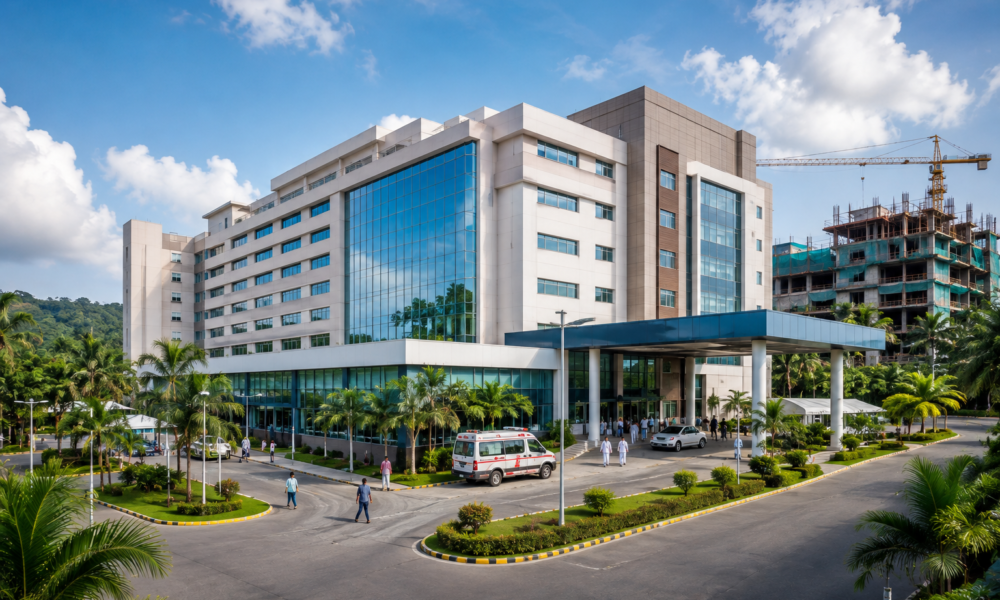
Aster DM Quality Care has approved an investment of ₹134.4 crore to expand its KIMSHEALTH Hospital in Thiruvananthapuram, Kerala. The project will add 184 beds to the hospital and is expected to be completed by May 2028.
The expansion will be carried out through KIMS Health Care Management Ltd (KHML), a material subsidiary of Aster DM Quality Care. The company’s board has approved the construction of a new hospital block and the optimisation of existing facilities at KIMSHEALTH Hospital.
The additional beds will increase the hospital’s total capacity from around 795 beds to approximately 979 beds. The expansion is aimed at addressing space constraints and supporting the growth of key medical specialities at the hospital.
The project will be financed through a combination of 70% debt and 30% equity. Based on the total investment, this works out to roughly ₹94 crore through debt and ₹40 crore through equity. The planned completion date is May 2028.
The expansion comes as healthcare providers continue to increase hospital capacity in response to growing demand for specialised medical services. KIMSHEALTH Thiruvananthapuram is currently operating at around 75% occupancy, with about 596 beds occupied during FY2026, according to reports citing the company’s disclosures.
For patients, additional beds can mean greater access to hospital care, particularly when existing capacity is under pressure. More space can also allow hospitals to expand specialised departments and provide treatment to more patients without relying as heavily on existing facilities.
The project also highlights the importance of hospital infrastructure in cities outside India’s largest metros. Thiruvananthapuram is a major healthcare and education centre in Kerala, and stronger hospital capacity can support residents as well as patients travelling from other parts of the state.
For the healthcare industry, the development reflects a wider trend of hospital chains expanding existing facilities rather than relying only on new greenfield hospitals. Adding beds to established hospitals can allow healthcare companies to use existing locations, medical teams and supporting infrastructure while increasing capacity.
The expansion also shows how healthcare companies are using capital to strengthen their hospital networks. Aster DM Quality Care is building an integrated healthcare network that brings together Aster Hospitals India, CARE Hospitals and KIMSHEALTH. The combined organisation currently has 39 hospitals, more than 10,600 beds and a presence across 28 cities in nine states, according to its corporate information.
The company’s expansion strategy could increase competition among private healthcare providers while also encouraging investment in medical infrastructure, equipment, specialist services and healthcare technology.
For ordinary people, the most direct impact will be the availability of 184 additional hospital beds in Thiruvananthapuram. If the expansion is completed on schedule, more patients could have access to hospital treatment and specialised services closer to home.
The project could also create demand for doctors, nurses, technicians, administrative staff, support workers and other healthcare professionals. Additional activity around the hospital may benefit pharmacies, diagnostic services, transport providers, food outlets and other local businesses.
The larger takeaway is that India’s healthcare sector is continuing to expand its physical capacity as demand for medical services grows. The focus is not only on building new hospitals, but also on increasing capacity at existing facilities.
By 2028, the additional 184 beds could strengthen KIMSHEALTH’s role in Thiruvananthapuram’s healthcare ecosystem and support Aster DM Quality Care’s wider expansion across India.






No Comment! Be the first one.