







Gurgaon AQI and Health: How Winter Air Pollution Affects Your Lungs, Heart and Daily Life
Gurugram’s air pollution has become a growing public-health concern as winter conditions contribute to poor air quality across Delhi-NCR. On November 4, 2026, the city’s overall Air...

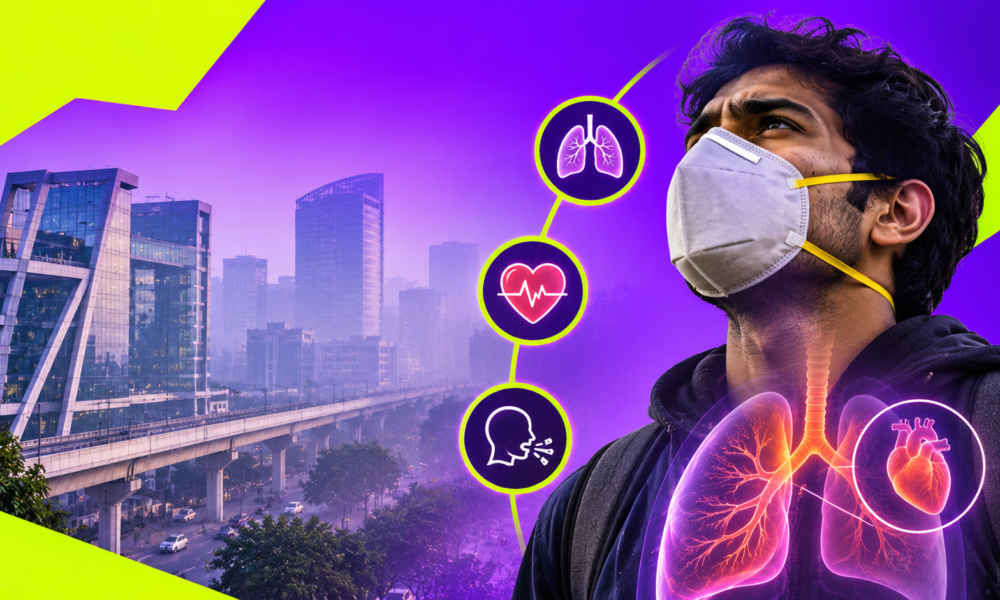
Gurugram’s air pollution has become a growing public-health concern as winter conditions contribute to poor air quality across Delhi-NCR. On November 4, 2026, the city’s overall Air Quality Index (AQI) reached 321, placing it in the very poor category. Gwal Pahari recorded an AQI of 375, according to data reported from the Central Pollution Control Board’s monitoring network.
The worsening conditions have renewed concerns about respiratory health, particularly among children, older adults and people with existing heart or lung conditions.
What does a very poor AQI mean?
India’s National Air Quality Index classifies AQI readings between 301 and 400 as very poor. According to CPCB, prolonged exposure at this level can increase the risk of respiratory illness.
The AQI is calculated using pollutant measurements, including particulate matter such as PM2.5 and PM10. PM2.5 particles are particularly concerning because their small size allows them to travel deep into the respiratory system.
Air quality can vary between neighbourhoods and monitoring stations. Residents should therefore check readings for their nearest monitoring location rather than assume that the entire city has identical conditions.
How can air pollution affect the lungs?
Short-term exposure to polluted air can irritate the eyes, nose and throat. Some people may experience coughing, wheezing, breathing discomfort or worsening asthma symptoms.
Repeated or prolonged exposure to particulate pollution is associated with a higher risk of respiratory and cardiovascular problems.
People living with asthma, chronic obstructive pulmonary disease (COPD) or other respiratory conditions may be more vulnerable during periods of poor air quality.
Can pollution affect heart health?
Air pollution is not only a lung-related concern. Fine particles can contribute to inflammation and affect the cardiovascular system.
Exposure has been associated with increased risks of heart disease and stroke. People with existing cardiovascular conditions may need to take additional precautions during severe pollution episodes.
This makes air quality a wider public-health issue rather than simply an inconvenience for people who dislike smog.
Who needs to be more careful?
Children, older adults, pregnant women and people with existing heart or respiratory conditions should pay particular attention to air quality advisories.
Children spend time outdoors playing and attending school. Older adults may have existing health conditions that make prolonged exposure more difficult to tolerate.
People who work outdoors may also have limited opportunities to avoid polluted environments.
What precautions can residents take?
Residents can reduce exposure by checking local AQI readings and limiting strenuous outdoor exercise when pollution levels are high.
Other practical measures include:
- Keep windows closed during periods of particularly poor outdoor air, while maintaining appropriate indoor ventilation and filtration.
- Use a well-fitting N95 or equivalent respirator when outdoor exposure is unavoidable during severe pollution.
- Avoid exercising beside busy roads.
- Follow prescribed treatment plans for asthma or other respiratory conditions.
- Seek medical attention for persistent breathing difficulty, chest pain or worsening symptoms.
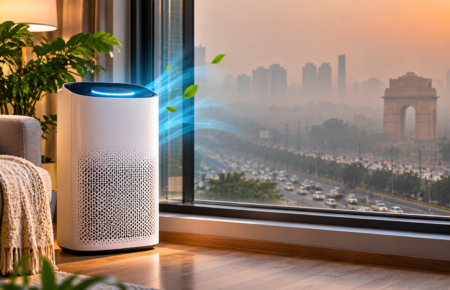
An air purifier with an appropriate HEPA filter may improve indoor particle levels when correctly sized and maintained. It does not remove every indoor pollutant.
The bigger picture
Gurugram’s winter pollution highlights the connection between environmental conditions and public health.
Personal precautions can reduce exposure, but lasting improvement requires cleaner transport, dust control, industrial emission management, waste management and coordinated action across Delhi-NCR.
Air quality should be treated as a health issue throughout the year, not only when the city disappears behind a layer of smog.




No Comment! Be the first one.