





India Expands Viral Research Labs Across Medical Colleges to Strengthen Disease Surveillance
India is expanding its network of viral research and diagnostic laboratories across medical colleges, hospitals and research institutions as the government seeks to strengthen early detection of...

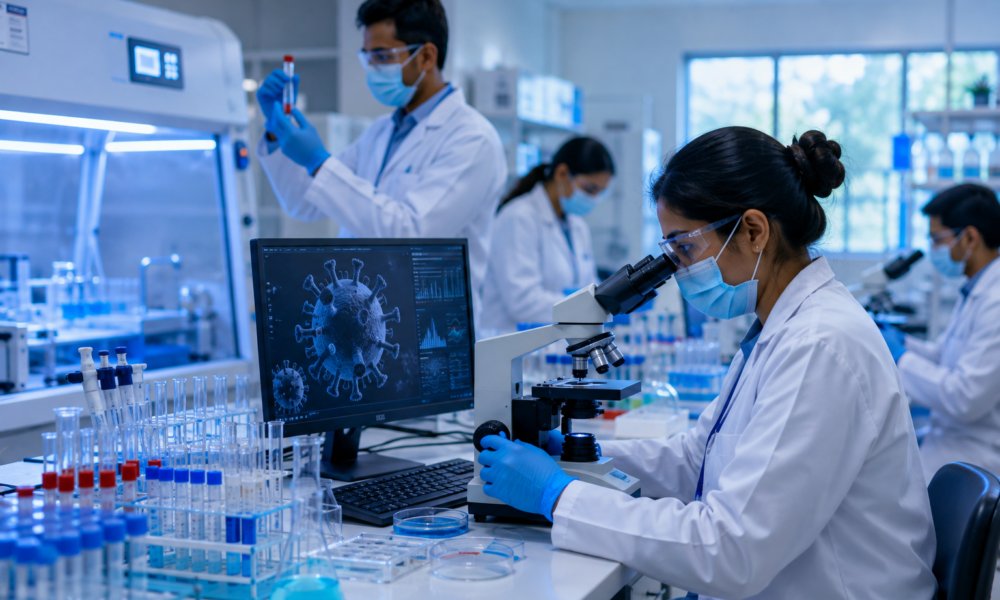
India is expanding its network of viral research and diagnostic laboratories across medical colleges, hospitals and research institutions as the government seeks to strengthen early detection of infectious diseases and improve the country’s ability to respond to outbreaks.
The Department of Health Research (DHR) has invited applications from eligible institutions to establish new Viral Research and Diagnostic Laboratories (VRDLs). Under the initiative, selected institutions will receive ₹1.55 crore in one-time financial assistance from the Centre. The funding includes ₹66.8 lakh for civil work and infrastructure modifications and ₹88.2 lakh for laboratory equipment.
The move is aimed at building diagnostic capacity closer to where infectious diseases emerge. The proposed laboratories will focus on the early diagnosis of infections, disease surveillance, outbreak investigation and research into emerging and novel viruses.
India already has a sizeable VRDL network. According to the latest information reported on August 21, the country has 167 viral research and diagnostic laboratories, including 11 regional-level laboratories, 27 state-level laboratories and 129 laboratories at medical colleges and research institutes.
The expansion comes as India faces a range of infectious disease threats, including dengue, influenza, chikungunya and other viral infections that can place pressure on healthcare systems during seasonal outbreaks.
Data from the Indian Council of Medical Research (ICMR) shows how the existing network contributes to disease surveillance. Its VRDL quarterly report for July to September 2025 recorded more than 3.24 lakh samples tested and 664,112 diagnostic tests performed across the network. The laboratories also helped investigate 38 suspected disease clusters during the quarter.
The network has expanded significantly over the past decade. An ICMR report says the VRDL network grew from 27 laboratories in 2014 to 165 laboratories across 31 states and Union territories by 2025. Between 2014 and 2024, the network tested more than 40 lakh samples and provided laboratory-based diagnoses for 2,534 disease clusters investigated across the country.
The role of these laboratories goes beyond routine testing. They can provide rapid laboratory confirmation during outbreaks, helping health authorities understand which pathogen is responsible and decide what response is required.
The ICMR-National Institute of Virology in Pune also supports the network through technical guidance, training and quality assurance. Its Resource Centre for VRDLs provides scientific and technical support, develops standard operating procedures and assists laboratories during outbreak investigations.
India is also moving towards a broader infectious disease surveillance system. Under the National One Health Mission, ICMR is developing Infectious Disease Research and Diagnostic Laboratories (IRDLs) at selected state and central government institutions and medical colleges. These facilities are intended to expand diagnostic capabilities beyond viruses to include bacterial, fungal and parasitic infections.
The latest expansion is therefore part of a wider effort to build stronger laboratory capacity across the country. By placing more diagnostic facilities within medical institutions, the government aims to improve access to testing, speed up outbreak investigations and generate better evidence for public health decisions.
For a country with a large and diverse population, stronger laboratory surveillance could play an important role in identifying infectious disease threats before they grow into larger public health emergencies.



No Comment! Be the first one.