








Raw Milk vs Pasteurised Milk: What Consumers Should Know
Raw milk is milk that has not been heat-treated to reduce harmful germs. Pasteurised milk is heated under controlled conditions and then cooled. This process lowers the risk of illness from bacteria...

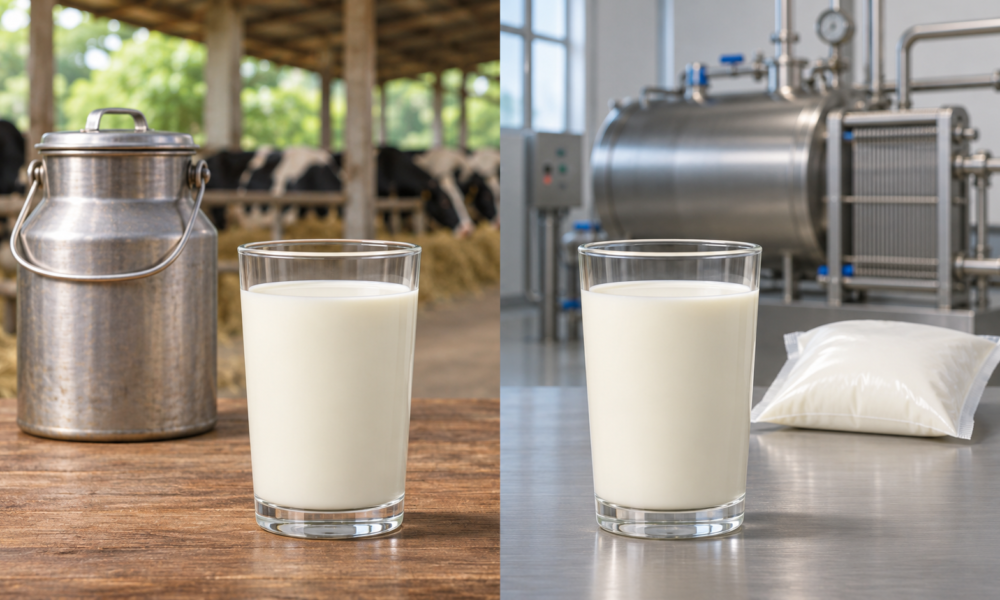
Raw milk is milk that has not been heat-treated to reduce harmful germs. Pasteurised milk is heated under controlled conditions and then cooled. This process lowers the risk of illness from bacteria that may be present in milk.
Raw milk can carry germs such as Salmonella, E. coli and Listeria. These can cause foodborne illness. The risk can be more serious for young children, older adults, pregnant people and anyone with a weakened immune system. Freshness, smell and appearance cannot confirm that raw milk is free from harmful bacteria.
What does pasteurisation do?
Pasteurisation uses a set temperature and time to reduce disease-causing microorganisms. Indian food safety rules set approved methods for pasteurising milk. After heat treatment, milk must be cooled and stored at the required temperature.
Pasteurisation does not mean that milk can be left unrefrigerated. Chilled milk should be kept cold, handled with clean utensils and used according to the label. Once opened, return the container to the refrigerator promptly.
Is raw milk a safer or more nutritious choice?
Some consumers prefer raw milk because they like its taste or believe it is less processed. These preferences do not remove the food safety risks. FSSAI guidance advises that unpasteurised milk should be boiled before use. Even then, safe handling and storage remain important.
Raw milk should not be given to people at higher risk of serious foodborne illness. People with questions about their diet or health should consult a qualified health professional.
How to choose and store milk
Buy milk from a reliable source and check the package, use-by date and storage instructions. Avoid containers that are damaged, leaking or swollen. If the milk is meant to be chilled, keep it refrigerated during transport and store it promptly at home.
Use a clean glass or utensil when serving milk. Do not pour unused milk back into the original container. If milk has been left out for a long time, follow food safety advice rather than relying on smell alone.
Both raw and pasteurised milk need careful handling. Pasteurisation reduces the risk of harmful germs, while good storage helps keep milk safe after purchase.



No Comment! Be the first one.