






Snake Bite First Aid: What to Do Immediately and What Not to Do
A snake bite can turn into a medical emergency within a short period, particularly when venom affects breathing, blood clotting, circulation or tissue. The most important response is not to rely on...

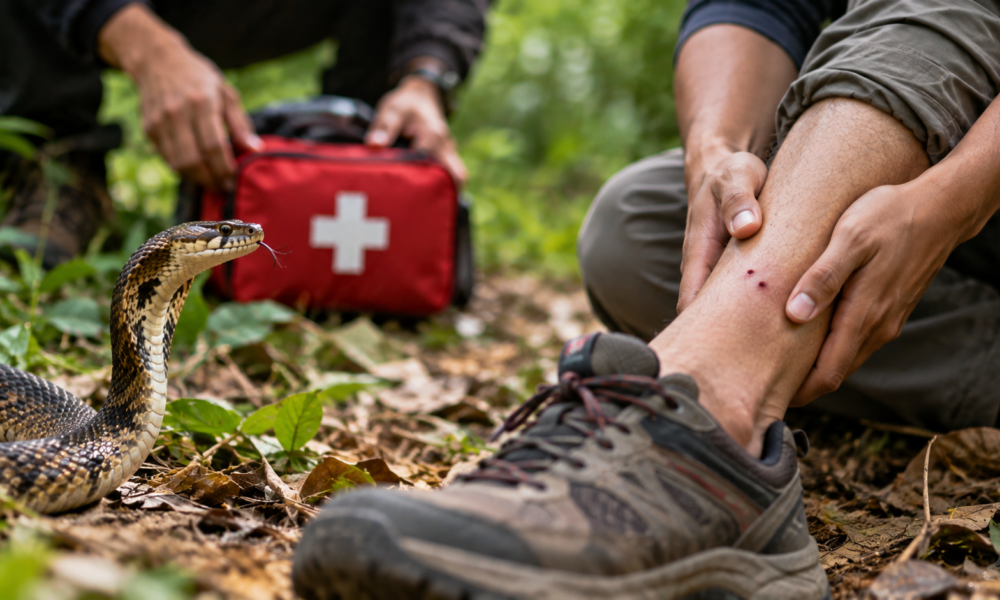
A snake bite can turn into a medical emergency within a short period, particularly when venom affects breathing, blood clotting, circulation or tissue. The most important response is not to rely on traditional remedies, but to keep the person still and get them to appropriate medical care as quickly as possible. The World Health Organisation (WHO) estimates that around 5.4 million people are bitten by snakes globally each year, with up to 2.7 million cases of envenoming.
For people living in areas where snake encounters are more common, knowing the correct first-aid steps can make a crucial difference.
What to Do Immediately After a Snake Bite
- Move away from the snake
First, move the person away from the area where the snake is present to prevent another bite. Do not attempt to catch, kill or handle the snake. If it can be done safely from a distance, a photograph may help medical professionals with identification, but seeking medical care should never be delayed for this.
- Keep the person calm and still
Fear and physical activity can increase circulation and may contribute to the spread of venom. Reassure the person and keep them as still as possible.
The bitten limb should be immobilised with a splint or sling without restricting blood circulation. The person should be transported to a healthcare facility rather than walking or driving themselves.
- Remove tight items
Remove rings, watches, bracelets, anklets, shoes and other tight clothing or jewellery from the affected limb. Swelling can develop after a bite, and these objects can become dangerously restrictive.
- Get medical help immediately
Take the person to the nearest appropriate health facility as quickly and safely as possible. Snakebite should be treated as a medical emergency.
Antivenom is the most effective treatment for reversing or preventing many of the serious effects of venomous snakebite, and it needs to be administered in an appropriate medical setting.
- Watch breathing and consciousness
Some snake venoms can cause paralysis that interferes with breathing. Keep monitoring the person’s condition while arranging transport.
If vomiting occurs, WHO recommends placing the person on their side in the recovery position to help protect the airway.
What Not to Do After a Snake Bite
Several traditional responses to snakebite can actually make the situation worse.
Do not apply a tight tourniquet. A tight arterial tourniquet can restrict blood circulation and cause serious injury to the limb.
Do not cut or incise the bite. Cutting the wound does not remove venom and can increase bleeding and infection risks.
Do not suck out the venom. Suction methods are ineffective and can cause additional injury or infection.
Do not rub or massage the wound. Manipulating the bite area can increase local damage and may increase absorption of venom.
Do not apply herbs, chemicals, ice or other substances. Such methods have no established benefit and can cause additional tissue damage or delay proper treatment.
Do not waste time trying to capture the snake. Another bite can occur, and delaying hospital treatment can be dangerous.
Why Speed Matters
Snake venom can affect the body in different ways depending on the species. Some venoms can cause paralysis and breathing problems, while others can interfere with blood clotting, damage tissues or affect the kidneys.
This is why a person should not wait for severe symptoms before seeking medical attention. Even if the bite initially appears minor, professional assessment is important.
India’s National Programme for Prevention and Control of Snakebite Envenoming includes improving first-aid awareness, strengthening emergency care and ambulance services, increasing access to treatment and expanding community awareness.
The Bottom Line
After a suspected snake bite, keep the person calm and still, immobilise the affected limb, remove tight items, avoid harmful traditional remedies and get to a healthcare facility immediately.
The safest first aid is simple: less movement, fewer interventions and faster medical care.

No Comment! Be the first one.