




TB Treatment May End, But Health Risks Can Remain, New India Study Finds
Completing tuberculosis (TB) treatment may not always mean the end of health risks, according to a new study conducted in India and published in The Lancet Global Health. The research found that...

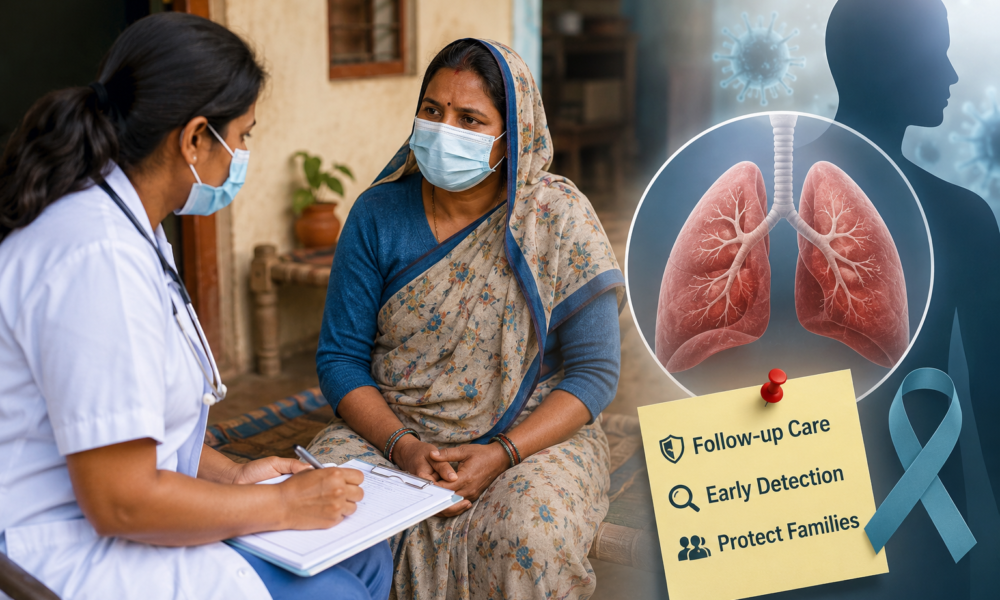
Completing tuberculosis (TB) treatment may not always mean the end of health risks, according to a new study conducted in India and published in The Lancet Global Health. The research found that people who have completed TB treatment, as well as members of their households, can remain at risk and may benefit from continued screening and follow-up.
The study, known as the TB Aftermath project, was carried out by researchers associated with @John Hopkins University, Dr D.Y. Patil Medical College, Hospital & Research Centre in Pune and India’s National Tuberculosis Elimination Programme. It followed 1,076 adults who had completed TB treatment and 3,309 household contacts. The participants were followed after treatment to compare two ways of checking for TB: screening by telephone and screening through home visits.
The research is important because TB can return even after a person has completed treatment. The study’s background notes that TB recurrence is particularly important in India, which has one of the world’s largest TB burdens. Earlier work connected to the TB Aftermath project also estimated that around 7% of reported TB cases each year are recurrent cases.
During the study, researchers enrolled adults who had completed treatment and followed them at six-month intervals. Participants were randomly assigned to either phone-based or home-based symptom screening. Household contacts were also monitored because people living with someone who has had TB can face an increased risk of infection.
The study reported that around 7% of TB survivors experienced recurrence, while about 1% of household contacts developed TB during the follow-up period. The median time to diagnosis was less than six months, highlighting the importance of continued monitoring after treatment rather than considering treatment completion as the final step in care.
The researchers also compared whether screening could be carried out remotely or through home visits. The findings showed that phone-based screening was not inferior to home-based screening for the study’s primary outcome, suggesting that telephone follow-up could be a practical option for some patients. At the same time, home-based follow-up identified more recurrent cases, pointing to the potential value of reaching patients directly in their homes.
The study also used portable lung-function testing to assess patients after TB treatment. This is significant because surviving TB does not necessarily mean that the lungs have completely returned to normal. Long-term lung problems can remain even after the infection has been treated. The TB Aftermath programme has specifically examined the relationship between recurrent TB and post-TB lung impairment.
For patients and families, the message is straightforward: finishing TB treatment should not necessarily mean stopping all follow-up care. Continued monitoring can help identify symptoms early, detect recurrence and reduce the risk of further transmission within households.
The findings could also influence how India’s TB programme approaches follow-up care. Instead of focusing only on diagnosing and treating active cases, healthcare systems could increasingly use post-treatment surveillance, including phone-based screening and targeted home visits.
The study therefore points to a broader shift in public health: TB care may need to continue beyond the treatment period, with follow-up, early detection and lung-health monitoring becoming a more important part of long-term care.



No Comment! Be the first one.