





Animal Diseases and Human Health: Why India Is Strengthening Zoonotic Disease Surveillance
Diseases that spread between animals and humans are becoming an important public health concern in India. A new scientific study published in October 2026 has proposed a nationwide surveillance...

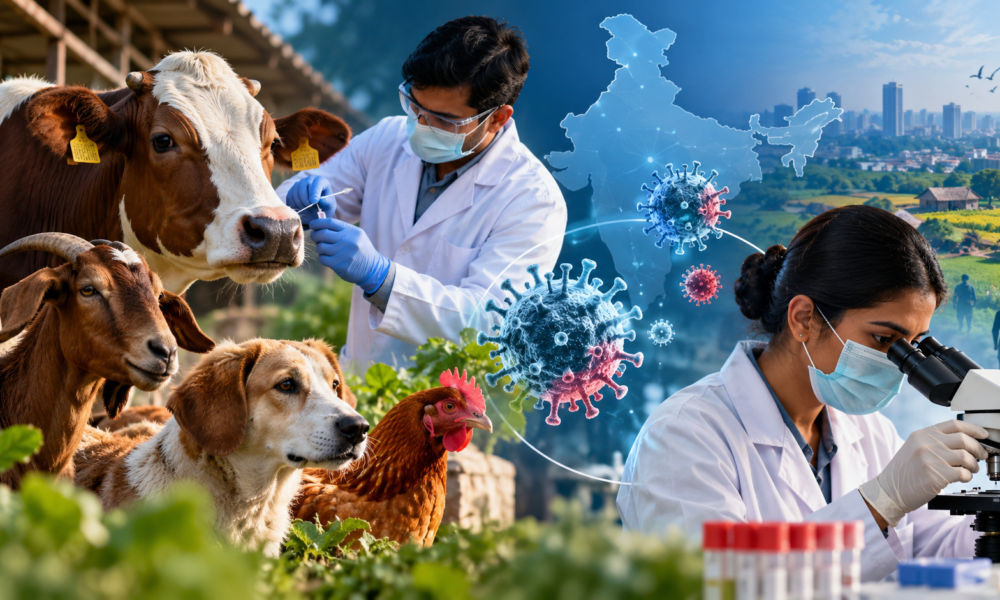
Diseases that spread between animals and humans are becoming an important public health concern in India. A new scientific study published in October 2026 has proposed a nationwide surveillance framework covering 10 zoonotic diseases and four transboundary animal diseases, highlighting the importance of monitoring infections across human, animal and environmental health systems.
The research was published in Frontiers in Veterinary Science on October 16, 2026, and was developed by researchers associated with India’s veterinary epidemiology and biotechnology institutions.
The study proposes a sampling plan involving 34,975 samples across 2,018 villages to improve disease surveillance.
What Are Zoonotic Diseases?
Zoonotic diseases are infections that can spread between animals and humans.
They can be caused by bacteria, viruses, parasites and fungi.
Transmission can occur through direct contact with infected animals, contaminated food or water, animal products, or disease-carrying insects.
Some zoonotic infections can also spread through environmental exposure.
Examples include rabies, brucellosis, leptospirosis, salmonellosis and certain forms of influenza.
These diseases can affect livestock workers, farmers, veterinarians, animal handlers and people who come into contact with infected animals or contaminated products.
What Does the New Indian Study Propose?
The October 2026 research presents a scientifically designed sampling framework for estimating the prevalence of 10 zoonotic diseases and four transboundary animal diseases.
The zoonotic diseases covered include:
- Brucellosis
- Tuberculosis
- Q fever
- Scrub typhus
- Japanese encephalitis
- Crimean-Congo haemorrhagic fever
- Cysticercosis
- Cryptosporidiosis
- Listeriosis
- Salmonellosis
The study also includes animal diseases such as African swine fever, lumpy skin disease and other transboundary infections.
The proposed surveillance plan covers 34,975 samples across 2,018 villages.
Importantly, this is a proposed sampling framework, not evidence that all these diseases are currently spreading across the country.
Why Is Livestock Surveillance Important?
India has a large livestock sector that supports rural livelihoods, agriculture, dairy production and the wider food economy.
Diseases affecting cattle, buffaloes, pigs, goats and other animals can create economic losses for farmers and disrupt food supply chains.
Some animal infections can also pose risks to human health.
For example, brucellosis can spread through contact with infected animals or consumption of unpasteurised dairy products.
Salmonella can spread through contaminated food, while leptospirosis is associated with exposure to water or soil contaminated by infected animal urine.
This makes animal health surveillance important not only for farmers but also for food safety and public health authorities.
What Is India’s One Health Approach?
India’s National One Health Mission promotes coordination between human health, animal health and environmental monitoring systems.
The approach recognises that diseases do not always remain within one sector.
An infection affecting livestock may eventually create risks for people, while environmental changes can influence the spread of pathogens and disease-carrying organisms.
The mission aims to strengthen surveillance, research, laboratory networks and coordinated responses to emerging health threats.
In July 2026, the government also highlighted Pashujanya Yudh Abhyas, an exercise focused on preparedness for animal health emergencies and zoonotic disease outbreaks.
How Can People Reduce Exposure to Animal-Borne Infections?
Basic hygiene and safe food practices can help reduce exposure to several zoonotic diseases.
People should avoid consuming unpasteurised milk and dairy products, handle raw meat safely and wash their hands after contact with animals.
Farm workers should use appropriate protective equipment when handling sick animals, animal waste or potentially contaminated materials.
Pet owners should also ensure that animals receive recommended veterinary care and vaccinations.
Any suspected infection in livestock should be reported to a qualified veterinarian or the appropriate animal-health authority.
People experiencing symptoms after animal exposure should seek medical advice and explain the nature of the exposure.
Why Does Early Detection Matter?
Surveillance can help identify unusual disease patterns before infections spread more widely.
Early detection allows authorities to investigate suspected cases, improve testing and coordinate preventive action.
It can also help farmers protect livestock and reduce economic losses.
However, surveillance is effective only when it is supported by reliable laboratories, trained personnel, timely reporting and cooperation between government departments.
The Bigger Picture
India’s proposed zoonotic disease surveillance framework highlights an important public health principle: human health cannot be separated from animal and environmental health.
Monitoring infections in livestock, improving food safety and strengthening veterinary healthcare can help reduce risks to communities.
The One Health approach offers a framework for identifying and managing these interconnected threats before they develop into larger public health challenges.


No Comment! Be the first one.