








Battery Storage Facilities Need Strong Fire Safety: Understanding the Health Risks of Lithium-Ion Battery Fires
India’s growing investment in battery energy storage systems is creating new opportunities for renewable energy and electricity infrastructure. However, the expansion of large battery...

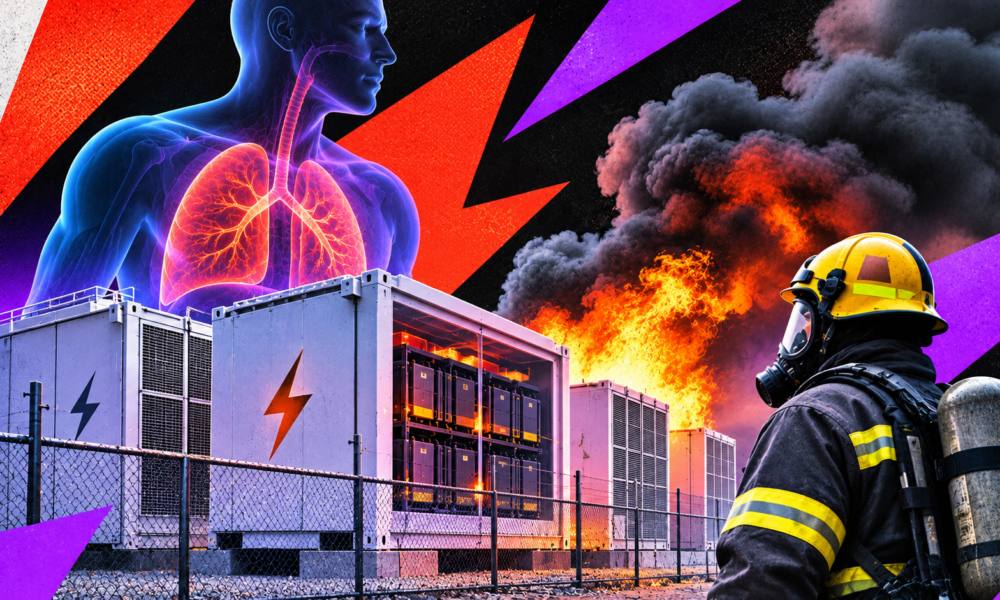
India’s growing investment in battery energy storage systems is creating new opportunities for renewable energy and electricity infrastructure. However, the expansion of large battery installations also makes fire safety and public health important considerations.
Battery energy storage systems, commonly called BESS, use rechargeable batteries to store electricity and release it when required.
Lithium-ion batteries are widely used in these systems because they offer high energy density and can store substantial amounts of electricity in relatively compact spaces.
However, lithium-ion batteries can experience a dangerous failure known as thermal runaway.
Thermal runaway occurs when a battery cell overheats and triggers a chain reaction that causes further heat generation. This can result in fire, smoke and the release of hazardous gases.
A large battery installation may contain thousands of individual battery cells. If a fire spreads between cells or storage units, controlling the incident can become difficult.
The MIT Climate Portal reported in August 2026 that battery storage facilities generally do not pose risks to nearby communities during normal operation. However, fires, although uncommon, can cause serious harm without suitable prevention and containment measures.
MIT Climate Portal
What Are the Potential Health Risks?
Battery fires can produce smoke containing fine particles and other potentially harmful substances.
Depending on battery chemistry and fire conditions, gases such as hydrogen fluoride and carbon monoxide may be released.
Exposure to smoke and toxic gases can irritate the eyes, skin and respiratory system.
People with asthma, chronic respiratory conditions and other health vulnerabilities may face additional risks from exposure to fire-related pollution.
Emergency workers may also face exposure risks while responding to battery fires.
It is important to understand that the exact hazards depend on the battery chemistry, materials involved, fire conditions and safety systems at the installation.
News in Numbers
- 5 August 2026: Publication date of the MIT Climate Portal’s battery facility safety explainer.
- Thousands: Individual cells may be present in large battery installations.
- Two major safety priorities: Preventing thermal runaway and containing incidents if they occur.
These are safety characteristics, not estimates of Indian battery fire incidents. As India increases investment in battery storage, developers must consider public safety alongside electricity generation and storage capacity.
A poorly managed battery installation can create risks for employees, emergency responders and nearby communities.
Fire detection systems, thermal monitoring, ventilation, emergency isolation and suitable separation between storage units can help manage these risks.
Occupational health and environmental safety are becoming important parts of clean-energy infrastructure.
Hospitals and emergency services may need specialised response plans for incidents involving large battery installations.
Firefighters and healthcare workers also need appropriate training to manage potential smoke exposure and other injuries.
The expansion of battery storage could increase demand for specialised fire protection, safety monitoring and emergency response systems.
It may also encourage greater cooperation between energy developers, local authorities, fire services and healthcare institutions.
India will need strong safety standards, regular inspections and clear emergency procedures as large-scale battery installations become more common.
The bigger picture: Clean energy infrastructure must be developed with public health and safety at its centre.





No Comment! Be the first one.