







Air Pollution Linked to Health Risks in 169 Indian Studies, New Review Finds
Air pollution is often discussed as an environmental problem, but its impact extends far beyond the quality of the air people breathe. A new review of Indian scientific research has highlighted the...


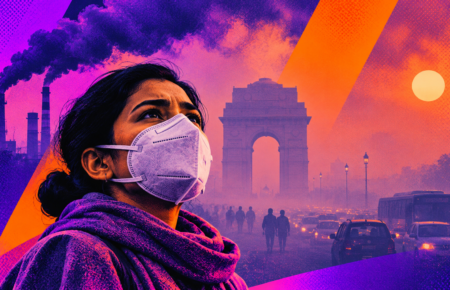
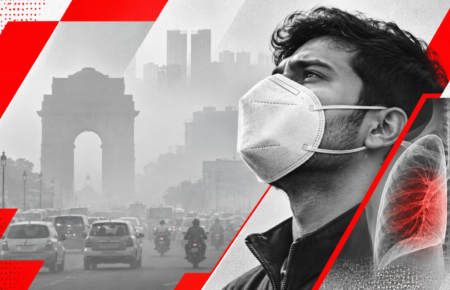
Air pollution is often discussed as an environmental problem, but its impact extends far beyond the quality of the air people breathe. A new review of Indian scientific research has highlighted the strong evidence linking air pollution exposure with several health risks.
Published on 13 November 2026, a review by the Centre for Research on Energy and Clean Air (CREA) examined 184 epidemiological studies conducted in India between 1975 and 2025.
The findings showed that 169 of these studies reported adverse health associations linked to air pollution.
The review highlights why cleaner air needs to become an important public health priority.
What did the review find?
The researchers examined studies covering different pollutants, exposure settings and health conditions.
Of the 184 studies included in the review, 169 reported increased health risks associated with air pollution exposure.
The findings also included research supported by government institutions.
Of the 46 government-funded studies, 44 reported increased health risks. Similarly, 77 of 81 studies involving government institutional affiliations reported adverse health associations.
These findings suggest that the relationship between air pollution and health is supported by a substantial body of Indian research.
However, the review combined studies with different designs and populations. It should not be interpreted as proof that every exposure causes the same health outcome.
Respiratory health remains a major concern
Respiratory diseases were the most frequently studied health outcome.
The review identified 86 studies examining respiratory conditions.
Air pollution contains several harmful substances, including fine particulate matter and gases released through vehicles, industrial activities, power generation and household combustion.
Fine particulate matter, particularly PM2.5, is a concern because its tiny particles can travel deep into the respiratory system.
Long-term exposure has been associated with respiratory problems and other health risks.
The review also examined research involving cardiovascular disease, mortality, pregnancy-related complications, diabetes, mental health and other conditions.
Delhi and other states feature in the research
Delhi accounted for the highest number of studies included in the review, with 26.
Punjab and Maharashtra each had 13 and 11 studies respectively, while Uttar Pradesh also accounted for 11 studies.
West Bengal, Tamil Nadu, Karnataka and Telangana were among the other states represented.
Importantly, the findings were not limited to urban populations.
The review identified 40 studies examining rural communities. Of these, 38 reported at least one adverse health association.
This highlights why air pollution should not be treated only as a problem affecting large cities.
Household cooking fuels, occupational exposure and indoor pollution can also affect people living outside urban centres.
Why PM2.5 deserves attention
PM2.5 refers to airborne particles with a diameter of 2.5 micrometres or smaller.
These particles can come from vehicles, industries, power plants, construction activities and the burning of fuels.
The CREA review identified multiple studies examining PM2.5 and other pollutants.
It also highlighted the role of gaseous pollutants such as nitrogen oxides and sulphur oxides, which can contribute to the formation of secondary particulate matter.
This means pollution control needs to address several emission sources rather than focusing on one pollutant alone.
What can individuals do?
People can follow local air quality updates and reduce strenuous outdoor activity when pollution levels are particularly high.
Well-fitted particulate-filtering masks may offer protection against particle exposure when used correctly.
Indoor ventilation and filtration should also be considered according to local conditions.
However, individual precautions cannot replace stronger pollution control measures.
Reducing emissions from transport, industries, power generation and household fuels requires coordinated public policy.
A wider public health challenge
The CREA review highlights the importance of treating clean air as a health priority.
Better air quality monitoring, stronger emission standards and wider research coverage could help improve public health planning.
For India, reducing air pollution is not simply about improving visibility or protecting the environment.
It is also about supporting healthier lungs, cardiovascular health and quality of life across urban and rural communities.
Source: Centre for Research on Energy and Clean Air, review published 13 November 2026.
CREA


No Comment! Be the first one.