








Diabetes and Hypertension Risk Rises Sharply After 40, Study of 56,000 Adults Finds
The risk of having diabetes and hypertension together rises sharply from around the age of 40, according to a new India-focused study that analysed health records of more than 56,000 adults....

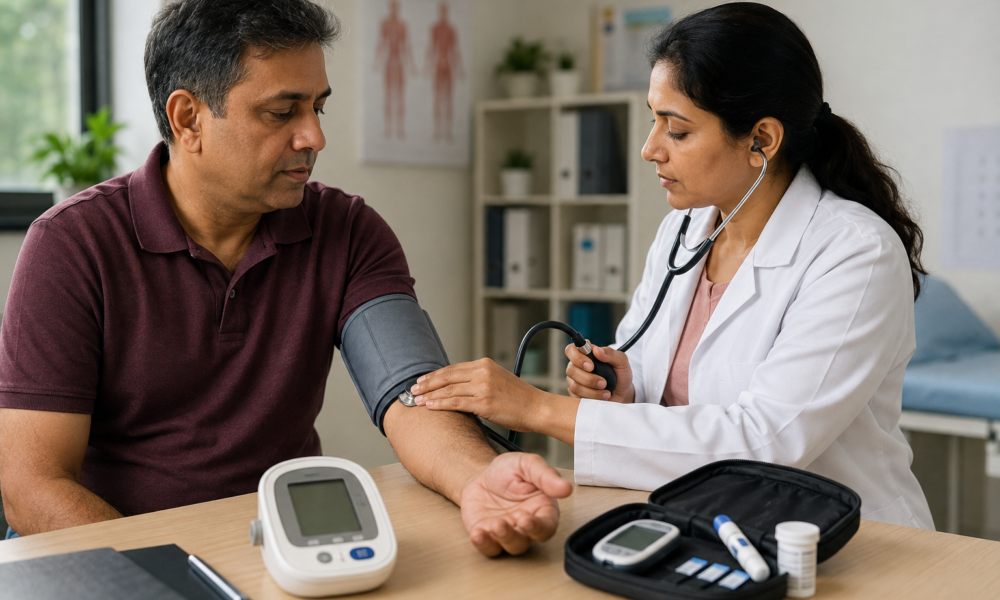
The risk of having diabetes and hypertension together rises sharply from around the age of 40, according to a new India-focused study that analysed health records of more than 56,000 adults. Researchers say the findings support screening for both conditions together, rather than treating them as separate health concerns.
The study was conducted by the Department of Clinical Research and Preventive Health Programme at Max Healthcare and examined electronic health records of 56,393 adults who underwent preventive health check-ups between January 2021 and December 2024. The records came from six Max Healthcare hospitals and medical centres across Delhi-NCR.
The findings, published in Diabetes & Metabolic Syndrome: Clinical Research & Reviews, provide an age-wise picture of how diabetes and hypertension occur together among Indian adults.
Nearly 5% of the people included in the study had both conditions. Researchers found that this was almost twice the level that would have been expected if diabetes and hypertension occurred independently of each other.
The overlap between the two conditions was relatively low among younger adults but began increasing rapidly from around the age of 40. It continued to rise until approximately 58 and then gradually levelled off, reaching nearly 17% by around the age of 70.
The study also found a strong association between the two conditions. Adults with diabetes were nearly four times more likely to have hypertension than people without diabetes. Meanwhile, people with hypertension were about 2.5 times more likely to have diabetes compared with those without high blood pressure.
Researchers said the findings are important because diabetes and hypertension share several risk factors and can contribute to serious long-term health problems. Both conditions are associated with cardiovascular disease, stroke and kidney disease, particularly when they remain undiagnosed or poorly controlled.
Dr Abhaya Indrayan, Biostatistics Consultant at Max Healthcare, said the sharp rise in the coexistence of the two conditions around the age of 40 provides evidence for integrated screening. Instead of screening for diabetes or hypertension in isolation, healthcare providers could consider checking for both when one condition is identified.
The study is particularly relevant to India, which has a large burden of non-communicable diseases. Earlier national research has estimated that around 101 million people in India have diabetes, while approximately 315 million have hypertension.
The researchers also examined age- and sex-specific trends, allowing them to identify when the combined burden of the two conditions begins to accelerate. This could help healthcare providers design more targeted preventive health programmes for middle-aged and older adults.
For patients, the findings underline the importance of routine health checks even when there are no obvious symptoms. High blood pressure and diabetes can develop without noticeable warning signs, meaning that waiting until symptoms appear may delay diagnosis.
The study does not suggest that everyone over 40 will develop both conditions. Instead, it highlights a higher likelihood of the two occurring together as people age and provides evidence for earlier assessment.
The researchers argue that preventive healthcare should move towards a more integrated model, particularly as India faces a growing burden of chronic diseases. Screening blood pressure and blood sugar together could help identify people at risk earlier and allow doctors to intervene before complications develop.
For India’s healthcare system, the message is straightforward: finding one condition may be an opportunity to look for the other. As the population ages and chronic diseases place greater pressure on hospitals and families, combined screening could become a more important part of preventive healthcare.







No Comment! Be the first one.