








India Pushes AI in Medical Devices, but Scaling from Pilots to Hospitals Remains a Challenge
India is looking to make artificial intelligence a bigger part of its medical device industry, with the government and healthcare sector focusing on how AI can improve diagnosis, clinical decisions...

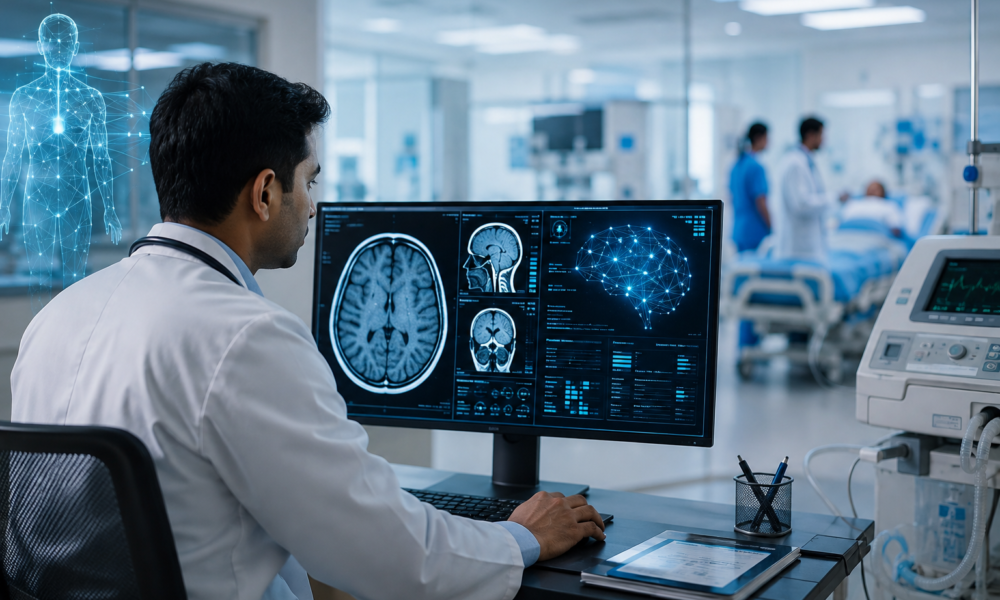
India is looking to make artificial intelligence a bigger part of its medical device industry, with the government and healthcare sector focusing on how AI can improve diagnosis, clinical decisions and access to specialist care.
The issue came into focus at the ninth India Medical Device 2026 event in New Delhi, where Union Health Minister J P Nadda released a new knowledge paper on AI in medical technology. The report, prepared by Praxis Global Alliance with the Federation of Indian Chambers of Commerce and Industry, looks at how India can move AI-based healthcare tools from small trials into regular clinical use.
AI is already being used in parts of healthcare, particularly in areas such as medical imaging and diagnosis. But the report argues that India has not yet built the wider system needed to use these technologies at scale.
One major problem is health data. Medical information in India is spread across different hospitals, systems and formats, making it difficult for AI tools to work with large and reliable datasets. Better access to useful health data will be important if companies and hospitals want to develop and test AI systems that can work accurately across different patient groups.
Regulation is another challenge. AI-based medical devices can change or improve through software updates, making them different from traditional medical equipment. The report says India needs a more predictable system that can regulate these technologies throughout their working life rather than treating them like a fixed product.
There is also the question of who pays for AI-enabled healthcare.
Even if a technology can help doctors work faster or identify a disease earlier, hospitals and healthcare providers need clear financial reasons to adopt it. The report therefore highlights the need for better reimbursement and procurement systems that recognise the value of AI-enabled medical technology.
Diagnostics could become the first major area where AI sees wider adoption. AI tools can help doctors analyse scans and other medical information, potentially allowing specialist knowledge to reach smaller hospitals and areas where specialist doctors are not always available.
This could be particularly important for India, where access to specialist healthcare remains uneven. If AI can support doctors in primary and secondary healthcare centres, patients may not always need to travel to major cities for an initial assessment.
India already has several building blocks for this transition. The report points to initiatives including the Ayushman Bharat Digital Mission, IndiaAI Mission, SAHI and BODH, alongside the National Medical Devices Policy 2023. Together, these initiatives could help create the digital and policy environment needed for AI-enabled healthcare.
The opportunity also extends beyond hospitals. India has a large software industry, a growing medical device manufacturing base and a large domestic healthcare market. Bringing these strengths together could help Indian companies develop medical technologies for both domestic and international markets.
However, technology alone will not be enough. Healthcare providers, regulators, researchers, manufacturers, insurers and policymakers will need to work together to build trust around AI.
For patients, the potential benefit is clear: quicker diagnosis, better use of specialist knowledge and wider access to healthcare. But those benefits will depend on whether AI tools are properly tested, regulated and integrated into everyday medical practice.
India’s next step in healthcare AI is therefore not simply creating more tools. It is building the system that allows useful tools to reach doctors and patients safely and at scale.







No Comment! Be the first one.