







Sitting for Over 30 Minutes at a Time Could Raise Cancer Risk, New Study Finds
Modern workplaces have made prolonged sitting an unavoidable part of daily life. Whether working at a desk, attending virtual meetings or commuting, many adults spend hours without significant...

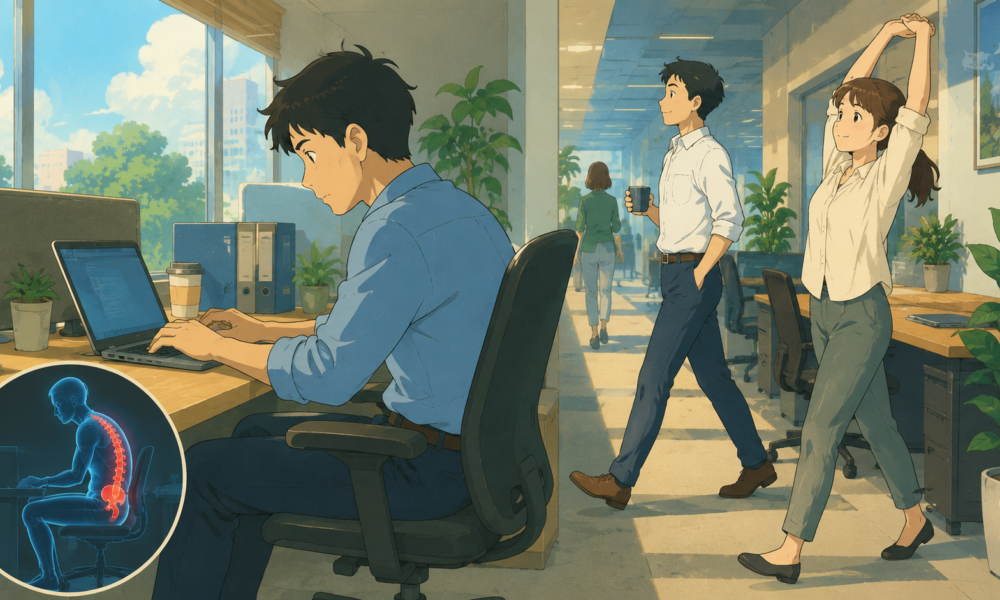
Modern workplaces have made prolonged sitting an unavoidable part of daily life. Whether working at a desk, attending virtual meetings or commuting, many adults spend hours without significant movement. A new large-scale study now suggests that this everyday habit may carry more serious health consequences than previously understood.
Researchers analysing health data from more than 91,000 participants in the UK Biobank have found that prolonged, uninterrupted sitting is associated with a higher risk of cancer-related deaths. The findings, recently published in PLOS Medicine, indicate that every additional hour spent sitting continuously for at least 30 minutes was linked to a 9 per cent increase in cancer mortality.
The study followed participants for an average of more than 12 years after monitoring their daily movement patterns using wearable activity trackers. Rather than simply measuring the total amount of time people spent sitting, researchers focused on uninterrupted sedentary periods lasting 30 minutes or longer. This distinction proved significant, suggesting that how people sit may be just as important as how long they sit overall.
Encouragingly, the research also identified a practical way to reduce the risk. Replacing just one hour of prolonged sitting each day with light physical activity, such as walking around the office, climbing stairs or performing household tasks, was associated with a 12 per cent lower risk of cancer-related death. Even moderate movement throughout the day appeared to offer meaningful health benefits.
Health experts explain that long periods of inactivity can affect the body’s metabolism, blood circulation and inflammatory responses. Over time, these changes may contribute to obesity, insulin resistance and chronic inflammation, all of which are recognised risk factors for several types of cancer. Previous research has also linked prolonged sedentary behaviour with cardiovascular disease and type 2 diabetes.
The findings are particularly relevant for India’s growing white-collar workforce. As hybrid work, digital services and technology-driven jobs continue to expand, millions of employees spend most of their working day seated in front of computers. Recent occupational health research has highlighted that prolonged sitting is becoming an increasingly important public health concern among Indian corporate workers, with evidence linking it to musculoskeletal disorders, vascular dysfunction and metabolic health risks.
Medical professionals stress that regular exercise before or after work alone may not completely offset the effects of remaining seated for long, uninterrupted periods. Instead, they recommend incorporating movement throughout the day. Standing during phone calls, walking to speak with colleagues instead of sending messages, stretching every half hour and taking short walking breaks can all help reduce sedentary time.
The study also reinforces a broader shift in preventive healthcare. Rather than focusing only on gym sessions or structured workouts, experts are increasingly encouraging people to improve their overall movement patterns during the day. Small behavioural changes repeated consistently may deliver meaningful long-term health benefits.
While the research was observational and does not prove direct causation, its large sample size and objective activity monitoring strengthen confidence in the findings. Researchers say further clinical studies will help determine personalised strategies for reducing health risks linked to sedentary lifestyles.
As office-based work becomes more common, the message is becoming increasingly clear. Protecting long-term health may not always require intense workouts. Sometimes, simply standing up and moving every 30 minutes could make a measurable difference.





No Comment! Be the first one.