








Air Pollution May Increase Type 2 Diabetes Risk by 10–16%. Why India’s Health Crisis Goes Beyond the Lungs
Air pollution is usually discussed as a respiratory health problem. But new research suggests that its impact could extend much further, potentially increasing the risk of developing Type 2 diabetes....

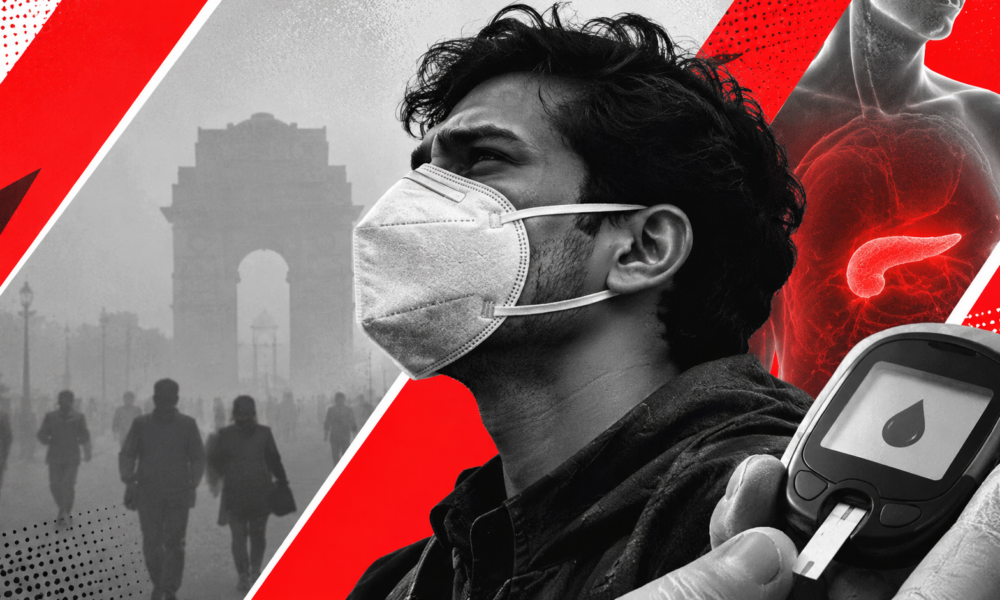
Air pollution is usually discussed as a respiratory health problem. But new research suggests that its impact could extend much further, potentially increasing the risk of developing Type 2 diabetes.
A global review published in the Journal of Vascular Diseases found that long-term exposure to fine particulate matter (PM2.5) was associated with a 10–16% higher risk of developing Type 2 diabetes for every increase of 10 micrograms per cubic metre in pollution exposure.
The findings are particularly relevant to India, where air pollution and metabolic disorders represent two significant public health challenges. The research suggests that the environment people live in could be another important factor to consider when discussing diabetes prevention.
What did the researchers discover?
The study, titled APEX-T2D, examined 13 previously published systematic reviews and meta-analyses covering more than 200 million cumulative participant observations.
Researchers assessed evidence from North America, Europe, Asia, Latin America and Australia to understand the relationship between long-term PM2.5 exposure and Type 2 diabetes.
Six of the seven reviews examining new diabetes cases found an increased risk of approximately 10–16% for every 10 micrograms per cubic metre rise in PM2.5 exposure.
The analysis also identified associations with diabetes prevalence, diabetes-related mortality and fasting blood glucose levels.
However, the authors highlighted an important limitation: these findings demonstrate an association, not proof that air pollution directly causes diabetes. The evidence for new diabetes cases was rated as low certainty, while evidence for several secondary outcomes was rated very low.
Why does PM2.5 matter for metabolic health?
PM2.5 refers to fine airborne particles measuring 2.5 micrometres or less in diameter.
These particles can travel deep into the lungs and enter the bloodstream, potentially triggering biological responses beyond the respiratory system.
Researchers have identified several possible mechanisms connecting pollution exposure with metabolic health:
- Inflammation: Prolonged exposure may contribute to systemic inflammatory responses.
- Oxidative stress: Pollutants can increase oxidative damage within the body.
- Blood vessel dysfunction: Pollution may affect the functioning of blood vessels.
- Insulin signalling: Researchers are investigating whether pollution-related biological changes can interfere with normal insulin activity.
These are proposed mechanisms rather than fully established explanations for the observed association.
Why should India pay attention?
India faces a substantial diabetes burden, making the findings particularly important for public health planning.
According to the International Diabetes Federation’s estimates cited in recent reporting, approximately 89.8 million adults in India were living with diabetes, including an estimated 38.6 million who had not been diagnosed.
The research also raises an important question about how environmental conditions interact with existing metabolic risk factors.
For people living in highly polluted cities, exposure is not always something they can easily control. Commuting, workplace conditions and neighbourhood air quality can influence daily exposure.
This means diabetes prevention cannot rely exclusively on individual lifestyle choices. Environmental health and pollution-control policies also deserve attention.
What should change in India’s health strategy?
The researchers argue that air quality should become a more visible part of cardiometabolic disease prevention.
Their recommendations include stronger air-quality monitoring, tighter emissions standards and greater consideration of environmental risk factors in national healthcare policies.
For individuals, established diabetes prevention measures remain important, including appropriate physical activity, balanced nutrition and medically advised screening.
People should not interpret this research as proof that pollution exposure will cause diabetes or that avoiding pollution alone can prevent it.
The bigger public health question
India’s diabetes conversation has traditionally focused on diet, physical activity, genetics and obesity.
This research adds another dimension: the environment.
The next generation of public health strategies may need to consider the relationship between the air people breathe and the metabolic conditions they develop.
If clean air can potentially help protect metabolic health, should pollution control also be treated as a diabetes-prevention priority?





No Comment! Be the first one.